
Unilever Indonesia Reports Rp16.9 Trillion in Net Sales for First Half of 2026
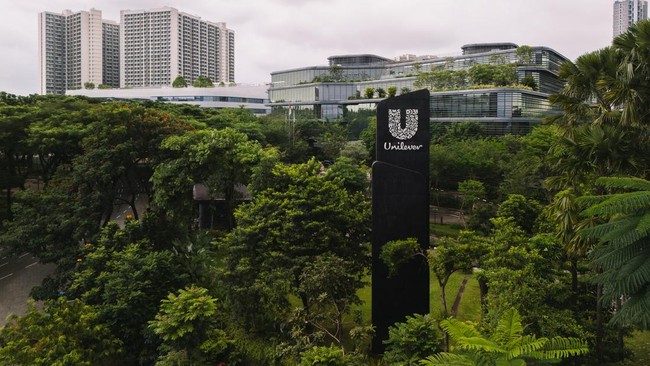
PT Unilever Indonesia Tbk (UNVR) recorded positive growth in the first half of 2026. The performance marks the company’s fourth consecutive quarter of growth, reflecting solid progress in strengthening business fundamentals and advancing its long-term growth targets.
In the first half of 2026, UNVR posted domestic sales growth of 7.1%, driven by strong underlying volume growth of 7.3%. Meanwhile, net sales from continuing operations reached Rp16.9 trillion, up 7.1% year-on-year.
Net profit from continuing operations (excluding the SariWangi tea business) also rose 10.2% year-on-year to Rp2.1 trillion.
UNVR recorded a gross margin from continuing operations of 46.6%, down 168 basis points compared with the previous year. Excluding transformation costs, the gross margin stood at 47.7%.
Meanwhile, the pre-tax profit margin from continuing operations held steady at 15.7%. Excluding transformation costs, the pre-tax profit margin rose 45 basis points to 16.7% compared with the previous year.
President Director of Unilever Indonesia Benjie Yap said the first-half 2026 performance reflects the positive results of efforts to strengthen the company’s fundamentals.
“We succeeded in recording positive growth in both sales and profit, supported by strong volume growth, which reflects improving execution in the market. These results further strengthen our confidence that the strategy we are pursuing is delivering tangible results and the business continues to move in the right direction,” he said in a written statement on Tuesday (28 July 2026).
“Amid a dynamic business environment and the continued investment we are making to transform the business and strengthen long-term competitiveness, we remain focused on driving consistent, quality growth and creating sustainable value for all stakeholders,” he added.
Benjie explained that the company executes its strategic priorities through three main pillars — Category, Sales Channels, and Cost — which reinforce one another to drive quality long-term growth.
Three Priority Strategies of Unilever Indonesia
- Category: Consumer Interest at Scale through Strong Brands and Innovation
Unilever Indonesia continues to strengthen its competitiveness through superior innovation and social-first demand creation to improve consumer preference across the company’s portfolio. Grounded in a “Desire at Scale” approach, Unilever Indonesia is enhancing brand superiority through differentiation based on science, aesthetics and sensory experience.
“At the same time, we are accelerating consumer engagement through creator collaborations and culturally relevant partnerships, thereby boosting brand visibility and relevance, particularly among younger consumers,” Benjie explained.
These efforts have delivered broad-based growth across the business, with 18 of 24 brands recording growth in the first half of 2026.
Most importantly, he said, the company’s core businesses that had previously faced challenges have returned to growth, while high-growth segments continue to post strong double-digit growth.
“Overall, these results further strengthen our confidence that the business performance recovery continues to show positive momentum across more parts of the portfolio. With core businesses returning to growth and high-growth segments continuing to expand, we are building stronger and more balanced growth momentum,” he added.
- Sales Channels: Execution at Every Consumer Purchase Point
Unilever Indonesia also continues to strengthen its route-to-market capabilities and execution across various sales channels, contributing to domestic sales growth of 7.1% in the first half of 2026. This performance was supported by growth across all key channels, reflecting improved execution, better product availability and stronger shopper engagement.
In General Trade, growth was driven by continued progress on the ‘More Stores’ and ‘Better Stores’ agendas, which expanded reach, improved product availability and strengthened execution at points of sale. Meanwhile, the Modern Trade channel recorded good performance thanks to stronger execution and effective category activation, boosting shopper engagement, visibility and in-store conversion.
The Health and Beauty and eCommerce channels also continued to show positive momentum, supported by a differentiated portfolio, social-first demand creation strategies and increasingly strong end-to-end capabilities.
“Most importantly, these results show that all our growth drivers are working consistently across various sales channels. Through strengthening route-to-market capabilities, more effective demand creation and increasingly targeted portfolio management, we continue to build more broad-based, quality and sustainable growth,” he said.
- Cost: Driving Growth through Discipline and Productivity
On the cost side, Unilever Indonesia is driving productivity and strengthening cost discipline across the business, enabling continued investment to support growth while maintaining profitability. Through a combination of measured price adjustments, productivity initiatives and disciplined cost management, Unilever Indonesia has maintained business resilience amid ongoing cost pressures while continuing to improve margins.
“At the same time, we remain focused on ensuring every investment delivers optimal impact by allocating resources in a more targeted manner. This is realised through sustained investment in priority brands and accelerated development of digital capabilities, which strengthen brand equity, improve execution effectiveness and support sustainable long-term growth,” Benjie explained.
He affirmed that going forward, Unilever Indonesia remains focused on driving competitive growth through disciplined execution of its Category, Sales Channels and Cost strategy.
Amid still-dynamic market conditions, Unilever Indonesia is optimistic it can continue to strengthen business performance through increasingly solid fundamentals, a strong brand portfolio, more effective market execution and a continued focus on productivity.
“Supported by our Hungry to Win culture, we believe we can further strengthen our competitiveness, accelerate quality growth and create long-term value for our shareholders and all stakeholders,” Benjie concluded.
Source: jawawa.id (https://jawawa.id/newsitem/unilever-indonesia-reports-rp16-9-trillion-in-net-sales-for-first-half-of-2026-1785221506)
Originally published by CNBC Indonesia (https://www.cnbcindonesia.com/market/20260728124000-17-754378/top-unvr-cetak-penjualan-bersih-rp169-t-di-semester-i-2026), translated from Indonesian