
Unila: Human Rights Law Revision Must Be Adaptive to Future Challenges
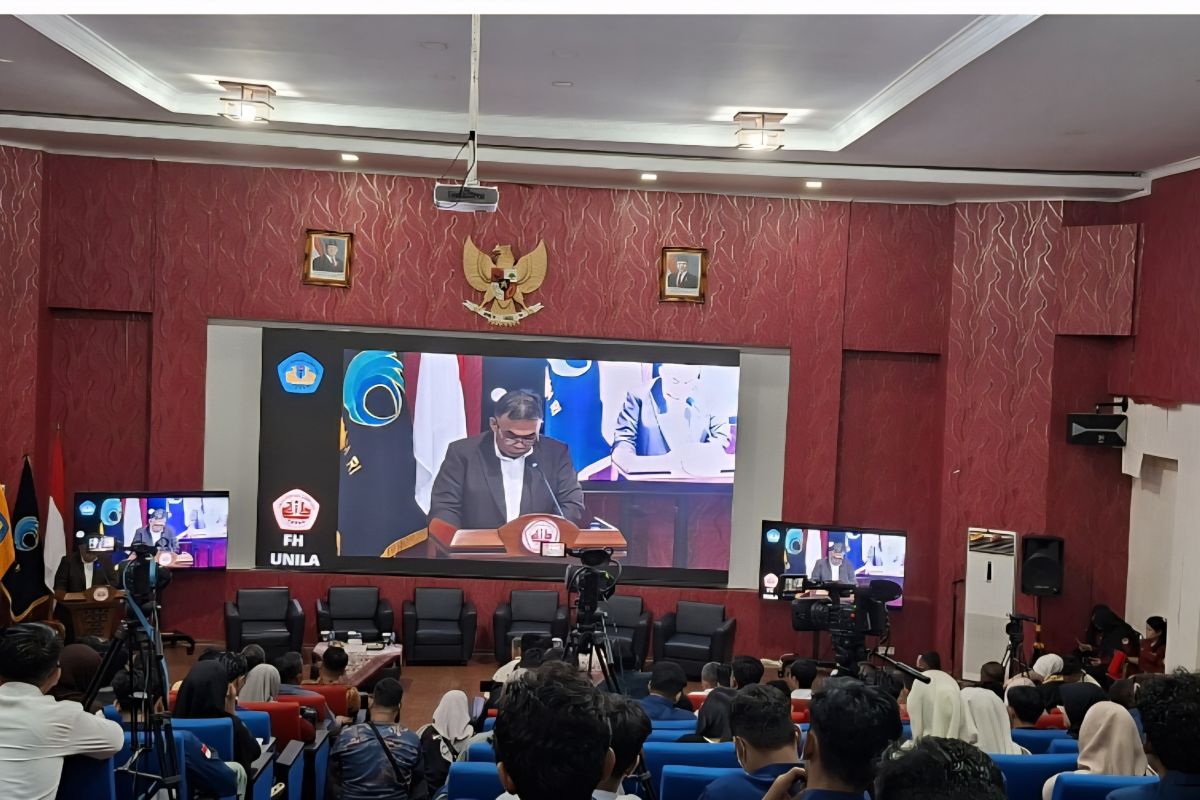
Bandarlampung (ANTARA) - The University of Lampung (Unila) has emphasised the importance of revising Law Number 39 of 1999 concerning Human Rights (HAM) to ensure it can meet future challenges and remain adaptive to technological developments, social dynamics, and global changes.
This view was expressed by the Vice Rector IV for Planning, Cooperation, and Information Systems at Unila, Prof. Ayi Ahadiat, during a review forum for the draft amendments to the Human Rights Law held by the Unila Faculty of Law in Bandarlampund on Monday.
“This legislative change must truly reach far into the future. Regulations in the field of human rights must constantly be adaptive to the advancement of the times, technological progress, societal dynamics, and global challenges,” said Ayi.
According to him, the revision of the Human Rights Law is not merely a change in legal norms, but an effort to strengthen the state’s commitment to ensuring the respect, protection, fulfilment, enforcement, and promotion of human rights as mandated by the constitution.
On this occasion, he also reminded that human rights values have been part of the foundation of the Indonesian nation since the beginning of independence.
He noted that human rights principles were reflected in the Preamble of the 1945 Constitution, even before the United Nations adopted the Universal Declaration of Human Rights in 1948.
In addition to highlighting the substance of the Human Rights Law revision, Ayi asserted that universities have a moral and academic responsibility to serve as a space for open, objective, and constructive dialogue in the process of formulating public policy.
He expressed hope that the forum could produce high-quality, comprehensive, and applicable input as an academic contribution to the refinement of the draft amendments to the Human Rights Law.
Ayi also invited forum participants to engage in critical discussion while maintaining high academic ethics to support the strengthening of the national legal system.