
Unila Dissertation Proposes New Legal Model for Doctor-Hospital Relations
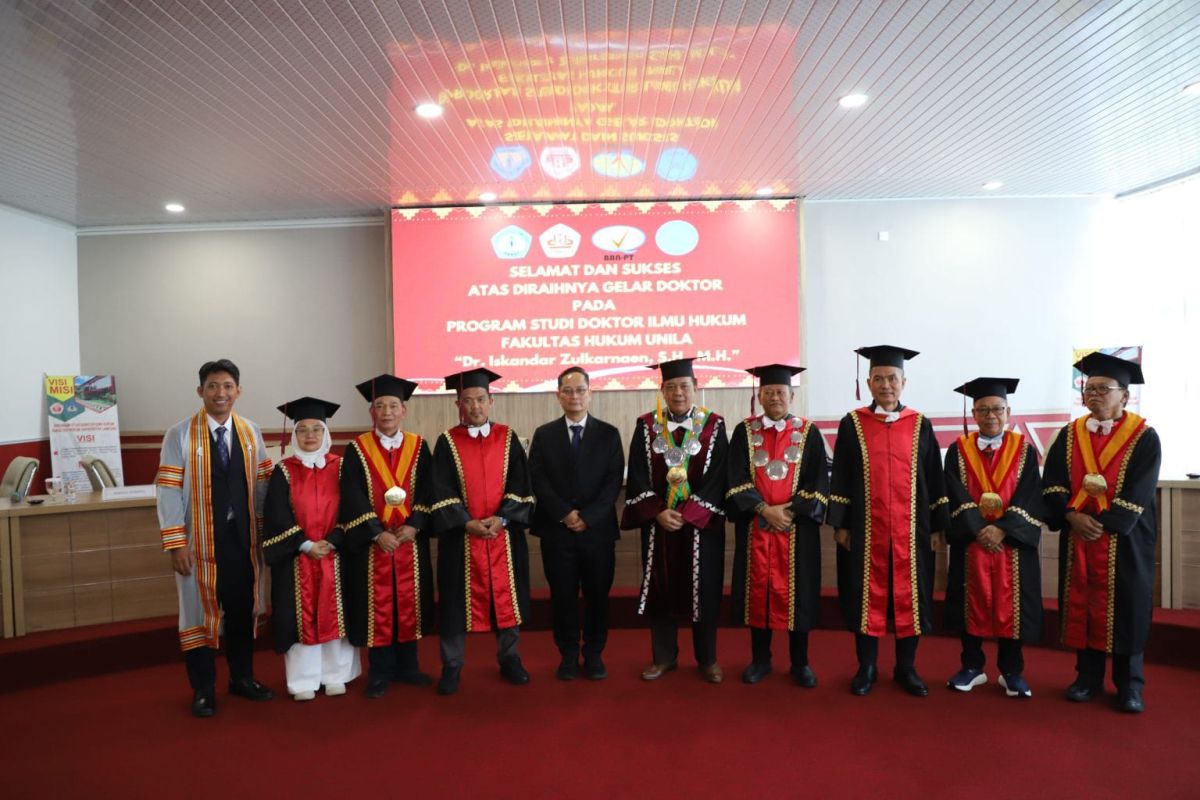
A doctoral dissertation from the Faculty of Law at the University of Lampung has proposed a new legal model for the working relationship between doctors and hospitals, which is considered more adaptive to the characteristics of the medical profession. Iskandar Zulkarnain, an Ad Hoc Judge for Industrial Relations Disputes at the Banjarmasin Class IA District Court, stated that current regulations have not been able to accommodate the unique characteristics of the medical profession, which differ from ordinary employment relationships. “On one hand, doctors work within a hospital’s organisational system. They use hospital facilities, are subject to service standards, work schedules, governance, and quality-of-service targets. However, on the other hand, doctors retain professional autonomy in making medical decisions that legally and ethically cannot be intervened in by hospital management,” Iskandar said. This finding is the core of Iskandar’s dissertation, defended in an open session of the Doctoral Programme at the University of Lampung’s Faculty of Law. The research was limited to full-time specialist doctors who hold only one Practice Licence at a single private hospital, do not hold a licence elsewhere, and are not civil servants. According to him, the dual nature of the medical profession cannot be fully accommodated through existing schemes such as Fixed-Term Employment Agreements, Permanent Employment Agreements, or partnership relationships based on cooperation agreements. “As a result, various problems arise, ranging from the unclear status of doctors as workers or partners, the protection of normative employment rights, legal liability when medical disputes occur, to legal protection for hospitals as healthcare institutions,” he said. Through the proposed model, doctors would still receive normative worker protections, such as legal certainty, social security, occupational safety and health protection, and industrial dispute resolution mechanisms. At the same time, the state would continue to recognise the professional autonomy of doctors and provide space for professional practice and healthcare cooperation in accordance with statutory regulations. “This model concept is considered a meeting point between the interests of hospitals as healthcare providers, doctors as professionals, and the public as service recipients,” Iskandar stated. The dissertation was examined by nine academics and legal experts from both within and outside the University of Lampung. The panel declared Iskandar to have passed with high distinction, granting him the right to hold the title of Doctor of Law.