
Unified Command Established to Combat Forest and Land Fires in Natuna
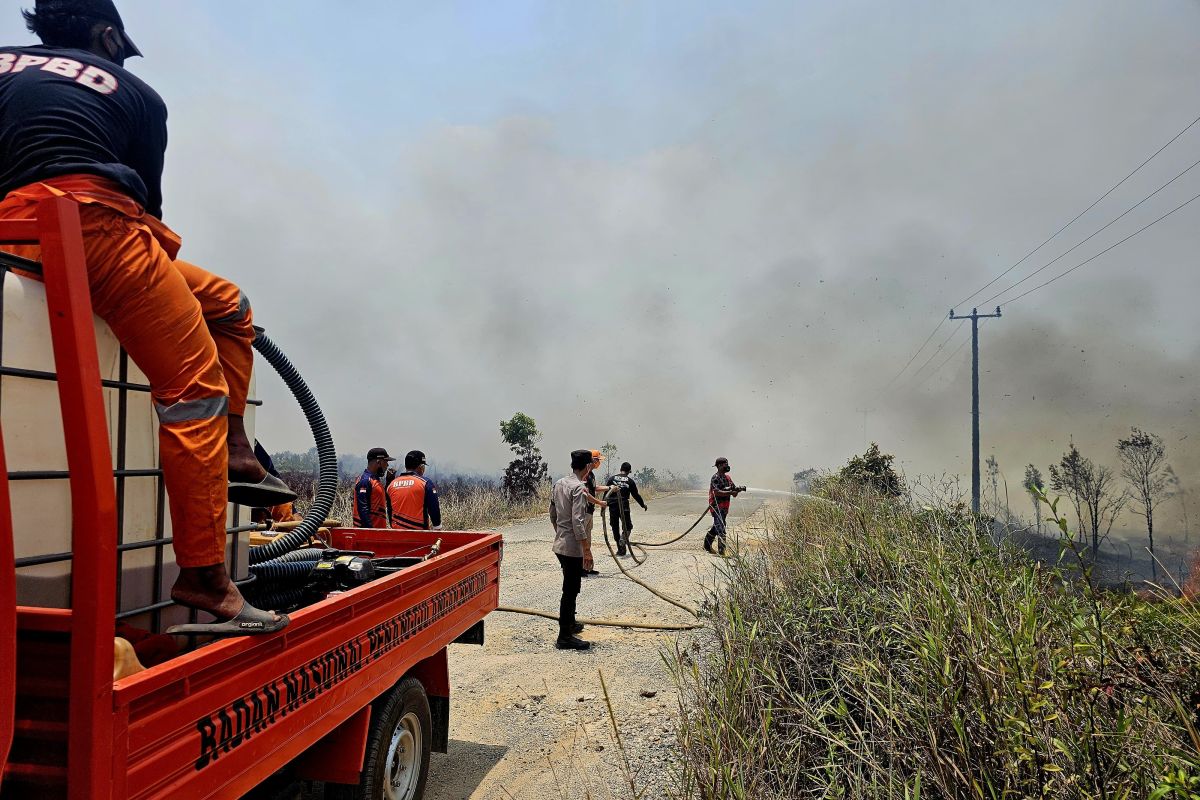
Natuna (ANTARA) - Since August 2026, the influence of the El Niño phenomenon has caused rainfall in Natuna Regency, Riau Islands, to decrease. Consequently, the soil in the area is gradually losing its moisture.
Open lands that were previously covered in vegetation and served as livestock fodder have begun to dry out, thereby increasing the threat of forest and land fires (karhutla).
By the second week of August 2026, hotspots began to emerge in several areas of Natuna. Fires have occurred in various locations, and by the end of August, they had scorched a total area of more than 20 hectares.
This disaster has prompted the Natuna Regency Government to strengthen preparedness through the formation of a Forest and Land Fire Task Force (Satgas Karhutla) on 26 August 2026.
The task force is directly commanded by the Regent of Natuna, Cen Sui Lan, and involves various elements, ranging from the TNI (Indonesian National Armed Forces), Polri (National Police), Basarnas (National Search and Rescue Agency), BMKG (Meteorology, Climatology, and Geophysics Agency), KPHP (Forest Management Unit), Perumda Air Minum (PDAM) Tirta Nusa Natuna, regional agencies, to the local community.
These participants represent institutions with diverse capabilities. Some possess air and land operational skills, others provide weather information, and others support water availability, health, logistics, and rescue operations. These differing capabilities are integrated into a single working system.
Heads of agencies have been assigned to specific sectors, ranging from planning and finance, general administration and command posts, air operations, and land operations, to the provision of clean water. The structure also encompasses rescue, evacuation and transport, data and information, health, logistics and equipment, as well as prevention and law enforcement.
As personnel move towards hotspots, they require information regarding weather conditions and wind direction. They also need medical support, water availability, equipment, and evacuation routes should the situation change. Information from the field is then sent back to the command post to serve as the basis for decision-making.