
Unib PKM Builds Participatory Village Waste Management Model
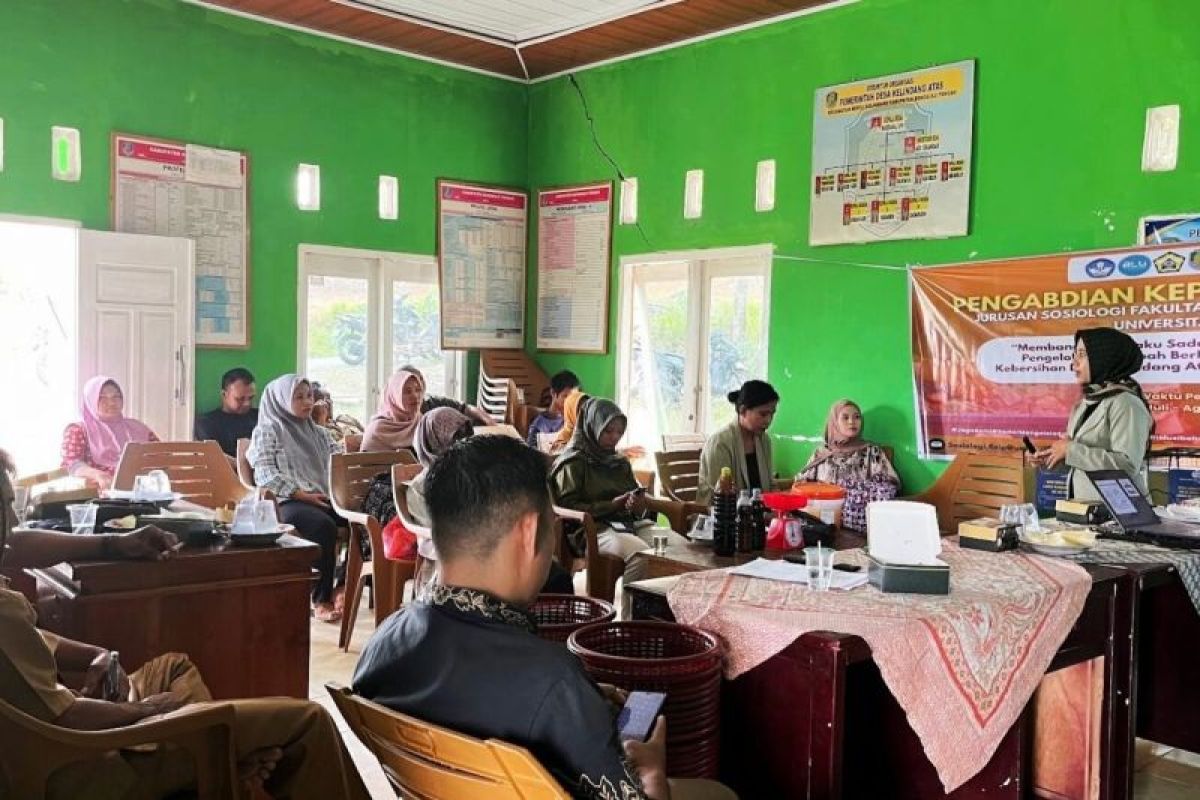
The issue of waste management in many rural areas is not solely caused by a lack of facilities, but rather by the persistent habit of littering. A Community Service (PKM) team from the University of Bengkulu (Unib) has built a participatory-based village waste management model to cultivate environmentally conscious behaviour within the community.
Diyas Widiyarti, the Head of the PKM Team from the Sociology Department of the Faculty of Social and Political Sciences (FISIP) at Unib, stated that behavioural change is the main foundation for creating a sustainable waste management system. When the community understands the impact of their daily habits, change will arise from awareness, not compulsion.
The programme, themed ‘Building Environmentally Conscious Behaviour Through Participatory-Based Waste Management Education to Support Village Cleanliness,’ is designed as a community empowerment model. It focuses not only on delivering knowledge but also on building environmental awareness starting from the household level.
According to Diyas, the waste management problem in many rural areas is not merely due to limited facilities, but also the strong habit of littering or burning rubbish in the yard. These habits have the potential to pollute the environment, degrade air and water quality, and increase the risk of various diseases.
In addition to socialisation at the village hall, the team, together with village health cadres and members of the Karang Taruna youth organisation, also conducted door-to-door education. This allowed residents to discuss household waste management issues directly. During each visit, the community was encouraged to understand the importance of sorting waste at home as a first step towards creating sustainable waste management. Residents were also given an understanding of the health and environmental impacts of poorly managed organic and inorganic waste.
‘We invite the community to start with a simple step, which is sorting waste from the kitchen. If done consistently, this small habit will have a significant impact on sustainable waste management while creating a cleaner and healthier village environment,’ said Diyas.
The Kelindang Atas Village Government is also preparing a Village Regulation on environmental governance and allocating village funds to support the provision of waste management facilities and infrastructure. Through this participatory-based waste management model, the PKM team hopes that community participation in waste sorting will continue to increase, thereby realising a cleaner, healthier, and more sustainable village environment.
The PKM team is targeting more than 75 percent of households in Kelindang Atas Village to actively participate in waste sorting activities. The programme is also projected to reduce the volume of waste sent to the final disposal site (TPA) by 40–50 percent through the implementation of a community-based circular economy and independent processing.
Source: jawawa.id (https://jawawa.id/newsitem/unib-pkm-builds-participatory-village-waste-management-model-1786103804)
Originally published by Antara (Indonesian) (https://www.antaranews.com/berita/5684528/pkm-unib-bangun-model-pengelolaan-sampah-desa-berbasis-partisipatif), translated from Indonesian