
Unhas strengthens vocational education development in Selayar
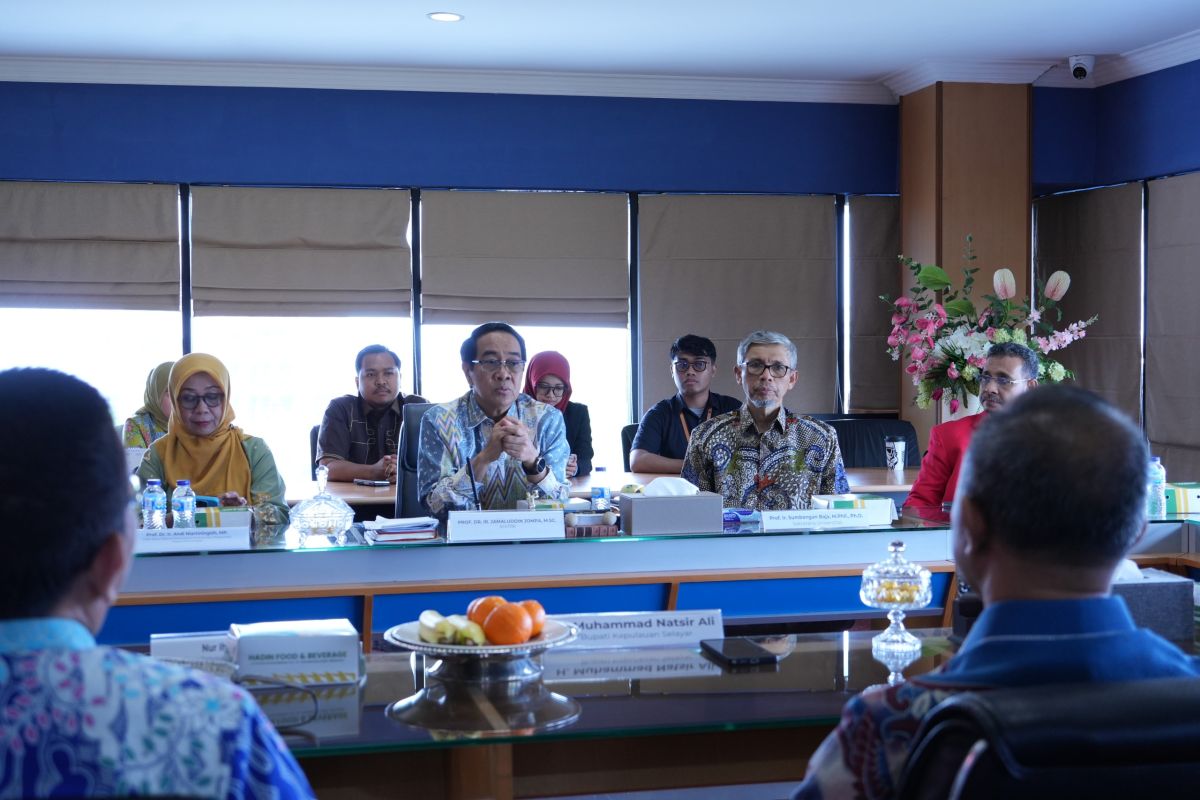
Support from local government provides space for vocational education to grow faster and deliver higher quality services in Selayar.
Makassar (ANTARA) - Universitas Hasanuddin is focusing on strengthening the development of vocational education in Kepulauan Selayar Regency, South Sulawesi, as a responsive measure to local needs.
Selayar, as a strategic area, has geographical characteristics that demand a different approach, making the presence of vocational education institutions highly relevant in addressing these challenges.
Unhas Rector Prof Jamaluddin Jompa (JJ) stated in Makassar on Saturday that he appreciates the proactive steps taken by the Kepulauan Selayar Regency Government, which demonstrate a strong commitment to education development.
“Vocational education must become a new anchor for Selayar’s progress. This is not just about education, but about how we build the region’s future based on its existing potential,” he explained during the land grant handover event from the Kepulauan Selayar Regency Government to Unhas.
JJ emphasised that Unhas has taken concrete steps to support the strengthening of that sector, including collaboration with Guangdong University.
“One of the forward implementations we can develop is to make Selayar a pilot project for comprehensive fisheries aquaculture research and development,” he said.
“We want to ensure that the research conducted truly addresses local needs and has a direct impact on the community,” JJ added.
Meanwhile, the Regent of Kepulauan Selayar, Natsir Ali, stated that his region still faces various development challenges, particularly related to limited land and the dispersed island geography.
This situation, according to him, requires a development approach that is not only conventional but also adaptive and based on the real needs of the community.
In his view, vocational education is a strategic solution to address these challenges.
Through a more applied approach oriented towards skills, vocational education is expected to create human resources that are job-ready and relevant to the region’s flagship potentials, such as maritime, fisheries, and other productive sectors.
“Building in an archipelago area certainly has its own challenges. However, we see education as a long-term investment that cannot be delayed,” explained Natsir Ali.