
Unhas Patriot Expedition Team Uses IoT and AIoT to Boost Chilli Production in Fakfak
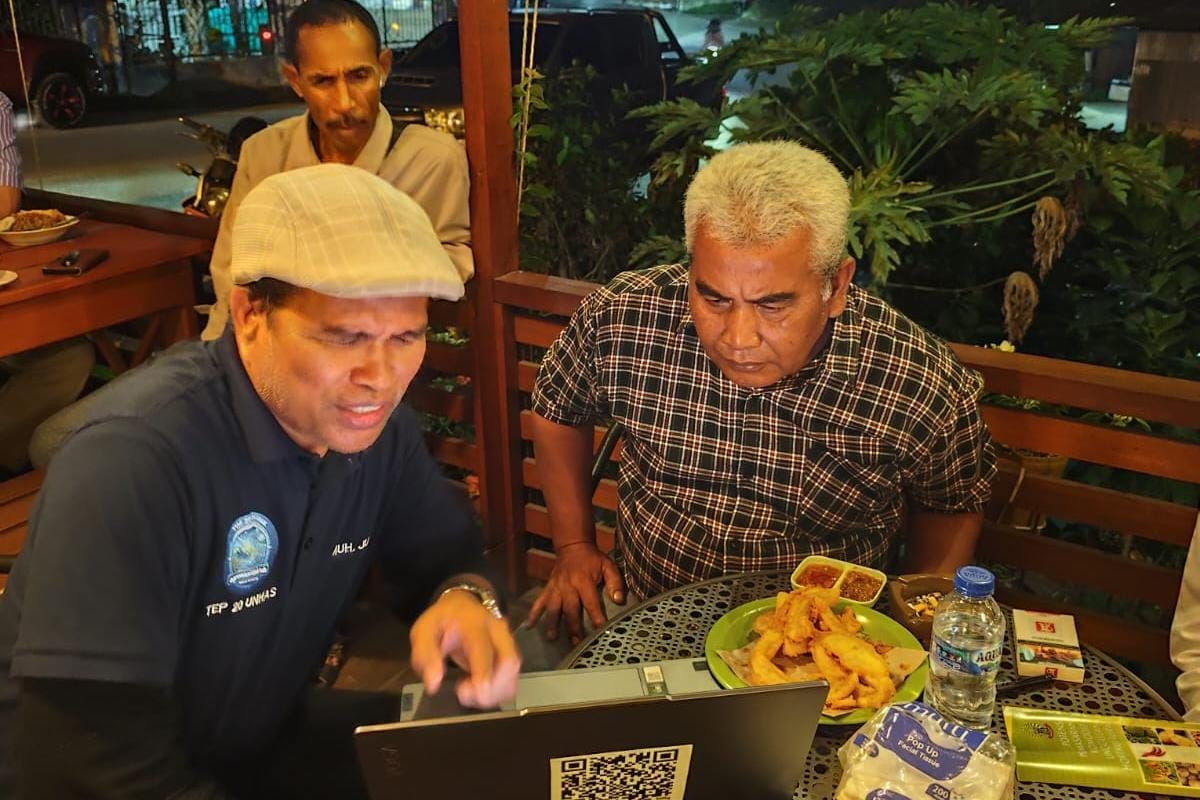
Makassar (ANTARA) — Team 20 of Hasanuddin University’s (Unhas) Patriot Expedition is applying precision-farming innovations based on the Internet of Things (IoT) and Artificial Intelligence of Things (AIoT) to support the development of chilli, known locally as rica, in Weri Saharey village, Fakfak regency, West Papua.
Muhammad Junaid, head of Unhas Patriot Expedition Team 20, said in a report from Makassar on Sunday that the innovation involved installing sensor devices to monitor environmental and farmland conditions regularly and using data.
The initiative is expected to support the local government’s efforts to establish Weri Saharey as one of Fakfak regency’s chilli production centres, he added.
He said Fakfak residents’ chilli needs had so far depended substantially on supplies from outside the area, causing prices to fluctuate. Yet Weri Saharey has agricultural land that could be developed for horticultural crops.
Precision farming is an approach to agricultural management that uses data to determine crops’ needs accurately, he explained.
“The essence of precision farming is to give plants what they need, at the right time, based on data rather than mere estimates,” Junaid said.
The installed IoT devices have sensors that monitor temperature, humidity, rainfall, wind direction and speed, and light intensity.
The system also supports soil monitoring, including levels of NPK nutrients, acidity (pH) and soil fertility. All the data are integrated into an online dashboard displaying environmental conditions and the land’s suitability for chilli cultivation.
In addition to environmental monitoring, the team is developing an AIoT-based pest-monitoring system. The technology combines microclimate sensors with camera-equipped insect traps to record and help identify pest populations.
Field data are transmitted through communications networks such as LoRaWAN or mobile networks and processed using artificial intelligence (AI). The results can be used to estimate pest populations and map their distribution, enabling farmers and officials to target control measures more effectively and efficiently.
Fakfak regency Agriculture and Food Security Agency head Muhammad Soleh said the dashboard would serve as a tool to support data-based decision-making, particularly in identifying suitable agricultural land.
“In line with the instructions of the Fakfak regent, Weri Saharey will be developed as a chilli production centre in Fakfak regency. Fast and accurate decision-making therefore requires precision technology to identify areas suitable for developing chilli, bananas and maize,” Soleh said.
He said data-based technology could help the local government identify land potential more accurately, making agricultural commodity development plans more focused.
Chilli cultivation also has economic prospects for local communities. Plants can be harvested repeatedly once they reach the productive stage, and may yield crops until they are about two years old, depending on the variety and maintenance.
A farmer is estimated to be able to harvest around 60 kilogrammes of chillies in a single picking. At prices of Rp60,000 to Rp100,000 per kilogramme, gross sales could reach Rp3.6 million to Rp6 million per harvest.
Source: jawawa.id (https://jawawa.id/newsitem/unhas-patriot-expedition-team-uses-iot-and-aiot-to-boost-chilli-production-in-fakfak-1794743523)
Originally published by Antara (Indonesian) (https://www.antaranews.com/berita/5855767/tep-unhas-terapkan-iot-dan-aiot-untuk-dorong-produksi-cabai-di-fakfak), translated from Indonesian