
Unhas equips fishermen with adaptation strategies to face environmental changes
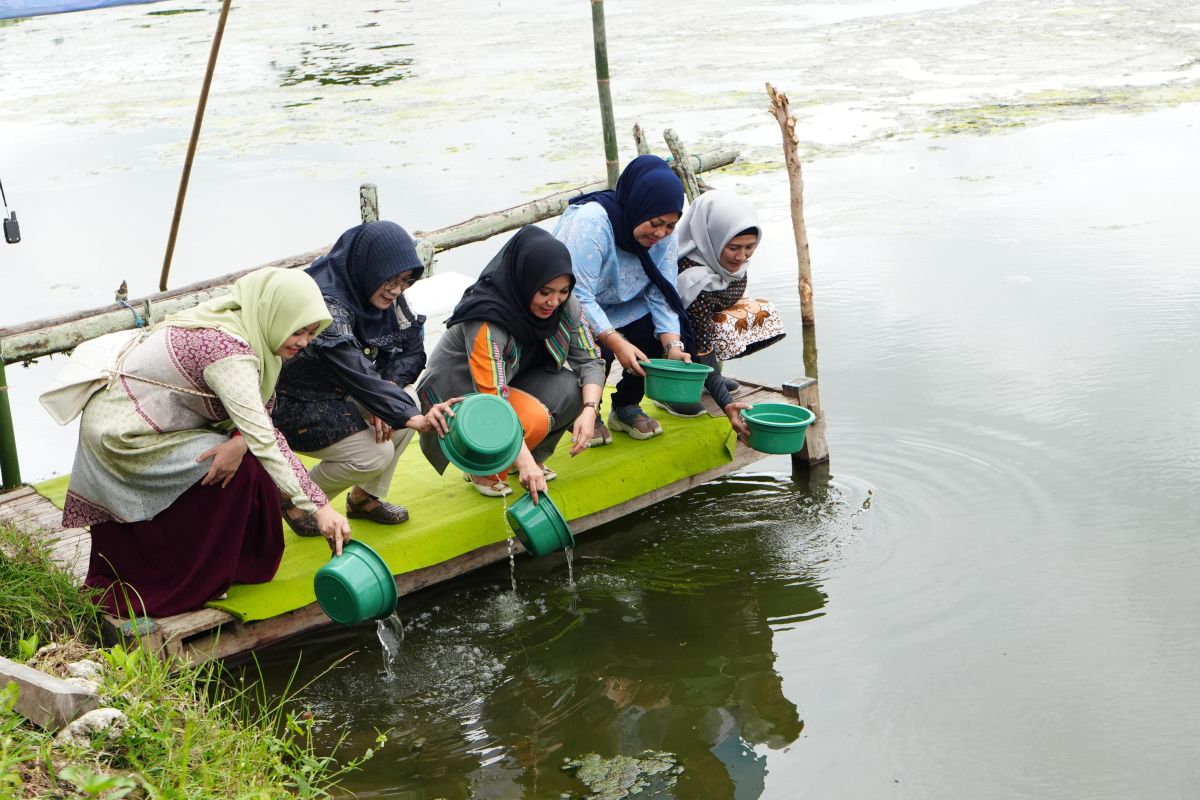
Makassar (ANTARA) - The Faculty of Marine Science and Fisheries (FIKP) at Hasanuddin University, together with Bank Indonesia (BI), has initiated training on management and environmental change adaptation for sustainable fisheries management to help fishermen avoid losses.
Muhammad Kurnia, a lecturer from the Fisheries Resource Utilisation Study Programme at FIKP Unhas, stated in Makassar on Monday that environmental change has become an unavoidable challenge in the development of the fisheries sector.
Strengthening the capacity of fishermen and aquaculture farmers is one of the strategic steps to ensure that coastal communities can anticipate various risks while maintaining the sustainability of their businesses amidst increasingly dynamic environmental conditions.
“Environmental change is no longer an issue to be faced in the future, but is already a reality directly felt by fishermen and aquaculture farmers. Therefore, the ability to adapt is a crucial factor for the fisheries sector to remain productive and sustainable,” he said.
He explained that every impact of environmental change has different characteristics and risk levels, thus requiring specific handling strategies.
Fisheries management can no longer be conducted with a uniform approach; instead, it must be designed adaptively based on the ecological, social, and economic conditions of each region.
“Adaptation efforts aim not only to maintain fishery production but also to preserve fish resource sustainability, increase the welfare of fishermen, and strengthen the food security of coastal communities,” said Kurnia.
An ecosystem-based fisheries management approach is one of the important instruments in increasing the resilience of the fisheries sector to various environmental dynamics, while maintaining the balance between productivity and resource conservation.
Meanwhile, the Director of the Mattirotasi Mitra Lestari Foundation, Muh. Ikhsan Idrus, stated that the training serves as a highly relevant learning space for coastal communities who are increasingly feeling the impact of environmental changes on their economic activities.
“We hope this educational activity can enhance the understanding of fishermen and aquaculture farmers regarding various adaptation strategies that can be applied according to field conditions. In this way, business productivity can be maintained while ensuring the economic sustainability of coastal communities,” he said.