
Unhas and IKN Explore Implementation of Research-Based Electric Vehicles
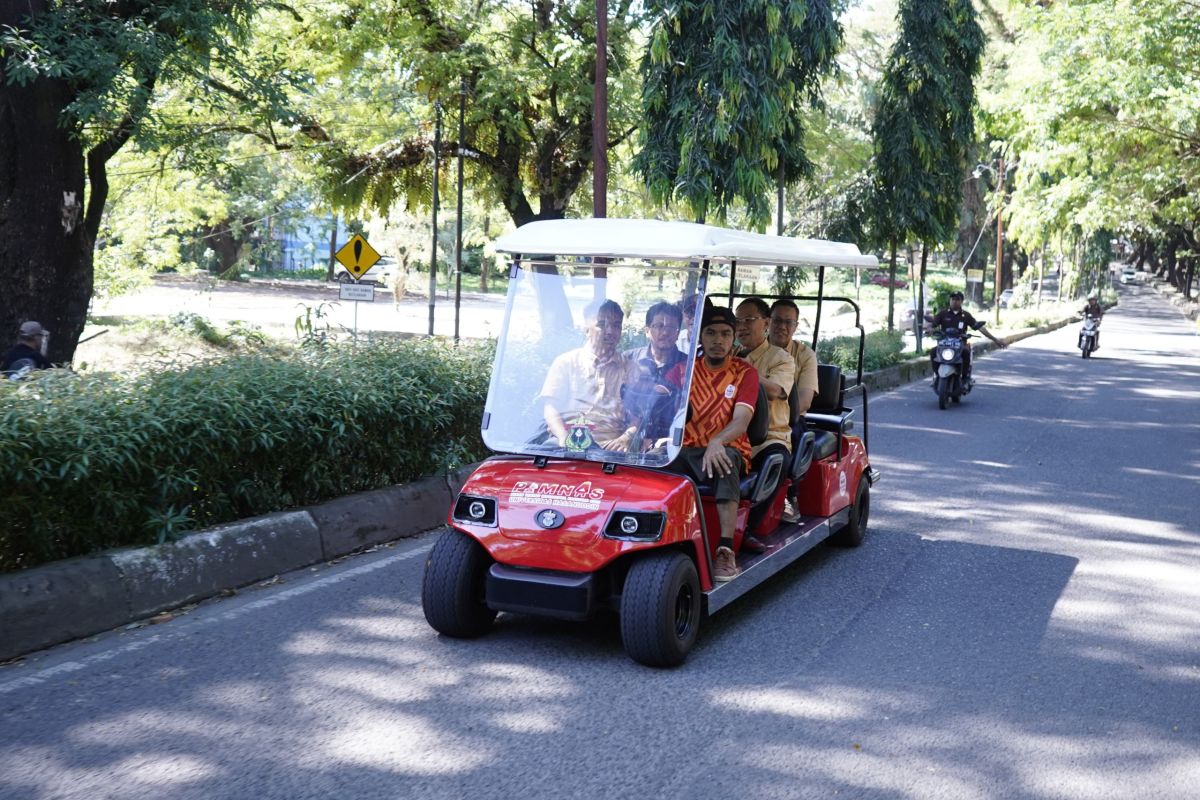
Makassar (ANTARA) - Universitas Hasanuddin and the Ibu Kota Nusantara (IKN) Authority are exploring the implementation of campus research products, particularly the development of electric vehicles, which are deemed relevant to the concept of IKN as a green and smart city.
The Director of Basic Infrastructure Facilities for IKN, Cakra Nagara, stated in Makassar on Sunday that regarding this exploration, his team has conducted direct inspections of several Unhas innovation products, including one of the electric vehicles developed by the university’s team.
According to him, this process is important to ensure technological readiness before application in the IKN area.
“We are exploring various innovations produced by Unhas, including this electric vehicle. Essentially, we want to see whether this research product can be implemented or not,” he said.
The IKN development concept, which promotes a green city and smart buildings, requires adaptive, environmentally friendly technology support that can be developed sustainably through collaboration with universities.
The Dean of the Faculty of Engineering at Unhas, Prof Muhammad Isran Ramli, explained that the development of electric vehicles is part of the university’s strategic programme that began last year. Following instructions from the Rector of Unhas, a special team was formed to develop electric vehicles as part of strengthening impactful campus innovations.
Unhas has launched three types of electric vehicles: shuttle car, executive car, and clean car for waste transport.
“One of the targets of an impactful campus is how the downstream results of Unhas research can be used by partner institutions, government, industry, or the business world,” explained Prof Isran.
Previously, the IKN Authority and Unhas signed a memorandum of understanding in April 2026, covering cooperation in education, research, and community service to support the development of the Ibu Kota Nusantara.
The scope of this cooperation includes human resource development, empowerment of expertise through education and training, implementation of scientific studies and research, as well as various other strategic programmes.