
Unhas and CSIS Discuss Decarbonisation of Electric Vehicle Battery Industry
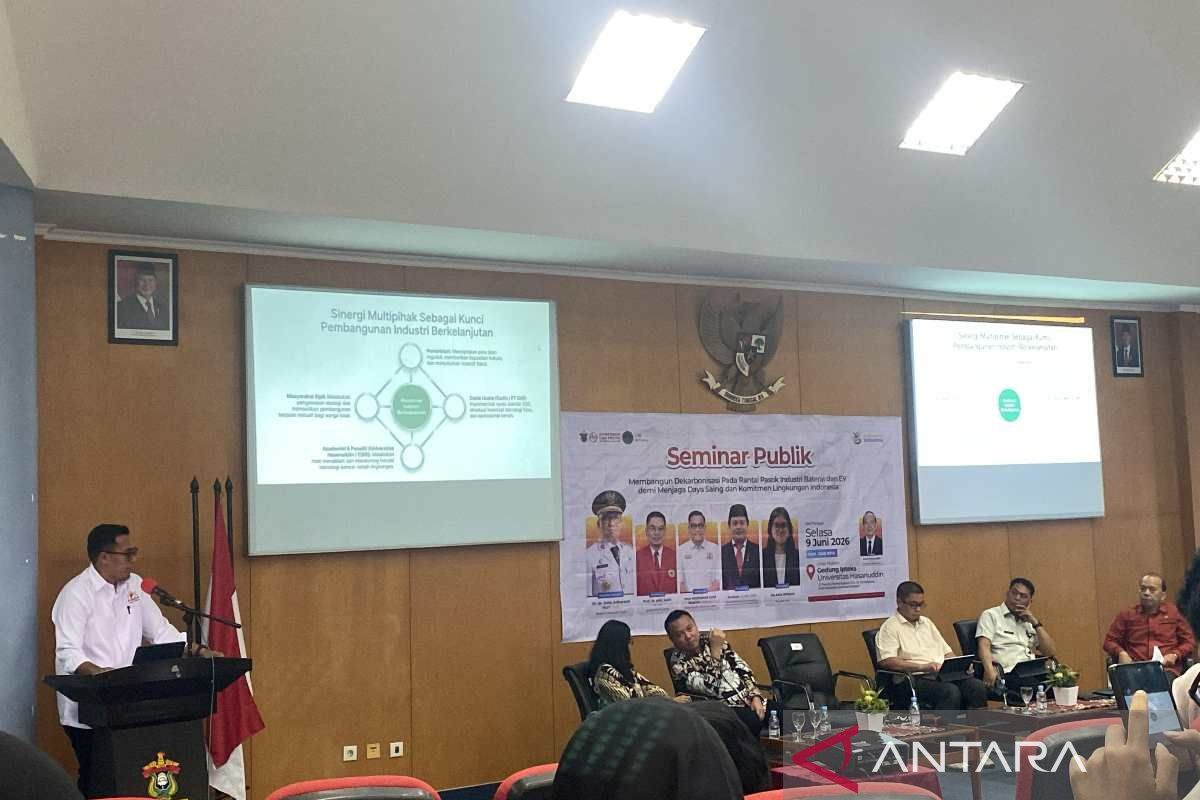
The Department of Political Science at the Faculty of Social and Political Sciences (FISIP) of Universitas Hasanuddin (Unhas), in collaboration with the Centre for Strategic and International Studies (CSIS), held a public seminar discussing the decarbonisation of the electric vehicle battery industry. Opening the seminar in Makassar on Tuesday, Unhas Secretary Prof Ir Sumbangan Baja affirmed the university’s commitment to supporting the decarbonisation agenda through strengthening battery research, carbon credit studies, and the development of electric vehicles on campus. “Decarbonisation is a strategic issue that cannot be separated from efforts to tackle climate change and maintain the sustainability of national industrial development,” he stated. Prof Dr Sumbangan Baja noted that the activity aimed to discuss the challenges and opportunities of decarbonisation in the development of Indonesia’s battery and electric vehicle (EV) industry, particularly amidst the rapid downstream processing of the nickel industry, which forms the backbone of the global battery supply chain. Meanwhile, North Morowali Regent Delis Julkarson explained that Indonesia has a significant opportunity to become a major player in the global electric vehicle battery industry, as it controls approximately 53 per cent of the world’s nickel reserves. However, he cautioned that successful downstream processing must be accompanied by efforts to reduce carbon emissions through the development of renewable energy, the application of carbon capture, utilisation and storage (CCUS) technology, and adherence to increasingly stringent global environmental standards. CSIS researcher Via Azlia Widiyati, in her presentation, highlighted the importance of building a green value chain within Indonesia’s electric vehicle industry. According to her, the success of nickel downstream processing does not automatically make Indonesia superior in the EV industry if it still relies on coal-based energy. She emphasised that decarbonising the supply chain, reducing the use of captive coal-fired power plants, and applying Environmental, Social, and Governance (ESG) principles are crucial factors for enhancing the national industry’s competitiveness in the global market. Meanwhile, Chairman of the North Morowali Chamber of Commerce and Industry (Kadin), Ince Mochamad Arief Ibrahim, stressed that decarbonisation is not a barrier to downstream processing but a primary condition for Indonesian nickel products to remain relevant and competitive. He introduced the Green Nickel concept, which places sustainability as an integral part of the entire industrial supply chain, from mining activities to waste management and battery recycling. Dean of FISIP at Universitas Hasanuddin, Prof Dr Sukri, reviewed the decarbonisation issue from a public policy perspective. He explained that sustainable development always faces a trilemma between economic benefit, environmental security, and long-term sustainability. According to him, the success of decarbonisation is determined not only by technology and investment but also by the ability to place the state, society, the business world, and the environment on an equal footing in the decision-making process.