
Uneven Fish Consumption in Indonesia: BPOM Chief Identifies the Main Causes
Jakarta, CNBC Indonesia — Indonesia is known as an archipelagic nation with abundant marine resources. However, fish consumption remains uneven across the country.
National Food and Drug Authority (BPOM) chief Taruna Ikrar said there was a significant gap in fish consumption, particularly between Sulawesi, Java and Papua. Data from Statistics Indonesia’s (BPS) 2025 National Socio-Economic Survey (Susenas) show that North Sulawesi had the highest consumption, at 48.97 kilograms per capita a year.
By contrast, Highland Papua had the lowest level, at just 10.66 kilograms per capita a year. In several densely populated provinces on Java, fish consumption ranged from 16 to 27 kilograms per capita a year.
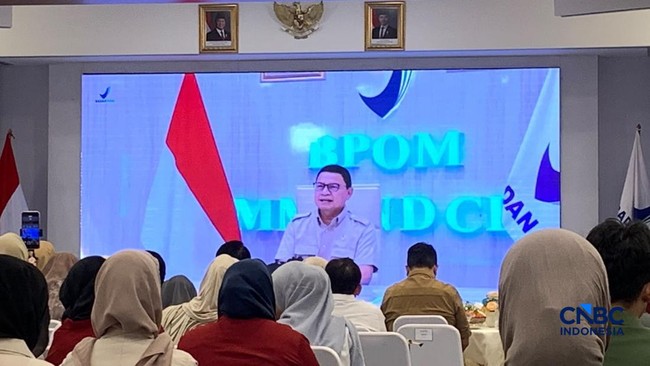
“Uneven consumption of fresh fish may also point to distribution and cold-chain challenges, which mean access to fresh fish is not equal, particularly in non-coastal areas,” Taruna said in remarks at the talk show “From the Sea to the Plate: Time to Consume Marine Products, for Health, for the Future” at BPOM’s Bhineka Tunggal Ika Building in Jakarta on Tuesday (27 October 2026).
Taruna said the country’s substantial fisheries production had not yet translated into evenly distributed consumption. Fish is an animal-protein source that also contains a range of nutrients important to the body.
National fisheries production reached 26.76 million tonnes in 2025, Taruna said, while seaweed production totalled 11.65 million tonnes.
This production potential shows that Indonesia has marine resources that could help meet the population’s nutritional needs. Although fish consumption is trending upwards, ensuring it is more evenly distributed remains a challenge.
One obstacle is delivering fresh fish to areas far from production centres. Fish spoils easily if it is not handled and stored at the right temperature, so distribution requires cold-chain systems to maintain quality and safety.
This can pose particular difficulties for areas far from the coast or with limited storage and transport facilities. Taruna said technological innovations in seafood processing could help widen access to fish.
One example is commercial sterilisation technology used to produce canned fish. It gives fish a longer shelf life without requiring continuous refrigeration, provided the packaging remains intact and the product is stored according to instructions. This allows fisheries products to be distributed farther from production centres.
“Processing innovation is essential so that processed marine foods can reach even the most remote parts of the country,” Taruna said.
Ishartini, acting head of the Marine and Fisheries Product Quality Control and Supervision Agency (BPPMHKP), said the government was encouraging people to eat more fish through the Gemarikan movement, or the Movement to Promote Fish Eating. The programme aims to establish the habit of eating fish from early childhood through adulthood.
“The government is also involving various parties, including schools, families, local governments and industry players, to expand education about the benefits of eating fish,” Ishartini said.
By increasing consumption and making fisheries products more widely accessible, Indonesia’s marine resources are expected to make a greater contribution to meeting the population’s nutritional needs.
Meanwhile, Lusia Mira Buanawati, representing the Indonesian Canning Fish Association (APIKI), said the country’s canned-fish industry had a long history. APIKI was established in 1993, and more than 50 fish-canning businesses operate across several parts of Indonesia.
“There is an association for the fish-canning industry, which was established in 1993. There are more than 50 canneries in Indonesia, located in places including Banyuwangi in East Java, Bali and Sulawesi,” Mira said at the same event.
Mira said canned fish undergoes several processing and inspection stages before reaching consumers. The process follows food-safety standards, from the selection of raw materials through to packaging.
The canning industry is also continuing to introduce product varieties to encourage fish consumption. Options include not only sardines, but also mackerel, tuna and salmon.
“If there are no sardines, there is mackerel, tuna or salmon. People can choose according to their tastes and needs. There are also various innovations, including products with tomato or chilli, or simply water and salt,” Mira said.
The variety of products can offer people a convenient way to eat fish, she said, particularly when fresh fish is difficult to obtain.