
UNESCO Session: Indonesia Calls for Child Protection in the AI Era
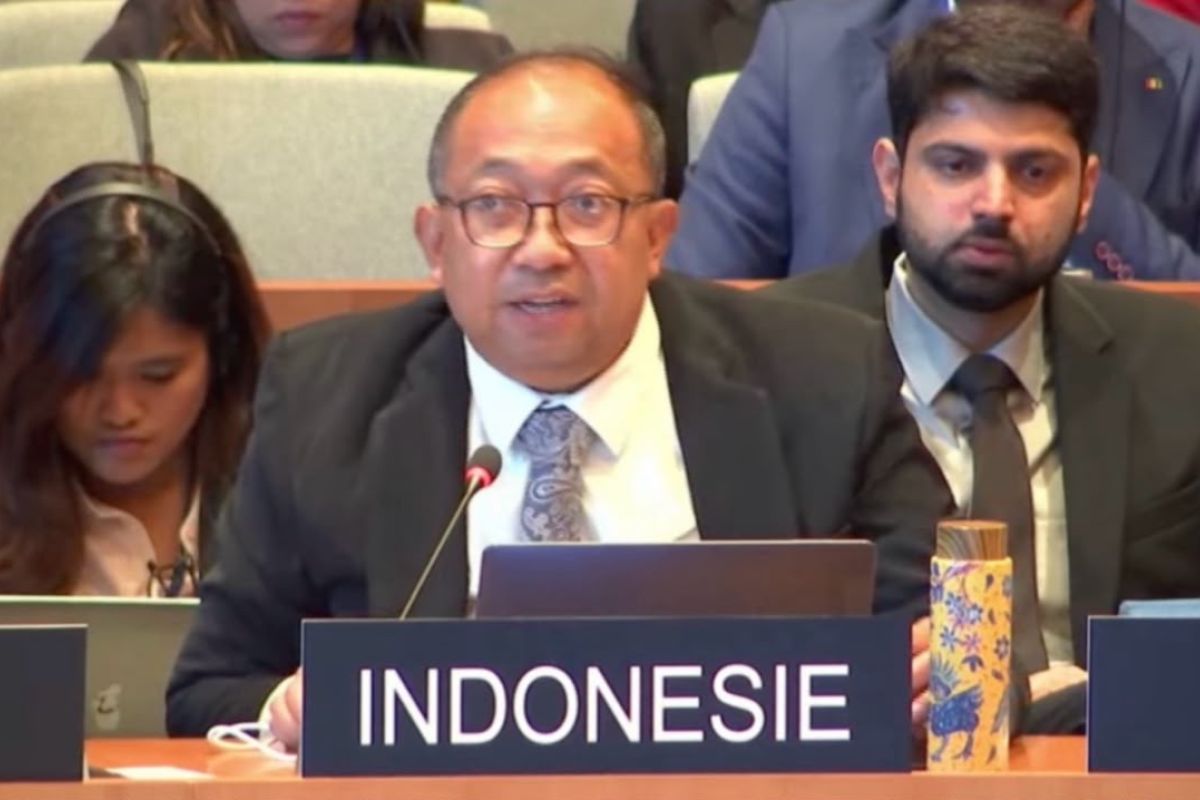
Jakarta (ANTARA) - Indonesia has called for global policies on children’s and young people’s use of digital devices and artificial intelligence (AI) to take account of differences in geography, culture and educational conditions, as well as the digital divide.
On the fifth day of the 225th session of UNESCO’s Executive Board in Paris on Friday (16 October), Indonesia’s Deputy Permanent Delegate to UNESCO, IGAK Satrya Wibawa, reaffirmed Indonesia’s commitment to supporting the initiatives in order to build a healthy, safe and inclusive digital ecosystem.
“The question is not simply whether children may use digital devices, but when, for what purpose and at which stage of development technology provides optimal educational benefits,” Satrya said, according to a written statement issued on Saturday.
“Policies must be based on scientific evidence, not merely on concerns about technology,” he stressed.
The session’s agenda included two important initiatives concerning digital technology and the protection of young people.
The first discussion focused on a proposal put forward by Pakistan, entitled UNESCO Guidelines on the Use of Digital Devices by Children and Young Adults and Its Impact on Foundational Learning and Cognitive Abilities. Indonesia and several other UNESCO member states also support the proposal.
It highlights the need for an in-depth international study of the effects of smartphones, tablets and other digital devices on children’s literacy and numeracy, attention spans, critical thinking and cognitive development.
The study would also examine screen time, the quality of learning, and comparisons between digital and non-digital learning methods.
Satrya said UNESCO emphasised that technology should support, rather than replace, human interaction in education.
The document also underscores the need for a comprehensive assessment, given that research evidence on the effects of digital devices has so far been inconclusive.
Indonesia is also advocating the use of disaggregated, context-specific data in developing international guidelines, so they are relevant to each country’s circumstances.
“There is no single policy that is automatically right for every country. In some areas, excessive use of digital devices can disrupt learning. In others, technology is the main bridge enabling children to access education. Differences in geography, culture, connectivity and the digital divide must form the basis for decision-making,” Satrya said.
At the national level, Indonesia has incorporated children’s safety, privacy and best interests into digital governance through Government Regulation No. 17 of 2025 on the Governance of Electronic Systems for Child Protection (PP TUNAS).
Empowerment and risks in the AI era
The second discussion concerned a UNESCO document on plans to develop an international standard-setting instrument for the protection and empowerment of young people in AI-based digital environments.
This initiative has a broader scope than the first proposal, encompassing social media, algorithms, digital games, virtual worlds, chatbots and AI companions.
UNESCO has identified a number of real risks posed by the AI era to young people, including technology dependence, information manipulation, algorithmic discrimination, harm to psychological wellbeing and a decline in independent thinking.
The proposed policy instrument would take the form of a recommendation and is scheduled for consideration at UNESCO’s General Conference in November 2027 under an accelerated procedure.
UNESCO has also been asked to conduct an international study involving a global network of university researchers, including UNESCO Chairs and the UNITWIN network, before submitting a report and draft guidelines to the 226th session of the Executive Board.
Satrya, who is also a lecturer in communications at the Faculty of Social and Political Sciences at Airlangga University, said the policy-making process must involve a broad range of stakeholders, including schools, families, civil society and technology companies.
He said digital and AI literacy should be integrated as a fundamental element of education, rather than treated as an additional skill.
“Child protection policies for the digital sphere must include transparent oversight mechanisms, involve the public and ensure that technology is used to strengthen children’s critical abilities,” he stressed.
Indonesia hopes the two UNESCO initiatives will produce global guidance that upholds human rights, reduces the digital divide and enables young people to participate actively and wisely in the digital transformation.
“Our goal is not to keep children away from technology, but to ensure they can use it safely, critically, creatively and responsibly. Protection and empowerment must go hand in hand,” Satrya said.
Source: jawawa.id (https://jawawa.id/newsitem/unesco-session-indonesia-calls-for-child-protection-in-the-ai-era-1792259432)
Originally published by Antara (Indonesian) (https://www.antaranews.com/berita/5794077/sidang-unesco-indonesia-dorong-perlindungan-anak-di-era-ai), translated from Indonesian