
Unej Students Transform Coffee Skin Waste into Antioxidant-Rich Snack
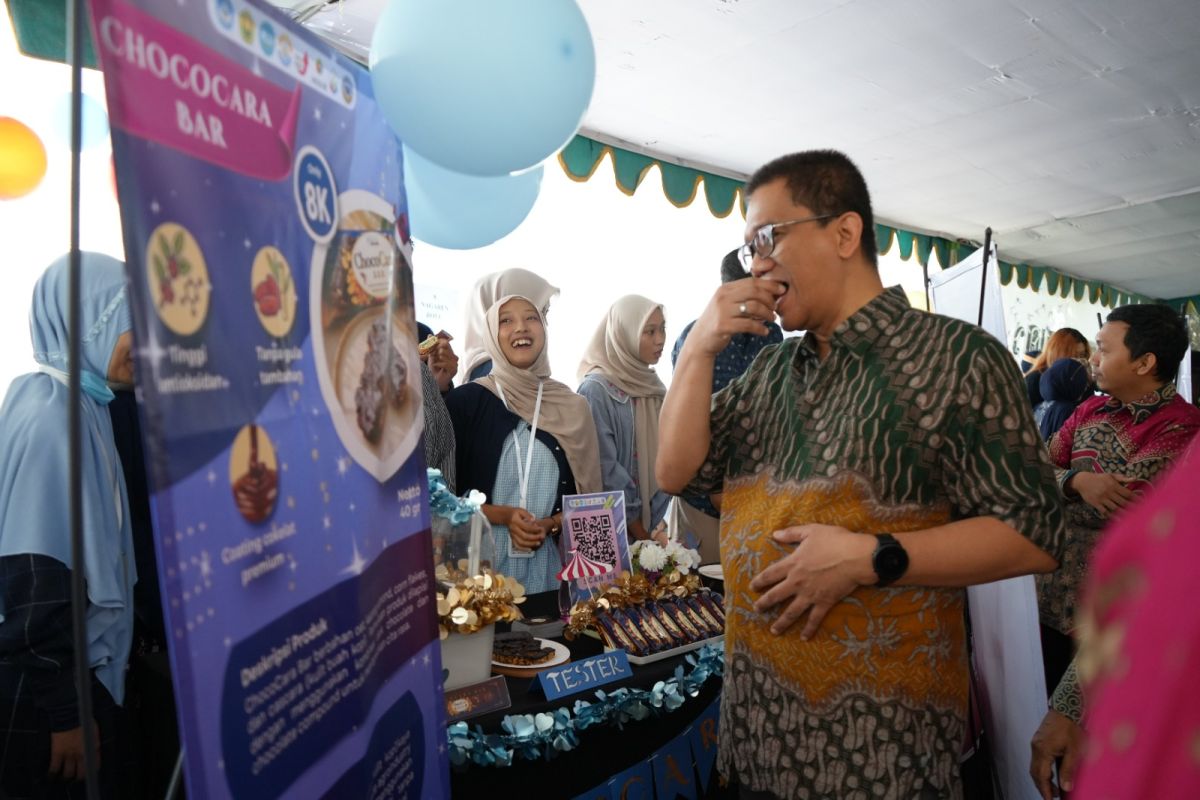
Jember, East Java - Students from the Food Product Technology Study Programme, Faculty of Agricultural Technology at the University of Jember (Unej), East Java, have transformed coffee husk waste into an antioxidant-rich snack known as ChocoCara Bar.
This innovative product, a snack bar based on cascara (dried coffee husks) and oats, was launched during the ‘2026 New Food Product Exhibition’ held in the parking area in front of the Faculty of Agricultural Technology Building C, Unej, Jember, on Wednesday.
“I highly appreciate the creativity of the FTP students who are keen to identify opportunities in utilising local commodity waste to create high-value economic functional products,” said the Rector of Unej, Iwan Taruna, while inspecting the event.
According to him, such innovation serves as tangible proof that the academic processes at Unej are capable of directly responding to challenges within society and industry. “The steps taken by FTP students to transform coffee by-products into high-quality healthy snacks are a concrete form of downstream campus research that provides solutions,” he added.
He stated that Unej is fully committed to supporting creativity that bridges the academic world with market needs and synergy with industrial partners, while simultaneously accelerating the achievement of the university’s Key Performance Indicators (KPI), particularly in producing graduates ready for professional work and entrepreneurship.
Laily Ratri Nurhaliza, a member of the ChocoCara Bar development team, explained that the product idea emerged from observing Indonesia’s potential as one of the world’s largest coffee producers, which generates vast amounts of coffee husk waste.
“So far, the use of cascara in society remains very limited, usually only processed into tea. High demand for coffee will undoubtedly result in even more coffee husks,” she said.
Furthermore, cascara itself contains high levels of bioactive compounds and antioxidants, so her team wanted to introduce cascara through a snack bar to raise public awareness that this ingredient possesses significant value, despite being an underutilised by-product.
“In its production process, ChocoCara Bar uses a combination of almonds, roasted oats, cornflakes, cascara, dates, 90 per cent dark chocolate, and dark chocolate compound,” she noted.
The combination of these ingredients produces a snack with a distinctive chocolate flavour and a crunchy texture. The product also supports the concept of sustainability as it is made without any added sugar; the sweetness and binding properties are derived naturally from dates.
However, Laily admitted that the development process was not without challenges, particularly in maintaining the snack bar’s texture to ensure it remains firm and crunchy despite the high moisture content in the dates.
Additionally, the development team explained that although there is no added sugar, the sugar content in one bar of ChocoCara Bar (net weight 40 grams) comes purely from the natural sugars in dates and the dark chocolate compound.
The 2026 New Food Product Exhibition showcased 24 local food innovations across several categories. In the healthy beverage category, there were products such as Es LumiSoy (butterfly pea flower moss soybean milk) and Purple Oat. The crunchy snack category featured Opakame (edamame crackers), EDACRIS, CRUBE, and Chibee Rolls. Meanwhile, the modern snack category presented CARROFIN (vegetable muffins), BluAyu Brulee, Nagaren Roll, Vesavo, and the functional product Sachika (made from sagon, chia seeds, and dates).