
Unej expert hopes 2027 state budget can upgrade Indonesia's economy
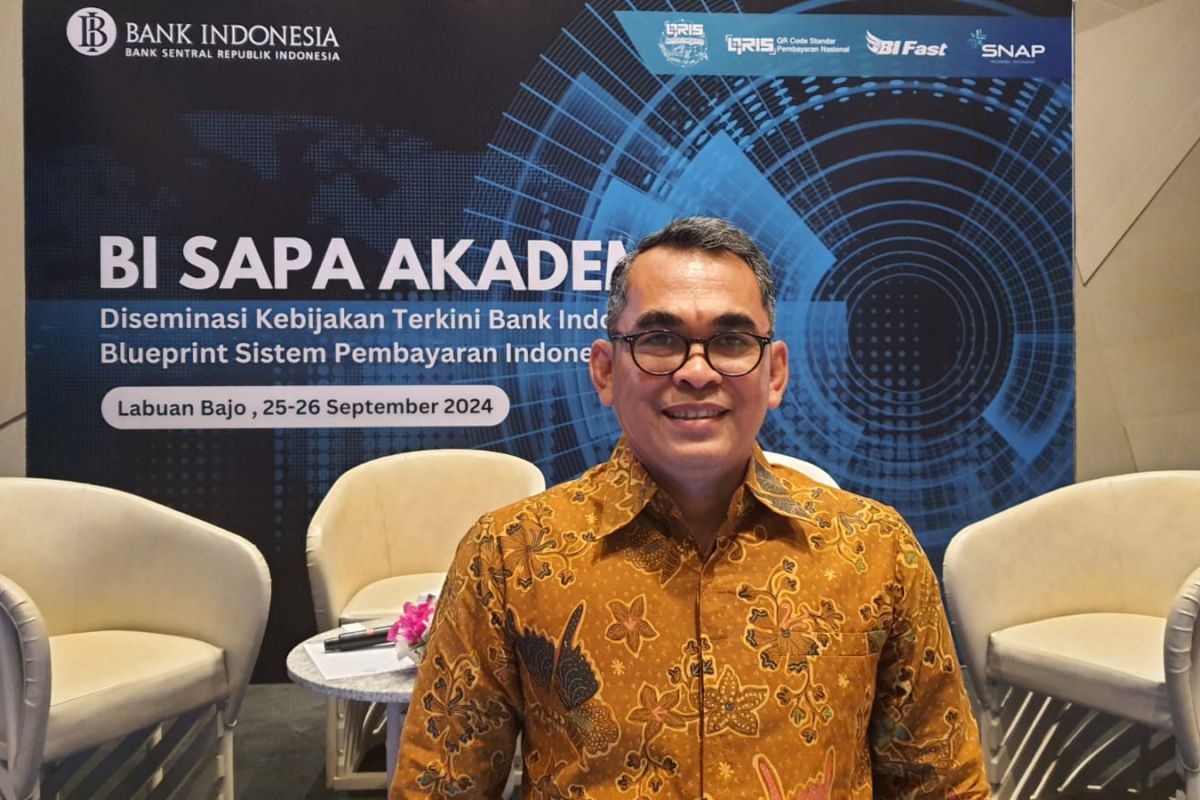
The credibility of the 2027 state budget (RAPBN) is ultimately determined not by how high or low its targets are, but by how clearly the government demonstrates a growth engine that can upgrade the economy without sacrificing fiscal health, according to an economist at the University of Jember (Unej), Adhitya Wardhono PhD. “The credibility of the 2027 RAPBN is ultimately determined not by how high or low its targets are, but by how clearly the government shows a growth engine that can upgrade the economy without sacrificing fiscal health,” he said in Jember Regency, East Java, on Saturday.
President Prabowo Subianto has set an economic growth target of 6 percent for Indonesia in 2027, higher than the 5.4 percent growth target in the 2026 state budget. However, the 6 percent growth target for 2027 is very challenging, especially at a time when the government also wants to reduce the deficit to 2.40 percent of GDP. “The combination of higher growth and a lower deficit is actually positive, but it requires a change in the sources of growth,” said the lecturer at Unej’s Faculty of Economics and Business.
According to him, 6 percent growth cannot rely too heavily on expanding government spending. Instead, it must be increasingly supported by massive private investment and clear productivity in economic sectors, and it also needs a boost from value-added exports. Moreover, growth in the first half of 2026 was still around 5.45 percent, so a more concrete explanation is needed regarding the additional sources of growth towards 6 percent.
He said that positioning downstreaming and industrialisation as one of the eight priorities of the 2027 RAPBN is the right direction because Indonesia does need to move from a commodity-based economy towards higher value-added activities. However, the next stage should not simply be about increasing the number of downstreaming projects, but rather improving the quality of downstreaming. The government therefore needs to start measuring how much value added actually remains in the country, how many quality jobs are created, and how large the use of domestic inputs is.
“Equally important is how much technology transfer can be obtained from such downstreaming. Downstreaming that is highly capital-intensive but creates few jobs and has low domestic linkages risks becoming an enclave economy,” he said. For that reason, he continued, it needs to be emphasised that fiscal support and financing through state instruments, including Danantara, must increasingly be based on economic additionality, meaning the state enters when an investment truly creates social and economic benefits greater than the public costs incurred.
Adhitya also assessed that the poverty target set by the government is a positive direction, especially as the government is beginning to expand the digitalisation of social protection and the updating of the National Socio-Economic Data (DTSEN). However, the challenges remain significant because the digitalisation of Family Hope Programme (PKH) registration has only been running in 153 regencies and cities, with around 3 million families registered towards a target of 49 million families.
From a development economics perspective, the success of social protection cannot be judged merely by the increase in recipients or a decline in the headline poverty rate. What matters more is whether households are able to escape poverty sustainably and do not fall back into poverty when hit by shocks. “Social assistance must be increasingly integrated with skills improvement and access to jobs. The state budget should not only be effective at preventing people from falling deeper, but must also be able to create a ladder so that people can move up in class,” he said.
Source: jawawa.id (https://jawawa.id/newsitem/unej-expert-hopes-2027-state-budget-can-upgrade-indonesias-economy-1786776823)
Originally published by Antara (Indonesian) (https://www.antaranews.com/berita/5695931/pakar-unej-harapkan-rapbn-2027-membawa-ekonomi-ri-naik-kelas), translated from Indonesian