
Undisbursed Loans Hit Rp 2,548 Trillion, Bank Indonesia Explains Current Demand and Supply Conditions
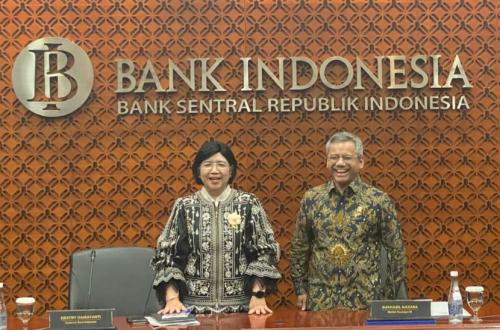
The figure for undisbursed loans recorded a level of Rp 2,548 trillion in July 2026, an increase of 7.8 per cent compared to the same period last year. Responding to this, Bank Indonesia (BI) assesses that the absorption of these idle loans will occur gradually, in line with improving demand and supply conditions.
“We are indeed seeing undisbursed loans remaining relatively flat at around the Rp 2,500 trillion mark. Why is this? There are two sides: demand and supply. From the demand side, while credit growth through the second quarter was largely driven by government-led initiatives, our latest data shows the private sector is beginning to move upwards,” said Destry during the Monetary and Fiscal Synergy Press Conference at the BI Complex, Jakarta, on Thursday (2026/9/24).
Destry noted that with positive movement in the private sector, the demand side is starting to revitalise for credit uptake. This led the Bank Indonesia Board of Governors in the September 2026 meeting to decide on maintaining the interest rate at 5.75 per cent.
“Because we see economic potential, as we are rising on the private sector side. Therefore, even though our focus is on stability, we are using a different approach; rather than using interest rates, we are using approaches such as hedging costs and so on,” he explained.
Regarding the supply side, Destry explained the concept of bank risk appetite, which refers to the level and type of risk banks are willing to undertake to achieve business and profit targets.
“We see that because demand was somewhat weak previously, instead of disbursing loans, banks have been placing funds into Securities (SSB), both in SBN (Government Securities) and SRBI (Bank Indonesia Rupiah Securities),” he said.
Consequently, the Financial System Stability Committee (KSSK) has discussed this issue. Among the policies introduced is the deepening of the money market through the Macroprudential Liquidity Incentive Policy (KLM).
“Why? Because for banks that allocate too much of their liquid assets in the form of SSB, such as SBN or SRBI, we will provide disincentives in the form of their GWM (Reserve Requirement). In other words, we will not provide GWM incentives to those banks. Meanwhile, for banks whose SSB holdings are relatively lower—we currently set this at 19 per cent of their total Third-Party Funds (DPK)—we will provide incentives, namely a reduction in the GWM,” he explained.
Destry stated that this policy will encourage increased liquidity for banks as they disburse loans. He noted that the measure is being implemented granularly.
“We know that Himbara (State-Owned Banks) are currently the most active. However, we also see that for some banks, demand is starting to emerge. As their credit appetite improves and alongside the incentive and disincentive systems we have implemented, this should encourage them to resume credit disbursement,” he explained.
Furthermore, Destry noted that the latest banking credit growth as of August 2026 reached 13.65 per cent year-on-year (yoy). This figure increased from the July 2026 growth rate of 13.58 per cent (yoy). Based on usage groups, credit development was supported by investment credit, working capital credit, and consumer credit, which in August 2026 grew by 25.11 per cent (yoy), 11.45 per cent (yoy), and 5.07 per cent (yoy) respectively.
“Investment credit is growing very highly, including working capital credit. This is actually a good sign, as it means credit growth is flowing into productive sectors. This serves as a signal to us that economic activity continues to circulate, with economic capacity expanding due to the availability of investment credit,” he said.
Source: jawawa.id (https://jawawa.id/newsitem/undisbursed-loans-hit-rp-2-548-trillion-bank-indonesia-explains-current-demand-and-supply-conditions-1790308468)
Originally published by Republika (https://ekonomi.republika.co.id/berita/tlwfbw349/kredit-nganggur-tembus-rp-2548-triliun-bi-jelaskan-kondisi-demand-dan-supply-terkini), translated from Indonesian