
Undira and Mercu Buana Strengthen Assisted Village Empowerment Through Technology
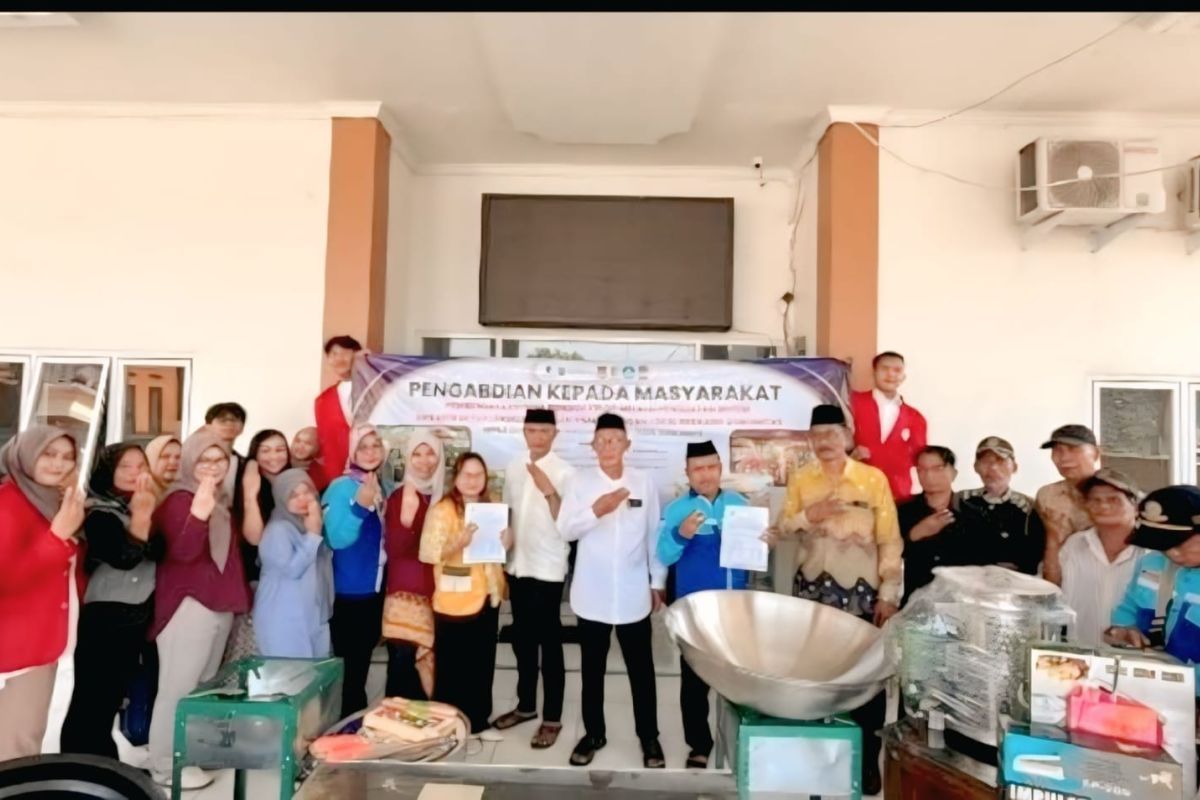
Universitas Dian Nusantara (Undira) and Universitas Mercu Buana (UMB) have strengthened their collaboration in implementing the Assisted Village Empowerment Programme (PDB) by handing over appropriate technology equipment to the community of Pondok Kelor Village, Sepatan Timur District, Tangerang Regency. The handover of the appropriate technology equipment marks the implementation phase of the programme funded by the Ministry of Higher Education, Science and Technology (Kemendiktisaintek).
Desiana Vidayanti, Head of the Assisted Village Empowerment Programme Team from Universitas Mercu Buana, stated that the handover is the beginning of the implementation of a system that has been built together with the community over the past several months. The equipment will be utilised by the Karang Taruna youth organisation of Pondok Kelor Village for community-based waste management and to revive the planting of moringa as the village’s identity. Meanwhile, a local food business group under the Village-Owned Enterprise (BUMDes), chaired by Nani Setiawati, received equipment to support the improvement of quality and production capacity of local food based on cassava and moringa.
“This is not just a handover of equipment. This is the beginning of the implementation of a system built together with the community. The hope is that waste management will become more organised, community businesses will grow, and gradually the identity of Pondok Kelor Village as a village closely associated with the moringa plant can be revived,” said Desiana. The PDB programme is carried out by Universitas Mercu Buana as a grant recipient from the Directorate of Research and Community Service (DPPM) of Kemendiktisaintek for the year 2026, involving cross-disciplinary lecturers from Undira.
Pondok Kelor Village was selected because it still faces issues with household waste management, lacking an organised system for collection, transportation, sorting, and processing. On the other hand, the moringa plant, which was once the village’s identity, is increasingly rare due to changes in land use and has not been optimally utilised as a nutritious food source or economic commodity for the community. According to Desiana, the PDB programme began in April 2026 with coordination with the village government, identification of community needs, mapping of potentials and problems, and the formulation of an empowerment plan with both partners.
On 12 June 2026, the team conducted a programme socialisation involving the village government, heads of neighbourhood and community units, community leaders, Karang Taruna, business groups under BUMDes, and residents. In addition to providing education on community-based waste management and the movement to revive moringa as the village’s identity, the activity also included training on financial literacy, simple bookkeeping, business management, and capacity building for local food business actors. Mentoring continued through a Focus Group Discussion with Karang Taruna to develop a community-based waste management service system, operational mechanisms, role distribution, and a movement to replant moringa in residential areas. The local food business group also received training on production standards, hygiene, and product quality improvement.
Sri Hesti, a member of the PDB programme team from Undira, said the success of community empowerment is largely determined by the active involvement of the community itself. “Waste management, the moringa planting movement, and local food business development cannot be supported by equipment alone. What is more important is building community awareness and participation so that the programme can run independently after the mentoring period ends,” she explained. Meanwhile, Pondok Kelor Village Head Junaedi expressed appreciation for the collaboration between the two universities, as it addresses the community’s needs in waste management while developing the potential of the moringa plant as the village’s identity.
The Assisted Village Empowerment Programme in Pondok Kelor Village is designed to last for three years. The first year focuses on building the foundation of the waste management system, the moringa planting movement, and strengthening the capacity of local food business groups. The second year is directed at strengthening operations and business development, while the third year focuses on strengthening village institutions so that the system can run independently and become a model for peri-urban village empowerment that can be replicated in various regions across Indonesia.