
Undip Students Initiate Waste Bank in Denasri Wetan, Batang
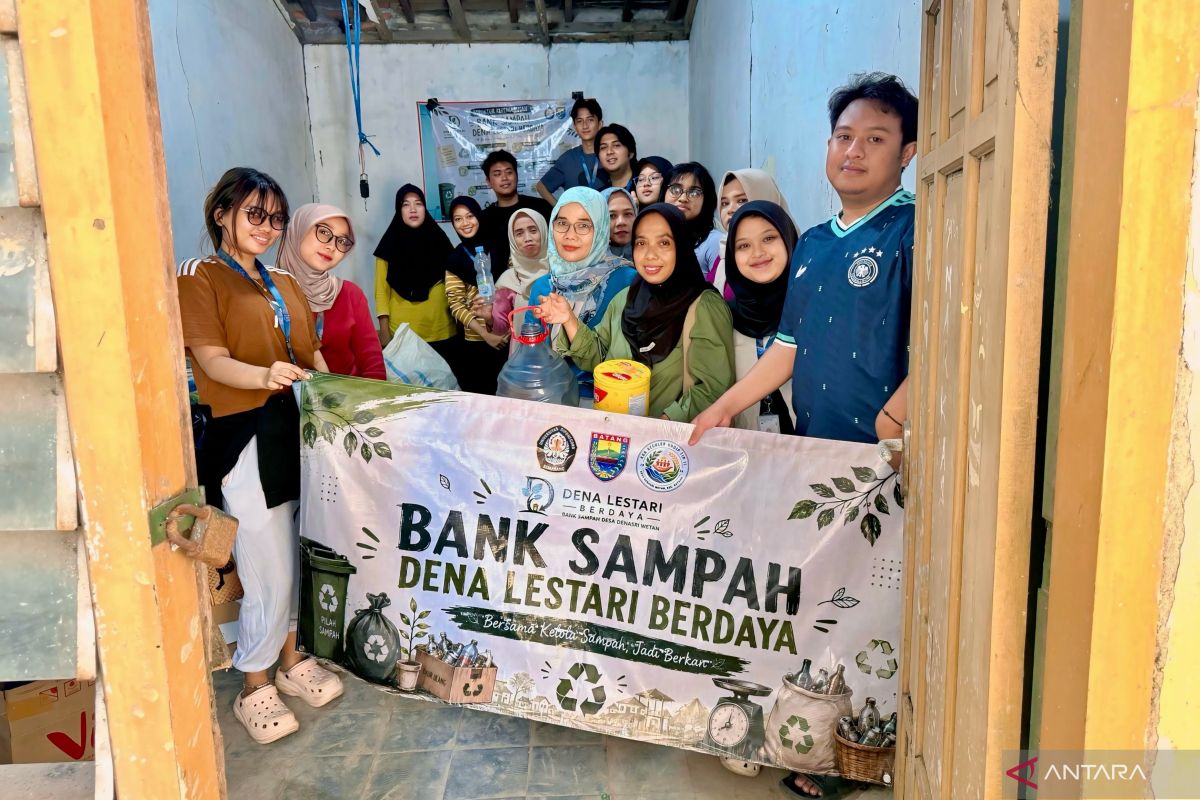
The Team 10 Community Service Programme (KKN) of Universitas Diponegoro (Undip) has partnered with the Village-Owned Enterprise (BUMDes) and PKK women’s group to initiate the establishment of the Dena Lestari Berdaya Waste Bank in Denasri Wetan Village, Batang Regency, Central Java.
Team 10 KKN Undip coordinator Jadev Abrar said in a statement in Jakarta on Wednesday that the establishment of the waste bank is not only oriented towards cleanliness issues, but also aims to build new habits within the community.
“We want the community not to see waste merely as something to be thrown away, but also as something that can be sorted and has value. That is why from the outset we involved BUMDes and PKK so that this programme can continue to run,” he said.
The student from the Faculty of Humanities expressed hope that the Dena Lestari Berdaya Waste Bank can become a shared habit in sorting and processing waste from the household level.
With sorting at the source, waste that still has economic value can be channelled and managed more optimally.
“The hope is that after the KKN ends, the community will remain consistent in sorting waste from home. This waste bank is not only a place to deposit waste, but can also become a platform for community empowerment and economic activity,” said Jadev Abrar.
“This programme is expected to provide economic benefits by turning previously worthless waste into something with saleable value,” said Ilham.
It was previously reported that the Deputy Minister of Higher Education, Science, and Technology (Wamendiktisaintek), Fauzan, emphasised the importance of universities being closer to the community and able to make real contributions to regional development.
“Universities are part of the social entity. The knowledge, research, and resources possessed by campuses must be contributed for the benefit of the wider community so as to truly deliver impactful higher education,” said Fauzan.
Deputy Minister Fauzan explained that student community service through KKN is one of many activities that universities will undertake to contribute to regional development.
Through KKN activities, he hopes universities will not operate in isolation but through collaboration. Research, community service, and innovation can be combined to accelerate the resolution of problems faced by regions.
“Universities must be able to read the needs of regions and present appropriate solutions through research and community service so that the benefits are truly felt by the community,” said Fauzan.