
Undip Hosts IPRC to Strengthen Plasma Technology Research
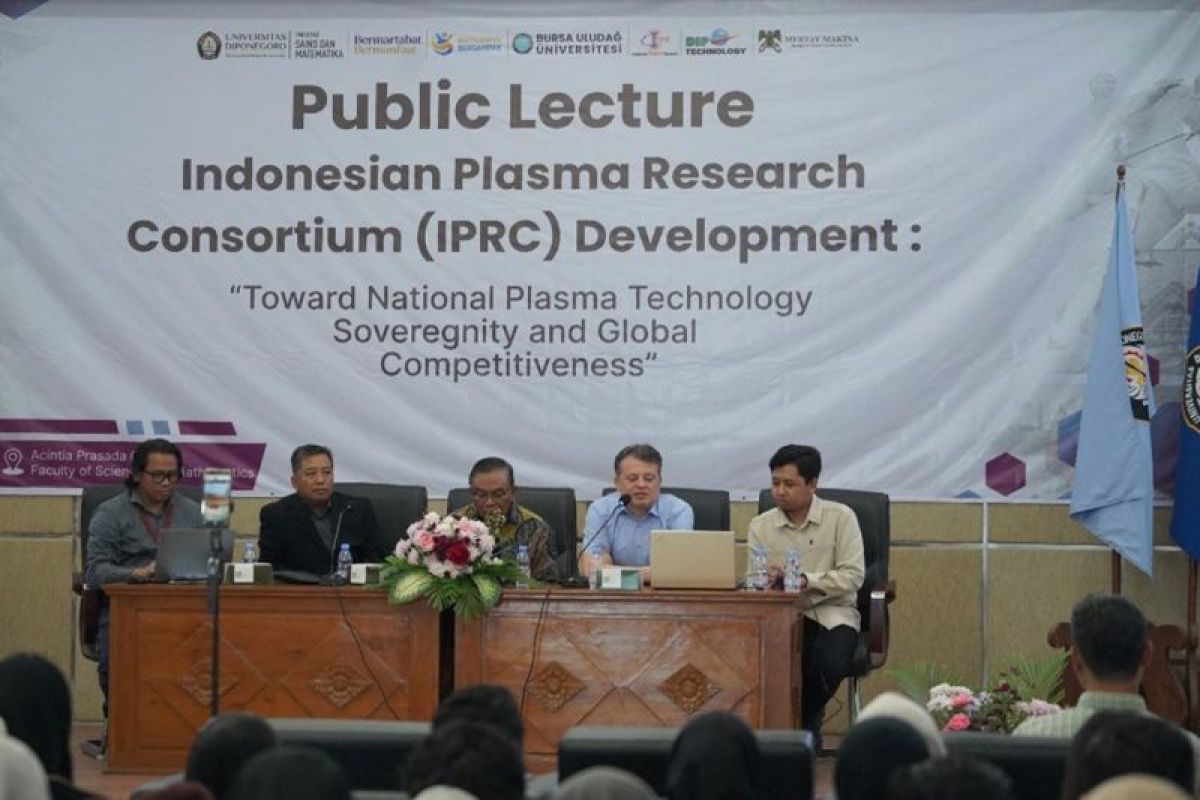
The Faculty of Science and Mathematics (FSM) at Diponegoro University (Undip) in Semarang, along with the Center for Plasma Research, is organising the Indonesian Plasma Research Consortium (IPRC) to bolster the development of plasma technology.
Undip’s FSM Deputy Dean for Resources, Dr Adi Wibowo, stated in Semarang on Friday that the event provides a vital opportunity for students and the academic community to broaden their knowledge of plasma technology.
He made these remarks during “IPRC Development: Toward National Plasma Technology Sovereignty and Global Competitiveness”, part of the IPRC agenda held from 14 to 17 April 2026.
The activities include discussions on collaboration between Undip and Bursa Uludağ University in Turkey, the signing of a cooperation agreement, and a sharing session with the Center for Plasma Research team.
He emphasised the importance of foundational scientific understanding as a basis for students to develop themselves, opening up academic and professional opportunities, and contributing to future research and plasma technology development.
Prof Kadir Çavdar from the Department of Mechanical Engineering at Bursa Uludağ University, Turkey, presented on the use of atmospheric plasma in material surface engineering, particularly to improve adhesion in polymer materials.
One key focus was polypropylene (PP), a thermoplastic material widely used in the automotive industry, such as in bumpers, interior components, body panels, fuel systems, and vehicle linings.
Meanwhile, Prof Muhammad Nur, Professor in the FSM Physics Department at Undip, explained the strategic role of cold plasma technology in various fields, from health and food to the environment, agriculture, and fisheries.
He also described plasma as the fourth state of matter after solid, liquid, and gas, consisting of ions, electrons, excited molecules, atoms, and free radicals.
Nur, who is also Head of the Central Laboratory for Plasma Research, outlined the downstreaming journey of cold plasma technology at Undip, which began in 1998 and has evolved into various ozone plasma-based products.
Ozone plasma technology can also help extend the shelf life of horticultural products, reduce microbial contamination, and decrease pesticide residues in certain products.
As part of the activities, on Friday (17/4), participants will visit PT Dipo Technology, including an introduction to the wastewater treatment system, a pilot-scale OKA room, and medical ozone development.
The agenda is expected to provide a real overview of plasma and ozone technology applications on an industrial scale, while strengthening synergy between university research and applied technology needs.