
Understanding Water Rescue Technology for Locating Drifted Victims in Batang Toru River
Search and Rescue (SAR) operations in water bodies, such as rivers with strong currents, require synergy between personnel expertise and advanced technology. Natural challenges including murky water, uneven depths, and vast search areas necessitate the use of specialised equipment to enhance operational effectiveness.
Learning from various river rescue cases, here is an analysis of the key technologies and methods standard in modern water rescue operations.
Unmanned aerial vehicles (drones) have revolutionised search methods. Unlike standard drones, Thermal Drones are equipped with infrared sensors capable of detecting heat signatures.
In murky or deep water, divers’ visibility is often limited. This is where Aqua Eye, a handheld smart sonar device designed specifically for aquatic rescue, comes into play.
The device can scan an area of 8,000 square metres in under five minutes, providing precise coordinates for divers to conduct evacuations.
Despite advanced technology, conventional methods like scouting remain a cornerstone. Scouting involves systematic visual monitoring along riverbanks or currents.
In addition to detection tools, personnel safety is the top priority. Essential equipment for water rescue standards include:
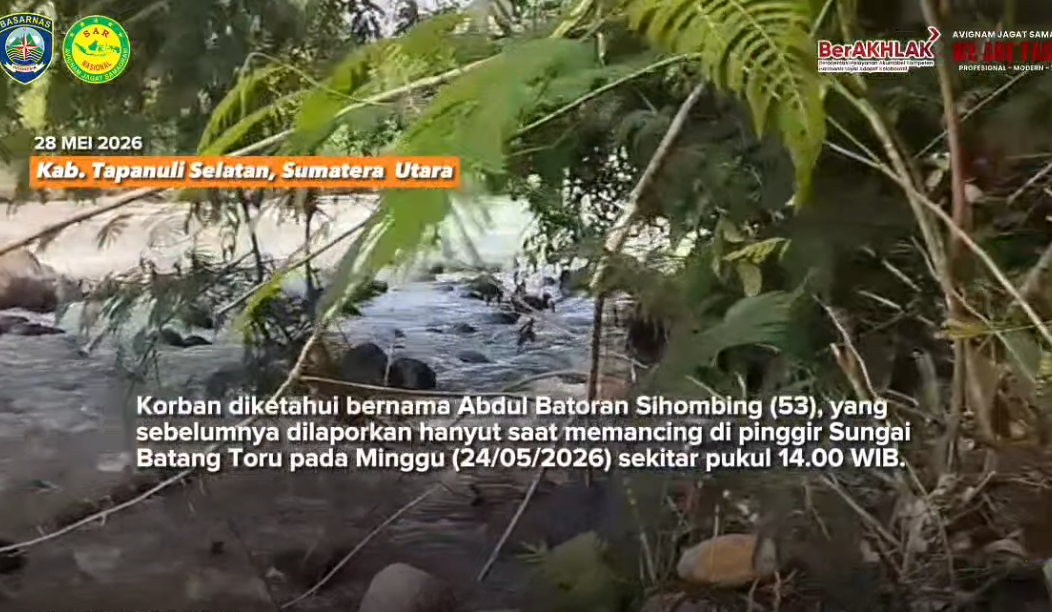
As reported, a joint SAR team successfully located a victim reported swept away in the Batang Toru River, confirmed deceased on Thursday, 28 May 2026, in the afternoon. The victim was found not far from the initial location where they were reported missing on Sunday.
Success in river search operations depends on a combination of rapid response, precise technology such as Aqua Eye and Thermal Drones, and meticulous scouting by teams. The integration of these tools not only accelerates victim location but also minimises risks for rescue personnel in the field.
How long can thermal drones fly?
Industrial thermal drones typically have a flight time of 25-40 minutes per battery, but SAR teams usually carry spare batteries for continuous operations.
Can Aqua Eye be used in seawater?
Yes, Aqua Eye is designed to work in both freshwater and saltwater, provided the water conditions allow for sonar wave reflection.
What are the biggest challenges in river scouting?
Strong currents, steep and rugged riverbanks, and extreme weather conditions that endanger search teams’ safety.