
Understanding the Symbols of the Galungan and Kuningan Celebrations and Their Meanings
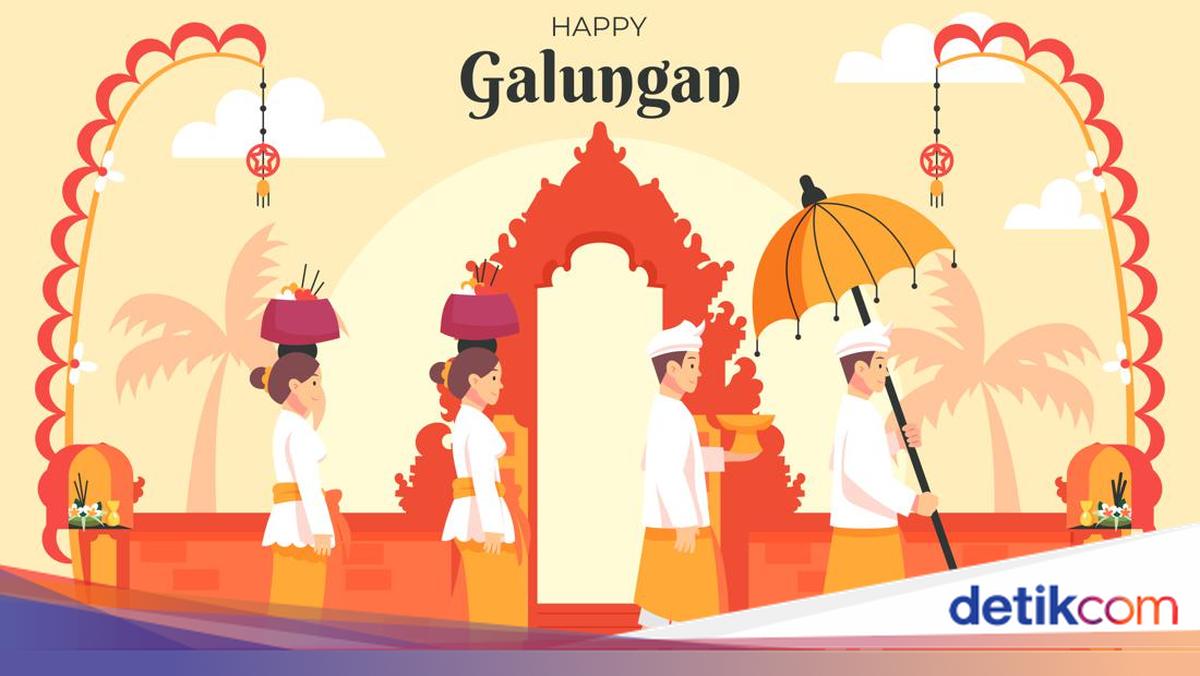
Hari Raya Galungan and Kuningan are sacred commemorations for Hindus to celebrate the victory of Dharma (good) over Adharma (evil), as well as an expression of gratitude to Ida Sang Hyang Widhi Wasa and the ancestors who descend to earth.
There are various symbols in the Galungan and Kuningan celebrations that hold deep philosophical and spiritual meanings. These symbols not only enliven the atmosphere but also contain religious values that teach balance and harmony in life.
Here are the symbols synonymous with the Galungan and Kuningan celebrations and their meanings.
Penjor
Penjor is a curved bamboo pole decorated with young coconut leaves and foliage, commonly placed in front of houses or along main roads. In Balinese tradition, the penjor is an expression of gratitude for the prosperity and well-being bestowed by Ida Sang Hyang Widhi Wasa. Its tall, arching form symbolises the harmony of the relationship between humans and God, among fellow humans, and with the universe.
Banten or Sesajen
Banten or sesajen are essential tools in traditional ceremonies and the devotional needs of Hindus. Various types of banten are prepared as sacred offerings during Galungan and Kuningan. Banten symbolises sincerity, gratitude, and devotion to Ida Sang Hyang Widhi Wasa, serving as a reminder that every success and blessing should be received with thankfulness.
Tamiang
Tamiang is a circular woven decoration typically installed ahead of Kuningan Day. This symbol represents protection, safety, and balance. For Hindus, Tamiang carries the message of always guarding oneself against negative influences and steadfastly upholding the values of dharma in daily life.
Endongan
Endongan is a distinctive accessory for Kuningan, made from woven young coconut leaves in the shape of a bag or pouch. In Balinese Hindu tradition, Endongan symbolises the provisions given to the ancestors before they return to the spiritual realm. This symbol conveys the message that every person should cultivate good deeds and sincerity as provisions to guide their life’s journey.
Dupa
Dupa, or incense, is an element present in every prayer session. Its fragrant aroma and slowly rising smoke symbolise the purity of prayers offered to God. Dupa represents the hope that every request is conveyed with sincerity and wholeheartedness.
Nasi Kuning
Nasi kuning, or yellow rice, is an offering synonymous with Kuningan Day. This offering embodies the hope that Hindus will always receive guidance in living their lives, so that every journey can be traversed with wisdom, peace, and blessings.
Gebogan or Pajegan
Gebogan or pajegan is an offering arranged from various types of fruits and agricultural produce. Before the ceremony begins, Hindus typically carry this offering on their heads. The towering gebogan, adorned with young coconut leaves and flowers, symbolises gratitude for the sustenance, prosperity, and fruits of life granted by Ida Sang Hyang Widhi Wasa.
Source: jawawa.id (https://jawawa.id/newsitem/understanding-the-symbols-of-the-galungan-and-kuningan-celebrations-and-their-meanings-1781574645)
Originally published by detikBali (https://www.detik.com/bali/budaya/d-8533405/mengenal-simbol-perayaan-galungan-dan-kuningan-serta-maknanya), translated from Indonesian