
Understanding the Rupiah's Weakening Against the United States Dollar and the Unique Character of Our Economic Foundations
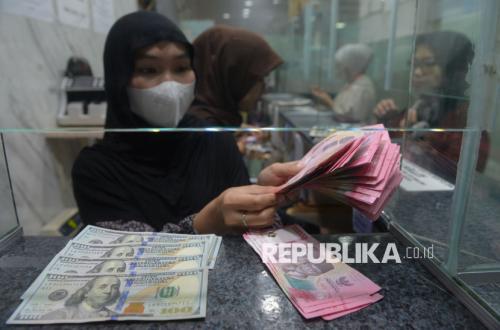
There is one thing that is often overlooked when people watch the rupiah weaken against the United States dollar: what moves is not only the economy, but also public psychology. When the trading screen shows the exchange rate crossing a certain threshold, anxiety quickly spreads. Media headlines become harsher. Social media becomes like a space of mass panic. Café conversations begin to fill with concerns about a crisis. It is as if the fate of a nation is determined by a single number moving in the foreign exchange market. Yet the history of the world economy has never been so simple. In the modern global economic system, the exchange rate is not determined solely by the strength of economic fundamentals, but also by speculative capital flows, trading algorithms, geopolitical wars, investor expectations, rating agencies, as well as the psychology of market fear. George Soros explained through his theory of reflexivity that markets do not merely read reality, but often help to shape that reality themselves.¹ When negative perceptions are built up continuously, capital flows out, pressures increase, and panic can gradually turn into real economic problems. Therefore, the global economy today is not only a war of production and trade, but also a war of perception. Karl Polanyi has long warned that modern markets have a tendency to detach themselves from the social reality of the communities.