
Understanding the Repositioning of Sharia Investments Following the Issuance of POJK 4/2026
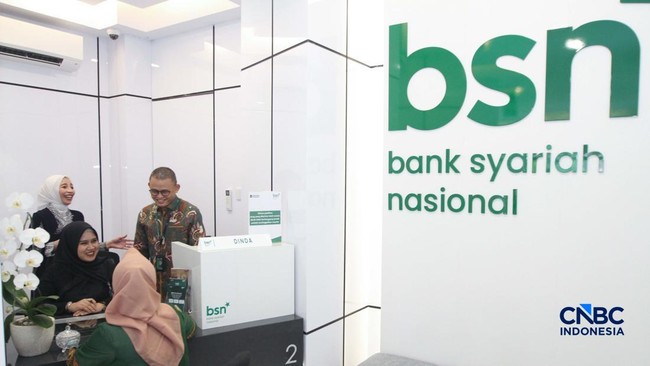
The Indonesian sharia banking industry is entering a new phase. Previously known primarily as a safe place to store funds in accordance with sharia principles, the direction of the industry is now changing. Sharia banks are no longer merely institutions for collecting funds and providing financing but are beginning to play a role as channels for sharia investments with increasingly diverse product characteristics.
In this context, POJK Number 4 of 2026 on the Implementation of Sharia Banking Investment Products becomes important to read more deeply. This regulation is not merely a technical administrative rule but a signal of a paradigm shift in the national sharia financial industry: separating deposits and investments more clearly.
This separation may seem simple, but it actually touches on important foundations in the modern financial system, namely risk transparency, consumer protection, product governance, and public literacy regarding the relationship between returns and risks.
For years, part of society has viewed all sharia bank products as having relatively the same character: safe, stable, and seemingly fully guaranteed. However, economically and legally, deposits and investments have different natures. Deposits are oriented towards fund security and liquidity, while investments carry risk consequences and potential fluctuations in returns.
Therefore, POJK 4/2026 can be read as the regulator’s effort to restore the basic discipline of the sharia financial industry: that investments remain investments and must therefore be understood along with all their risks.
A Growing Industry
This repositioning is relevant because the Indonesian sharia financial industry is no longer on the fringes of the national financial system. As of December 2025, total sharia financial assets in Indonesia excluding sharia shares have reached more than Rp3.131 trillion. Meanwhile, sharia banking assets have broken through around Rp1.028 trillion with double-digit annual growth.
These figures show that sharia banking has developed into one of the important pillars of national intermediation. Asset growth, increasing number of customers, and expansion of digital services demonstrate that public trust in the sharia financial system continues to strengthen.
However, the larger an industry becomes, the greater the demands on the quality of its governance and product transparency. When sharia banks begin offering various investment instruments to the public, the boundary between deposit products and investments must no longer be blurred.
This is where the main challenge arises. Not a few people still understand the “sharia” label as synonymous with “safe without risk”. Yet in Islamic economic principles themselves, profit is never separated from risk. The maxim al-ghunm bil-ghurm affirms that potential profit always adheres to readiness to bear risk.
In other words, sharia investments are not risk-free instruments. They remain subject to asset management quality, market conditions, and business dynamics just like other investment instruments.
Separating Saving and Investing
One of the important substances of POJK 4/2026 is the affirmation of the difference between deposits guaranteed by the Deposit Insurance Corporation (LPS) and investment products that are not under the same protection regime.
In the national banking system, deposits such as current accounts, savings, and certain deposits receive LPS protection as long as they meet the applicable provisions. In sharia banks, this protection also covers products such as wadiah current accounts, wadiah savings, mudharabah savings, and mudharabah deposits.
However, investment products have a different character. In investments, customers essentially act as investors who share in bearing the risks of fund management. Therefore, higher potential returns always go hand in hand with the possibility of a decline in investment value.
The issue is that many people still find it difficult to distinguish between “saving money” and “investing money”. Not a few customers buy investment products with expectations of security like ordinary savings. When there is a decline in results or fluctuations in value, disappointment easily arises because risk understanding was not built completely from the start.
This is where POJK 4/2026 becomes important. This regulation not only regulates products but also attempts to rebuild the way the industry explains risks to the public.
Transparency That Can No Longer Be Delayed
The repositioning of sharia investments will ultimately change the way sharia banks build communication with customers. Banks can no longer suffice with merely explaining that a product uses a mudharabah, wakalah, or musyarakah contract. A purely symbolic approach is no longer adequate amid the increasing complexity of modern investment products.
Customers need more honest and substantive explanations regarding how their funds are managed, where potential returns are formed, what risks may arise, and to what extent protection for those funds is available.
This is where the real challenge begins. For years, part of the sharia financial industry has often been too focused on contract compliance aspects but has not yet fully strengthened risk transparency.
As a result, not a few people understand sharia investment products like ordinary deposits: safe, stable, and seemingly fully guaranteed. Yet investments, including sharia investments, remain subject to market dynamics and business risks that are not always controllable.
Therefore, the repositioning brought by POJK 4/2026 essentially forces the industry to enter a new, more mature phase. Sharia banks are required not only to sell halal or sharia narratives but also to build a culture of openness. They must be able to
Source: jawawa.id (https://jawawa.id/newsitem/understanding-the-repositioning-of-sharia-investments-following-the-issuance-of-pojk-4-2026-1778428362)
Originally published by CNBC Indonesia (https://www.cnbcindonesia.com/opini/20260510221042-14-733835/memahami-reposisi-investasi-syariah-pasca-pojk-4-2026-terbit), translated from Indonesian