
Understanding the Regent's Position in the PT Bandung Daya Sentosa Case
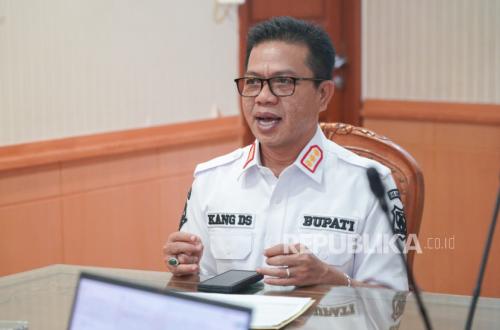
By: Djamu Kertabudi, observer of regional governance
Some time ago, the writer had the opportunity to be a resource person in a live broadcast on Radio PRFM discussing the first-year performance of Dadang Supriatna’s second term as Regent of Bandung. In assessing the performance of a regional government, the writer sought to remain neutral, comprehensive, and objective.
Therefore, besides reviewing the various achievements attained over the past year, the writer also raised a number of challenges and problems facing the Bandung Regency Government.
On the one hand, the breakthroughs made by the Regent of Bandung in realising the regional vision of ‘Bandung Lebih BEDAS’ are considered to have produced a number of positive achievements. Various awards from the central government have been secured, accompanied by rising levels of public satisfaction as an indicator of successful public services.
On the other hand, the writer also touched on an issue that once drew public attention, namely the alleged corruption involving the directors of PT Bandung Daya Sentosa (PT BDS), a regional-owned enterprise (BUMD) of Bandung Regency. The case attracted wide coverage across the mass media, particularly online media.
Unfortunately, a narrative emerged from certain quarters that tended to steer opinion as though the matter were the direct responsibility of the Regent of Bandung. In fact, at that time the legal process was still at the investigation stage with the Bandung Regency District Prosecutor’s Office. The writer therefore called on all parties not to build unfounded assumptions and to respect the ongoing legal process until a legally binding decision is reached.
From a normative perspective, the relationship between the head of the region and the BUMD is clearly regulated in Bandung Regency Regional Regulation Number 11 of 2022 concerning the Establishment of the Bandung Daya Sentosa Regional Limited Company. The regulation affirms that the Regent of Bandung holds the position of shareholder or Proxy of Capital Owner (KPM) over the equity injected from the regional budget as separated regional assets.
With that position, the Regent’s responsibility as a shareholder is limited to the value of the capital contributed to the company. In legal terms, the Regent does not bear personal responsibility for any losses that may arise from the company’s management, so long as no involvement is proven through the legal process.
The trial of the alleged corruption at PT BDS is now under way. The court has named the defendants and summoned a number of witnesses to give testimony. As the proceedings continue, the case focuses on the parties indicted on the basis of the investigation carried out by law enforcement officials.
Given these developments, the public is expected to view the matter proportionally, upholding the principle of presumption of innocence and respecting the judicial process in progress. Judgements about any individual should be based on legal facts, not on assumptions or opinions circulating in the public sphere.
Ultimately, this episode serves as an important lesson for all parties. In realising participatory, transparent, and accountable regional governance, public participation plays a vital role.
However, such participation must be grounded in legal norms, ethics, and respect for the legal process. At the same time, the regional government must continue to consistently apply the General Principles of Good Governance as mandated by Law Number 30 of 2014 on Government Administration.
Wallahu a’lam bishawab.
Source: jawawa.id (https://jawawa.id/newsitem/understanding-the-regents-position-in-the-pt-bandung-daya-sentosa-case-1785739974)
Originally published by Republika (https://analisis.republika.co.id/berita/tj6inb368/memahami-posisi-bupati-dalam-kasus-pt-bandung-daya-sentosa), translated from Indonesian