
Understanding the Reasons Behind the Transjabodetabek Fare Increase
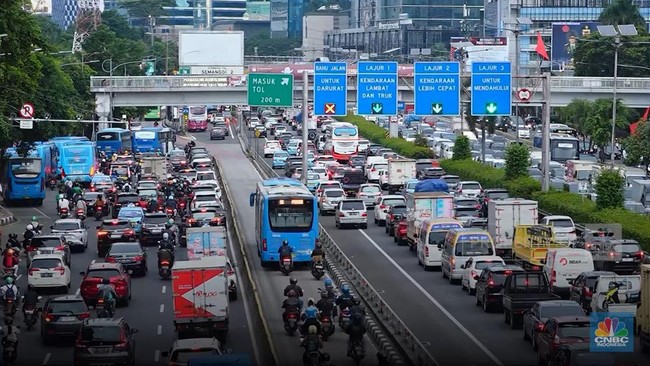
On 15 January 2004, the first Transjakarta bus launched on the Blok M-Kota route with a fare of Rp3,500. Twenty-two years later, in 2026, that figure has not changed. Meanwhile, the price of rice has risen, fuel prices have increased, and the minimum wage has gone up, yet the bus ticket remains Rp3,500, whether for a trip from Bekasi to Jakarta, from Bogor to Blok M, or from Blok M to Soekarno-Hatta International Airport, a distance of 65 kilometres.
For a long time, this price difference was seen as a sign that the government sided with the people. Now, the same figure must also be read as a sign that there is a bill that has gone unpaid for two decades. When the discourse on fare increases surfaced this week, the public reaction immediately targeted one name: Jakarta Governor Pramono Anung. He was accused of not siding with the people, of revoking subsidies for the poor, and was heavily attacked on social media. The anger is understandable, but misdirected anger will not solve the problem. To understand why fares must rise, we need to examine the figures first.
Jakarta’s Burden Alone
The bill is overdue. According to data from the Jakarta Transportation Agency, the subsidy specifically allocated for Transjabodetabek services in 2026 reaches Rp401 billion. This means that every time someone boards the bus and pays Rp3,500, the Jakarta provincial government must cover an additional Rp12,258 from its own regional budget (APBD). Looking further, the overall operational costs of Transjakarta grew by 12.46 percent per year between 2021 and 2025, while revenue only grew by 10.22 percent per year in the same period. This data was recorded by CNBC Indonesia based on Transjakarta’s financial reports. Each year, the gap widens, and this shortfall must be covered by the tax money of Jakarta residents.
Governor Pramono has openly stated that this burden is too large to be borne alone. The word “alone” is key, because this is where the real problem lies. Transjabodetabek is not a service solely for Jakarta residents. It is a service for the entire metropolitan area, accommodating millions of people who depart from Bogor, Depok, Tangerang, and Bekasi every morning and return there every evening. Yet, according to Pramono’s statement on 10 June 2026, all operational costs, fare subsidies, and even the maintenance of bus stops in Bogor, Bekasi, and Tangerang are borne by Jakarta’s regional budget. Not a single rupiah comes from the supporting regional governments.
American economist Wallace E. Oates, in his 1972 work Fiscal Federalism, offers a simple explanation for this situation: whoever enjoys the benefits of a public service should also contribute to its financing. If a service is only for the residents of one city, that city pays. If a service is for multiple regions simultaneously, all those regions should share the cost. Transjabodetabek clearly falls into the second category, yet ironically, only one party is paying. Interestingly, even West Java Governor Dedi Mulyadi does not reject this principle. When asked about the possibility of the West Java provincial government contributing to the subsidy, he told Kompas.com on 9 June 2026, “If that becomes the obligation of the West Java provincial government, we have no problem.” Bekasi Mayor Tri Adhianto, according to various media reports on 10 June 2026, even personally telephoned Pramono to seek assurance that his constituents would continue to be served. This narrative confirms that concern for this service actually exists among all parties.
The issue is not about willingness. The issue is that the word “obligation” in Dedi’s statement has never existed in any regulation. Therefore, as long as there is no legal obligation, all goodwill remains voluntary, and what is voluntary can be stopped at any time.
A Shared Legal Framework
Stephen P. Osborne, a British public policy researcher who wrote “The New Public Governance?” in the journal Public Management Review (2006), asserts that public services crossing administrative boundaries cannot be managed in the old way, where each region operates independently. In this context, what is needed is a single, shared framework with binding legal force. Not merely routine meetings whose decisions can be ignored, nor simply an invitation to share costs that can be politely declined. Without such a framework, Jakarta will continue to pay a bill that should be shared. And when that bill becomes too large, the consequence is exactly what we see today: fares rise, the public is angry, and no one is held accountable for the systemic void.
What about the question of who is most affected by the fare increase? Here, it is important for the public to read the data honestly. According to Jakarta Transportation Agency data processed by Kompas.id, of the 18 operating Transjabodetabek corridors, the Blok M-Soekarno-Hatta Airport route is the least crowded, with 77,391 passengers from January 2025 to April 2026. Compare this with the UI-Lebak Bulus route, which recorded 3.88 million passengers, or Poris Plawad-Petamb with 3.68 million. The busiest routes are the daily commuter routes, used by people who take the bus to go to work.
Measuring a Sense of Justice
American philosopher John Rawls, in A Theory of Justice (1971), stated that a new policy can only be considered just if its impact is most beneficial to those in the weakest position. From this perspective, raising the fare for the airport route first is a fairer step than raising the fare for commuter routes. Airport route passengers are travelling to fly, while commuter route passengers are travelling to work. Equating both with the same fare is not an equal policy; it can give rise to an injustice hidden behind the same number. And if we are angry at Pramono, we must ask ourselves: are we angry at the person, or are we angry because we are only now being shown a bill that has been deliberately hidden for twenty-two years?