
Understanding the Grebeg Besar Tradition in Surakarta and Yogyakarta Royal Courts
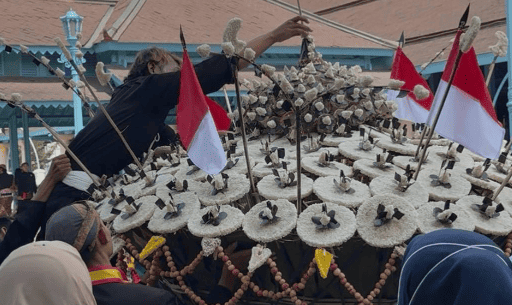
Grebeg Besar is one of the most anticipated traditional ceremonies in the Javanese cultural calendar, particularly at the two Mataram cultural centres: Surakarta Kasunanan Royal Court and Yogyakarta Ngayogyakarta Royal Court. Although both are held to commemorate Idul Adha, the 2026 (1447 H) celebrations reveal an intriguing dynamic between preserving tradition and adapting to contemporary circumstances.
Grebeg Besar Dal 1959 at Yogyakarta Royal Court: A Symbol of Simplicity
This year, Yogyakarta Royal Court held the Grebeg Besar Dal 1959 ceremony with a distinct approach. Following the decree of Sultan Hamengku Buwono X, the procession was conducted simply as a cost-saving measure aligned with central and regional government policies.
Public Rituals Cancelled: Ceremonies such as Gladhi Resik Prajurit and Numplak Wajik ritual were omitted for efficiency.
Distribution of Ubarampe: Instead of parading the gunungan (mountain-shaped offerings) to the public, the court distributed approximately 4,000 ubarampe pareden (small blessed items).
Internal Distribution: The ubarampe were blessed by Kanca Kaji before being distributed by members of the royal family (GKR Mangkubumi, GKR Condrokirono, GKR Hayu, GKR Bendara) and in-laws (KPH Wironegoro, KPH Notonegoro) to palace servants.
Despite the simplicity, KRT Kusumanegara, Penghageng II of the Reksa Suyasa Department at Yogyakarta Royal Court, affirmed that the essence of the king’s charity to the people remains intact through the symbolism of the ubarampe.
Grebeg Besar at Surakarta Royal Court: Enthusiasm and ‘Grounding’ Culture
Unlike Yogyakarta, Surakarta Hadiningrat Royal Court celebrated Idul Adha 1447 H with fervour in the courtyard of the Grand Mosque. Hundreds of residents and tourists gathered to participate in the ‘ngalap berkah’ tradition, or the scramble for the gunungan.
Gunungan Jaler (Male): Filled with raw agricultural produce such as long beans, sugarcane, red chillies, and salted eggs, symbolising life’s sources and fertility.
Gunungan Estri (Female): Comprising ready-to-eat foods or rengginang (puffed rice snacks), symbolising prosperity and harvest ready for consumption.
KP Eddy Wirabhumi of Surakarta Royal Court’s Legal Department explained that this year, both gunungan were contested by the public in the mosque courtyard. This was done to accommodate the overwhelming public and tourist enthusiasm, as well as to ‘ground’ Solo’s culture as a centre of Javanese heritage.
Comparing the Essence of Both Royal Courts
Conclusion
Both Surakarta and Yogyakarta’s Grebeg Besar share the same historical roots as expressions of royal gratitude and charity to the people. The technical differences in their 2026 implementations highlight the dynamic nature of Javanese tradition—it can be modest in times of economic concern, yet inclusive to embrace public enthusiasm.
What is ubarampe pareden?
Small portions of the gunungan components that have been blessed, typically distributed as symbols of the court’s blessings.
Why do residents scramble for the gunungan?
The public believes that obtaining a piece of the gunungan (ngalap berkah) brings peace, good fortune, or agricultural fertility.