
Understanding the Differences in TV Display Technology: Precise Dimming Is a Key Factor
JAKARTA — Advances in television technology have given consumers a range of options, from Quantum Dot Light Emitting Diode (QLED) to Mini LED. With display-technology terms increasingly common in the market, understanding lighting systems and colour reproduction is important when choosing image quality suited to individual needs.
One factor affecting a television’s visual quality is its ability to control lighting precisely. This helps produce better contrast, preserve image detail and reduce blooming—the glow around bright objects shown against a dark background.
TCL Indonesia Chief Executive Evan Tang said developments in display technology were directed at improving colour reproduction, lighting control and image detail. He said the evolution of television technology from QLED to SQD-Mini LED was part of efforts to enhance the viewing experience.
“TCL remains committed to delivering television technology innovations that not only prioritise visual quality but also provide an increasingly immersive viewing experience,” Evan said.
In television technology, QLED uses Quantum Dot to produce a wider range of colours. TCL says its QLED technology can generate more than one billion colours, with coverage of up to 93 per cent of DCI-P3.
Mini LED, meanwhile, uses smaller backlights than conventional LED technology. This allows lighting to be controlled across multiple zones behind the screen, with brightness adjusted to suit the image being displayed.
The ability to control these lighting zones is one factor that distinguishes Mini LED television performance. If lighting control is not precise enough, light from bright objects can spread into nearby dark areas. This effect, known as blooming or the halo effect, can reduce image contrast and definition.
TCL uses the term True Mini LED to emphasise the importance of lighting control, or Precise Dimming. With QD-Mini LED technology, the company combines Quantum Dot with independently controlled lighting zones to optimise contrast and preserve detail in both bright and dark scenes.
The technology has since been developed into SQD-Mini LED. TCL says it is based on four aspects: Pure Colors, Stable Colors, Superior Light Control and Richer Details. These focus on colour purity and stability, light control and sharper image detail.
Consumers should nevertheless check the specifications of each television model when comparing display technologies. Panel type, the number and capability of lighting zones, brightness levels and colour-reproduction characteristics can all affect the resulting image.
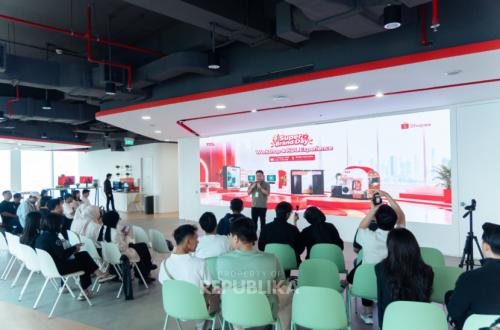
To introduce the differences between these technologies, TCL partnered with Shopee to hold a product-experience workshop at Trinity Tower in Jakarta in early October 2026. The event brought together more than 100 content creators and affiliates, including technology enthusiasts.
Through interactive demonstrations, participants were introduced to developments in display technology, from QLED and QD-Mini LED to SQD-Mini LED. They also observed how lighting control affects contrast and helps reduce blooming in scenes with sharp differences in brightness.
Evan said display-technology development was not only about improving visual quality, but also about the entertainment experience available to consumers.
“Through the evolution from QLED and QD-Mini LED to SQD-Mini LED, we continue to refine colour reproduction, more precise lighting control and richer image detail,” he said.
Through education about display technology, consumers are expected to understand that television quality is not determined solely by screen size or resolution. Accurate colour, light control and the ability to preserve image detail are also considerations when choosing home entertainment equipment.