
Understanding SUTET Cables and the Sumatra Mass Power Outage
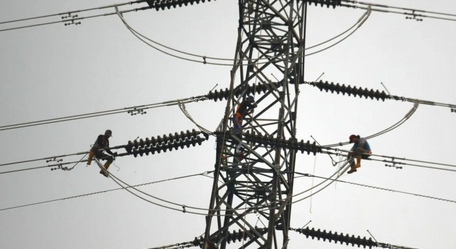
A mass power outage that struck Sumatra on Friday (22 May) was reportedly triggered by a disturbance in the main transmission network. One of the most critical components in this system is SUTET. As the backbone of energy distribution, damage to these lines can have systemic effects, paralysing inter-provincial activities in an instant.
SUTET stands for Saluran Udara Tegangan Ekstra Tinggi (Extra High Voltage Overhead Lines). Within Indonesia’s power system hierarchy, SUTET represents the highest transmission level. According to PLN standards, SUTET operates at 500 kV (500,000 volts), though in regions like Sumatra, the main interconnection system is also supported by SUTT (Saluran Udara Tegangan Tinggi or High Voltage Overhead Lines) at 275 kV.
Technically, SUTET transmits electricity from large power generation centres (such as PLTU coal-fired plants or PLTA hydroelectric plants), typically located far from residential areas, to substations (GI) where the voltage is stepped down for distribution to households.
The use of extra-high voltage in SUTET is not without reason. The technical analysis of its function is as follows: when a SUTET cable breaks or experiences technical faults, the power system suffers a severe disturbance known as a transient disturbance. The following outlines the stages of a mass blackout.
Fixing a blackout caused by SUTET faults is not as simple as flipping a switch. Technical teams must carry out several complex procedures.
SUTET is a strategic infrastructure that determines regional energy stability. A cable break on these lines is not merely a local technical issue but a threat to regional power system stability. Preventive maintenance and transmission line protection are key to preventing future blackouts.