
Understanding Robotic Surgery for Rectal Cancer: What are the Benefits for Patients?
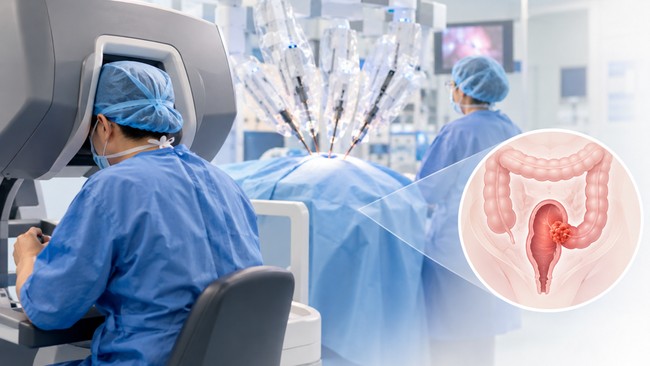
The role of technology in the healthcare sector is immense. It has been proven that rectal cancer surgery can now be performed using da Vinci Xi Robotic-Assisted Surgery, which allows for smaller incisions and supports faster recovery.
As is well known, rectal cancer is a condition involving the growth of malignant tumours in the final part of the large intestine, located in the narrow pelvic cavity near the anal sphincter muscles and nerves that play a role in urinary and sexual functions. This condition often causes anxiety for patients undergoing surgery, particularly regarding the risk of bowel and urinary dysfunction following the procedure.
According to Dr Errawan Ramawitana Wiradisuria from Mayapada Hospital South Jakarta, the primary goal of surgery is to remove the cancer optimally while preserving anal function and surrounding nerves whenever possible. “The choice of surgery is tailored to the patient’s condition, including the location and size of the tumour, the cancer stage, and the response to pre-operative therapies such as chemotherapy or radiotherapy. For patients suitable for minimally invasive surgery, the robotic approach can be one of the options, considering its benefits for the patient,” he explained.
The benefits of robotic technology can be experienced by patients through minimally invasive techniques. “Robotic surgery can provide benefits such as smaller incisions, minimal pain, and shorter hospital stays. This approach can also reduce the need to switch to open surgery and helps maintain urinary, sexual, and bowel functions after surgery,” Dr Errawan explained.
Furthermore, the sophistication of robotic technology assists doctors during surgery. “With the doctor’s control during surgery, robotic technology helps reach narrow pelvic areas with 3D visualisation and flexible instruments with precise movement, and eliminates tremors (tremor filtration), which supports more controlled tissue separation, including around nerves that need to be preserved. However, the doctor still controls all movements during surgery, while the robotic technology helps enhance control,” he stated.
Robotic technology can also support doctors’ efforts to preserve anal function in patients, even when the tumour is located in a very low part of the rectum. In certain cases, after the tumour is removed, doctors can reconnect the intestine to the lower rectum or anus. “To protect that intestinal connection, doctors can create a temporary faecal diversion (stoma) through the abdominal wall during the same operation. Once the intestinal connection heals, the stoma can be closed through a subsequent operation so that the patient can return to bowel movements through the anus,” he explained.
However, to determine whether a patient can undergo robotic surgery, a series of thorough examinations must be conducted. “Examinations may include colonoscopy to view the internal condition of the intestine, pelvic MRI, and/or Abdominal CT Scan to determine the location and extent of the tumour, as well as the condition of other organs and the possibility of disease spread,” explained Dr Errawan.
According to Dr Errawan, for high-risk tumours, acute bowel obstruction, or bowel perforation due to cancer, open surgery may be more appropriate. In certain conditions, the placement of a permanent stoma may also be a medically safe option. “Therefore, the management of rectal cancer should ideally involve digestive surgeons, medical haematology-oncologists, radiologists, radiotherapy specialists, anatomical pathologists, and other doctors as required by the patient,” concluded Dr Errawan.
Developments in surgical technology allow more complex procedures to be performed minimally invasively, including robotic surgery for rectal cancer. The Gastrohepatology Centre at Mayapada Hospital provides comprehensive services for various digestive tract disorders, ranging from detection and diagnosis to treatment. Mayapada Hospital South Jakarta possesses da Vinci Xi Robotic-Assisted Surgery technology to support precise and targeted surgical procedures according to patient needs. This technology also complements the services of the Oncology Centre at Mayapada Hospital South Jakarta for surgical procedures in cancer cases, alongside a multidisciplinary medical team.
Source: jawawa.id (https://jawawa.id/newsitem/understanding-robotic-surgery-for-rectal-cancer-what-are-the-benefits-for-patients-1790427267)
Originally published by CNBC Indonesia (https://www.cnbcindonesia.com/lifestyle/20260926185952-33-771164/mengenal-operasi-robotik-untuk-kanker-rektum-apa-manfaat-ke-pasien), translated from Indonesian