
Understanding Rare Earth Elements
Indonesia is currently pushing for the development of Rare Earth Elements (REE), which are deemed highly versatile for various sectors. These minerals play a vital role in the advancement of high-tech industries, ranging from the electric vehicle ecosystem to medical and military equipment.
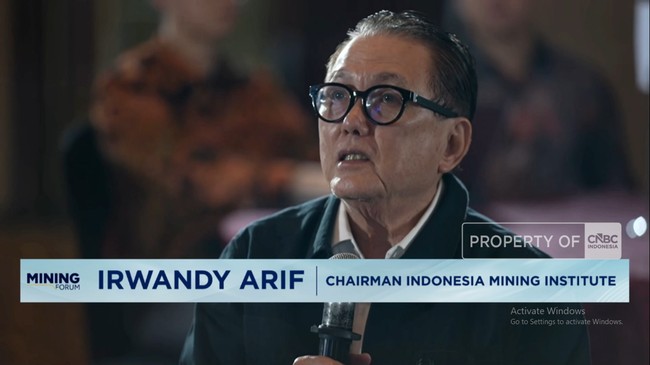
The Indonesia Mining Institute (IMI) has highlighted the characteristics and potential of REE, identifying them as Indonesia’s critical mineral commodities of the future. Irwandy Arif, Chairman of the IMI, explained that REE consists of a group of 17 chemical elements in the periodic table that possess unique magnetic and chemical properties. These minerals are classified into two main groups: light rare earth elements and heavy rare earth elements.
The group of 17 elements includes scandium (Sc), yttrium (Y), lanthanum (La), cerium (Ce), praseodymium (Pr), neodymium (Nd), promethium (Pm), samarium (Sm), europium (Eu), gadolinium (Gd), terbium (Tb), dysprosium (Dy), holmium (Ho), erbium (Er), thulium (Tm), ytterbium (Yb), and lutetium (Lu). The distinction between heavy and light categories is based on orbital electron configuration, where the heavy group tends to be rarer and possesses much higher economic value.
In Indonesia, REE are generally found as by-products of mining activities for other commodities such as tin, nickel, and bauxite. Certain minerals containing REE found in the country include monazite, xenotime, and zircon, which are abundant in alluvial tin deposits in the Bangka Belitung Islands.
In addition to being by-products, the government has recently identified primary rare earth element reserves in the Mamuju region of West Sulawesi. This discovery has become a new focal point because the concentrations are significantly higher than those found in by-product minerals, opening opportunities for Indonesia to build its own strategic mineral processing industry.
According to research data, the findings in Mamuju show total REE concentrations as high as 4,500 to 6,000 ppm, far exceeding the levels in Bangka Belitung, which range from 1,000 to 2,391 ppm. Meanwhile, North Sumatra also holds potential with concentrations between 2 and 1,400 ppm derived from the weathering of granite rocks.
In terms of supply, the largest uses are for catalysts, glass, and polishing. Cerium accounts for the largest share at 31%, followed by lanthanum for catalysts and NiMH batteries, and neodymium (Nd) at 25% for permanent magnets. The use of REE for permanent magnets is the most strategic sector, as it is a key component in electric vehicle traction motors, wind turbines, and computer hard drives. The usage volume of REE-based magnets is projected to increase from 29% in 2023 to 41% by 2034.