
Understanding NASA's Deep Space Network: The Communication Bridge Between Earth and Spacecraft
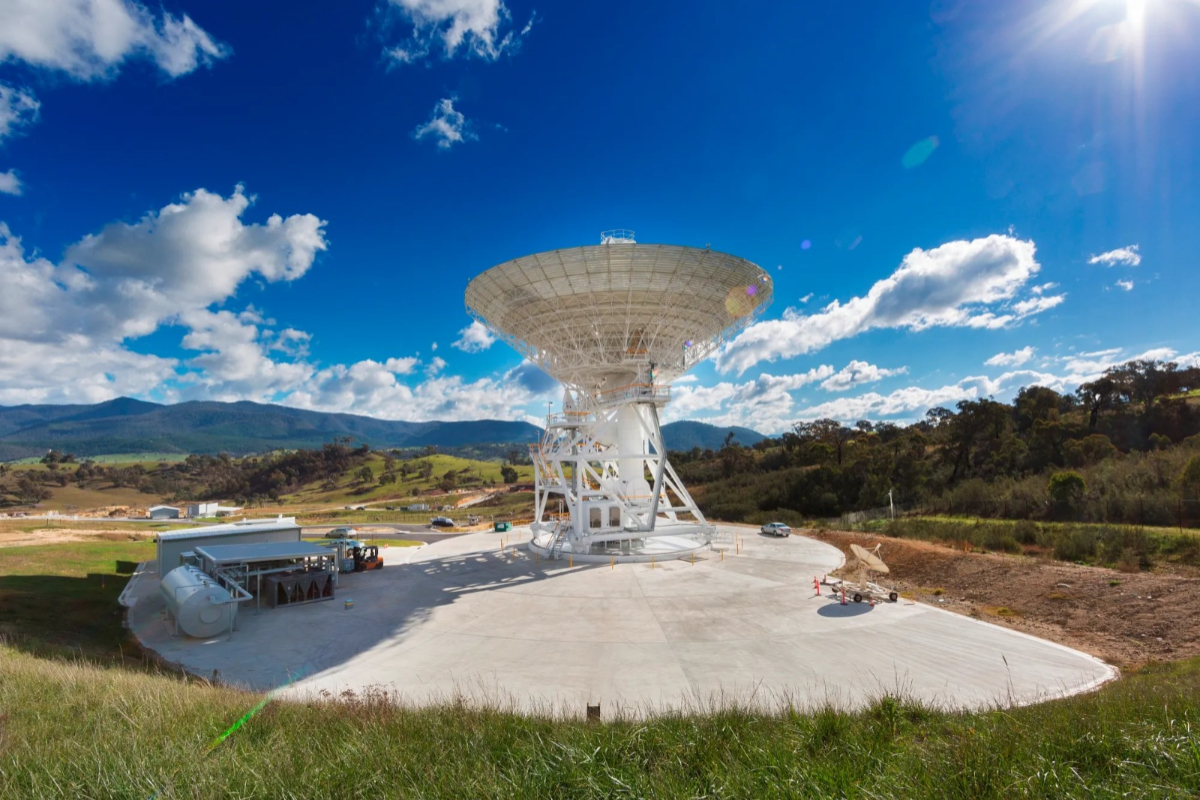
Space exploration is not merely about sending spacecraft to distant planets or objects. Once they leave Earth, spacecraft require a way to maintain continuous communication with humans. This is where NASA’s Deep Space Network (DSN) plays a crucial role.
This system acts as a sort of “communication bridge” connecting Earth with various spacecraft exploring the solar system. According to NASA, the Deep Space Network is a network of giant radio antennas used to support spacecraft missions, particularly those travelling beyond Earth’s orbit. The DSN is also utilised for radio astronomy and radar observations.
The network consists of three main complexes positioned approximately 120 degrees of longitude apart. These are located in Goldstone, California, USA; near Madrid, Spain; and near Canberra, Australia.
This placement is intentional. As the Earth rotates and a spacecraft moves out of range of one station, another station can take over the communication. In this way, a continuous connection with the spacecraft can be maintained.
One of the most striking features of the DSN is its antennas. Each complex possesses a 70-metre diameter antenna, which is the largest and most sensitive antenna in the network. NASA explains that these giant antennas are capable of tracking spacecraft located tens of billions of miles from Earth. Such size is necessary because radio signals from spacecraft travelling vast distances become increasingly weak by the time they reach Earth.
Interestingly, DSN antennas do not only function to receive information. The system is also used to send commands to spacecraft, track their positions, and monitor their condition and safety.
The role of the DSN is far broader. NASA uses this network to obtain scientific data regarding planets, moons, asteroids, and even phenomena in outer space. Changes in radio signals can also assist scientists in studying the characteristics of objects in the solar system and determining the position and velocity of spacecraft.
Consequently, every image, research datum, or information regarding spacecraft conditions successfully transmitted from space to Earth is inseparable from the role of this giant antenna network. The DSN remains a vital piece of infrastructure that enables humans to remain “in communication” with the robotic explorers located far from Earth.