
Understanding Arctic Amplification: Why Is the Arctic Warming Faster?
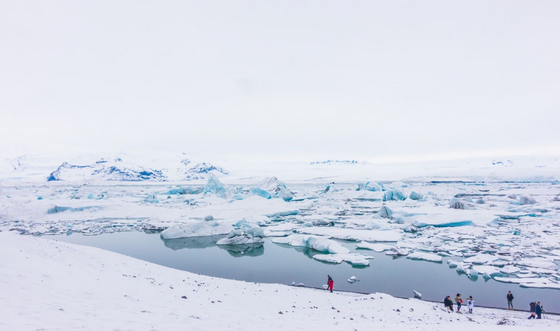
Climate change is no longer just a forecast; it is a reality now hitting the Arctic with intensifying force. Arctic Amplification is the phenomenon in which temperature increases in the polar region are far greater than the global average. New data up to May 2026 show that temperatures in this region have risen roughly three to four times faster than global averages over recent decades. This pattern is not a coincidence but the result of a complex interaction between sea surface conditions, the atmosphere, and the massive loss of sea ice. The primary driver is the ice-albedo feedback cycle. Here’s how it works: As sea ice retreats, darker ocean water absorbs more solar radiation, accelerating warming and further ice loss in a self-reinforcing cycle. In addition to albedo, several technical and atmospheric factors amplify conditions in the Arctic, including changes in cloud cover, atmospheric circulation, and ocean heat transport. The impacts of Arctic Amplification extend beyond polar bears or Arctic communities. Scientists warn of broader consequences for people around the world. The Arctic functions as the Earth’s cooling system, and Arctic Amplification shows the cooling mechanism is deteriorating. Satellite monitoring from NASA and studies in Nature Communications Earth & Environment emphasise that what happens in the Arctic serves as the most accurate indicator of the planet’s climate future. Without drastic global mitigation to cut carbon emissions, Arctic warming will continue to act as a catalyst for larger climate disasters worldwide. Sources: NASA Climate, National Snow and Ice Data Center, Nature Communications Earth & Environment.