
Understanding and Loving Batik Can Support the Sustainability of Cultural Heritage
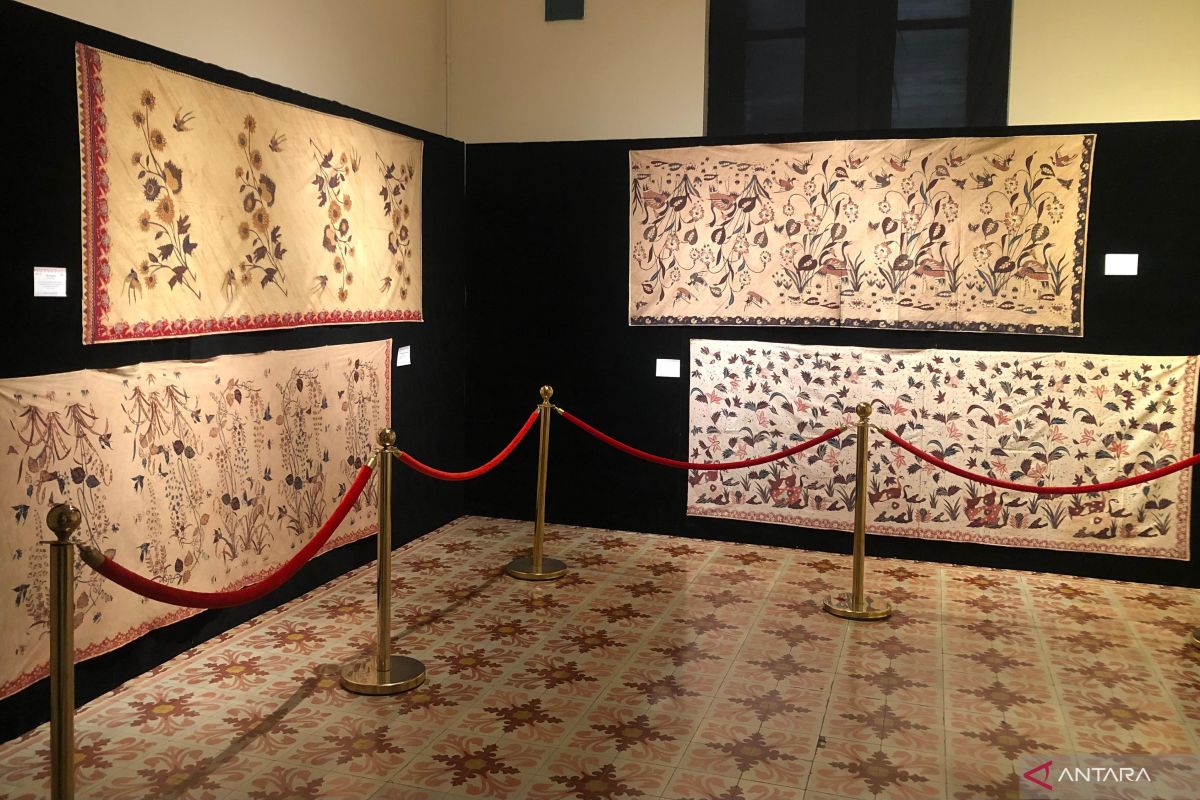
Jakarta (ANTARA) - The Head of the Art Museum Management Unit for the Jakarta Provincial Culture Office, Sri Kusumawati, has encouraged the public, particularly the younger generation, to go beyond merely feeling proud of wearing batik. She emphasised the need for a desire to understand, study, care for, and pass on knowledge regarding batik.
“Because ultimately, the sustainability of batik as a cultural heritage depends heavily on our ability to keep it alive, relevant, and loved from generation to generation,” Sri told ANTARA in Jakarta on Friday.
In this regard, the Textile Museum is inviting the public to get closer to the various batik traditions across different regions of Indonesia, notably through the exhibition “Traces of Beauty: Batik Kudus, Demak, and Banyumas,” held in conjunction with National Batik Day on 2 October.
Sri stated that the momentum of National Batik Day serves as a reminder that batik is not merely fabric or clothing, but a part of the identity and cultural wealth of the Indonesian nation.
“Through the ‘Traces of Beauty’ exhibition, we want to invite the public to look more closely at the diversity of batik traditions in various regions and to understand that every motif and every piece of cloth holds traces of history, creativity, and the lives of the people of its era,” said Sri, whose unit also manages the Textile Museum, the Fine Arts Museum, and the Ceramics Museum.
The “Traces of Beauty: Batik Kudus, Demak, and Banyumas” exhibition features 60 collections, consisting of 3 batik pieces from Demak, 15 from Kudus, and 42 from Banyumas. The displayed items are part of the Textile Museum’s long-standing collection.
Sri noted that these three batik traditions are part of the social and cultural journeys of their respective regions. However, with the changing times, their existence has experienced periods of ebb and flow.
“The decline in the regeneration of batik makers, changes in societal lifestyles, evolving tastes, and various social and economic factors have all contributed to the sustainability of these traditions,” she said.
“Even if their golden age may have passed, the traces of skill, creativity, and cultural values contained within these works remain alive to this day,” she added.
Furthermore, Sri stated that as a museum with a specific focus on Indonesian textiles, the Textile Museum does not only handle the storage and maintenance of collections, but also engages in data collection, documentation, conservation, research, exhibitions, and various educational and public programmes.
The Textile Museum also continues to build collaborations with batik makers, communities, academics, collectors, and various parties possessing knowledge regarding batik.
Sri remarked that for the Textile Museum, preserving batik is not enough by merely protecting the fabric. Knowledge regarding the makers, the region of origin, techniques, motifs, dyeing processes, functions, and the community stories behind the cloth must also be documented.
“In this way, the museum can serve as a space that connects the heritage of the past with the development of batik in the present and for future generations,” she concluded.
Source: jawawa.id (https://jawawa.id/newsitem/understanding-and-loving-batik-can-support-the-sustainability-of-cultural-heritage-1790938863)
Originally published by Antara (Indonesian) (https://www.antaranews.com/berita/5768703/mengenal-dan-mencintai-batik-dapat-dukung-keberlanjutan-warisan-budaya), translated from Indonesian