
Understand the Difference Between Grants and Inheritance
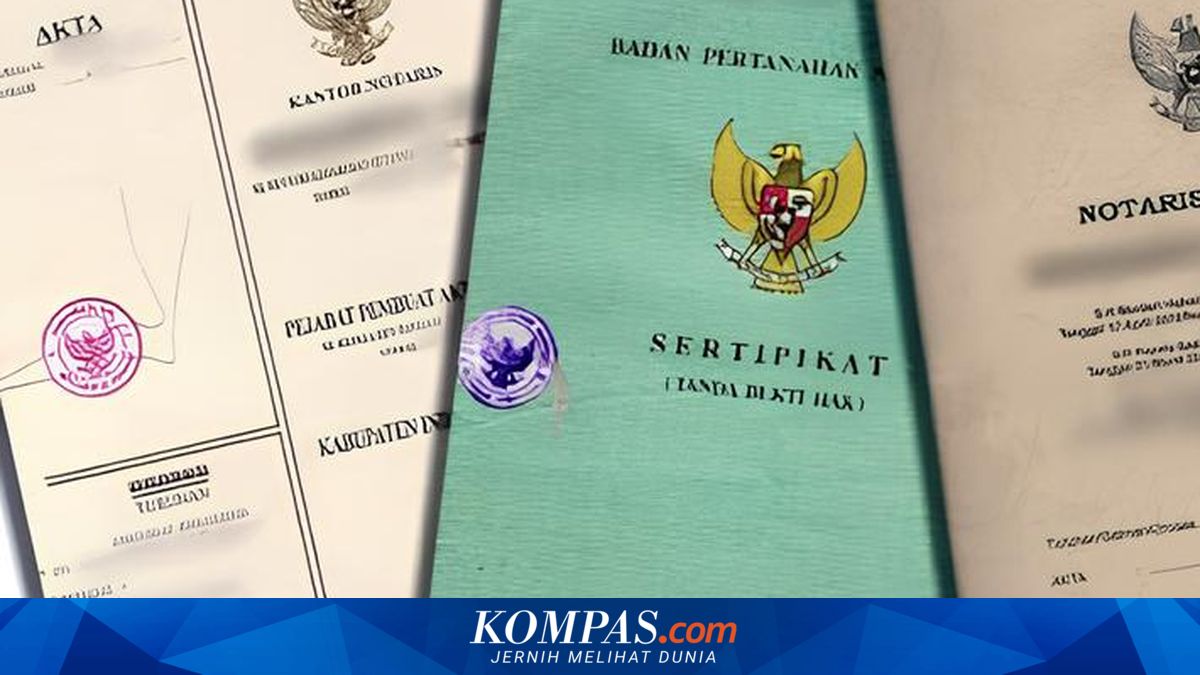
JAKARTA, KOMPAS.com - When parents wish to transfer ownership of a house to their children, there are two mechanisms that need to be understood: hibah and waris.
The differences between them lie not only in the timing of the transfer but also impact the administrative processes, documents, and costs required for changing the name on the land certificate.
The Head of the Public Relations and Protocol Bureau of the Ministry of Agrarian Affairs and Spatial Planning/National Land Agency (ATR/BPN), Shamy Ardian, explained that changing the name is the process of legally transferring land rights from the old owner to the new legal owner, including within family contexts.
“So, changing the name is the process of transferring land rights from the old owner to the new legal owner. In the context of parents to children, changing the name does not happen automatically even though the family relationship is clear,” he stated, quoted on Monday (20/04/2026).
He emphasised that the initial step for the public to understand is to differentiate between hibah and waris.
Hibah is carried out while the parents are still alive, whereas waris applies when the parents have passed away.
“If the wrong one is chosen from the start, it can result in the process having to be repeated from the beginning,” Shamy Ardian stressed.
In practice, the name change process includes several stages, starting from the legal basis for the transfer of rights, the creation of deeds by the Land Deed Official (PPAT) or notary, payment of taxes and duties, to official recording at the Land Office.
Each stage has cost implications that the public needs to prepare for.
The costs that must be met include Acquisition Duty on Land and Building Rights (BPHTB), costs for creating hibah or waris deeds, service fees at the Land Office including non-tax state revenue (PNBP), and other taxes depending on the land object’s condition.
The amount of costs can vary by region and is generally calculated based on the land value.
In the inheritance process, applicants are required to complete several documents, such as stamped application forms, photocopies of heirs’ identities, original land certificates, death certificates, and Inheritance Certificates.
Additional documents such as wills, current SPPT and PBB, and proof of BPHTB and income tax payments are also required as per regulations.
Meanwhile, for hibah, the administrative requirements include application forms, identities of the grantor and recipient, original land certificates, and hibah deeds made by PPAT.
Shamy reminded that processing costs can increase if the process is delayed. This is influenced by increases in the Tax Object Selling Value (NJOP), potential late penalties, and outdated documents.
“Well, if it’s delayed further, the costs usually increase and feel more expensive,” he concluded.