
Understand the Cash Carrying Regulations: Our Small Steps to Prevent Financial Crime
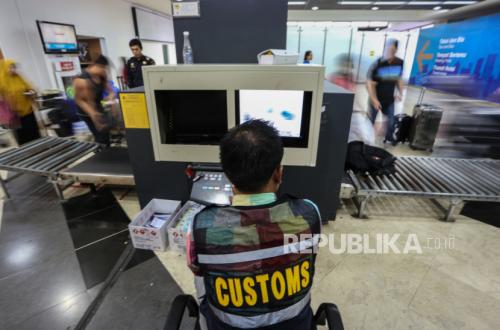
REPUBLIKA.CO.ID, JAKARTA – Monitoring the carrying of cash and/or other payment instruments across borders, or cross-border cash carrying (CBCC), is an essential part of efforts to prevent money laundering crimes (TPPU) and terrorism financing crimes (TPPT), as well as supervising cross-border financial flows.
The cash subject to monitoring includes banknotes and coins, whether in rupiah or foreign currency. Meanwhile, other forms of payment instruments subject to monitoring include bills of exchange, negotiable documents such as cheques, traveller’s cheques, letters of credit, and deposit certificates.
“CBCC is part of the implementation of the duties and functions of Customs in supervising the flow of goods and value at the state border,” said the Head of the Subdirectorate of Public Relations and Outreach of Customs, Budi Prasetiyo, in a statement on Thursday (23/4/2026).
He also emphasised that this policy is supported by a national regulatory framework that includes laws related to the prevention and eradication of money laundering and terrorism financing crimes, as well as technical regulations through government regulations, Ministry of Finance regulations, and Bank Indonesia provisions regarding cross-border cash carrying.
Cash Carrying Notification Obligation
The carrying of cash and/or other payment instruments across borders is strictly regulated under Law No. 8 of 2010 on the Prevention and Eradication of Money Laundering Crimes.
Article 34 states that every person carrying cash in rupiah and/or foreign currency, and/or other payment instruments amounting to at least Rp100,000,000 or its equivalent value into or out of Indonesian customs territory must notify the Directorate General of Customs and Excise.
In addition to submitting a customs notification, the carrier must also complete the form for the funds being carried.
This form must include at least information on the identity of the carrier, as well as the identity of any other party or beneficiary of the funds being carried. If the cash is carried on behalf of a corporation, the identity of the relevant corporation must be notified.
The submission of the customs notification and completion of the form is done through an application system. If the application experiences disruptions, the carrier must submit it to Customs manually (printed form) at the entry or exit points to Indonesia, such as international airports, international ports, and border posts.
In addition to complying with the above provisions, every person carrying cash must also obtain permission or approval from Bank Indonesia (BI) for cash in rupiah amounting to at least Rp100,000,000 when exiting customs territory, and for foreign banknotes (UKA) amounting to at least Rp1,000,000,000 when entering or exiting customs territory.
Violation Sanctions
Every person who fails to report the carrying of cash and/or other payment instruments is subject to an administrative sanction in the form of a fine of 10 percent of the total amount of cash and/or other payment instruments carried, with a maximum amount of Rp300,000,000.
If the carrying of cash and/or other payment instruments is reported but the amount exceeds the notified amount, an administrative sanction in the form of a fine of 10 percent of the excess amount carried is imposed, with a maximum of Rp300,000,000.
Customs officers may grant approval for carrying after the violator pays the administrative sanction as provided. Payment can be made in cash or other payment methods approved by the Customs Official.
Payment of the administrative sanction must be completed no later than five working days from the date of the customs notification. In the case of unreported cash carrying, the date of the customs notification is the date of determination of the administrative sanction.
Supervision
Supervision of the carrying of cash and/or other payment instruments mandated under Law No. 8 of 2010 on the Prevention and Eradication of Money Laundering Crimes is carried out by the Directorate General of Customs and Excise.
This demonstrates Customs’ commitment to supporting the Anti-Money Laundering and Counter-Terrorism Financing (APU-PPT) regime in Indonesia. Under the law, Customs is obliged to prepare reports on cash and/or other payment instrument carrying and reports on the imposition of administrative sanctions for violations of cash and/or other payment instrument carrying, which are then submitted to the Financial Transaction Reports and Analysis Center (PPATK).
In addition, Customs is also obliged to report cash and/or other payment instrument carrying that meets suspicious indicators.
It should be noted that physical cross-border money transfer methods are simple methods often exploited by criminals to avoid transfers through financial institution services.
Through early detection of suspicious cash carrying, Customs synergises with PPATK in fulfilling its role as a community protector.
This collaboration is embodied through one of the supervision pillars, namely “follow the money,” to trace fund flows that indicate terrorism financing or other crimes that potentially threaten national security and economic stability.
From this commitment, Customs maximises its role as the frontline guard at Indonesia’s borders through supervision of cash and/or other payment instrument carrying that goes beyond mere administrative actions.
Budi revealed that this regulation not only aims to encourage the public to comply with administrative requirements but also serves as an early detection mechanism for potential risky fund flows.
He also emphasised that the CBCC provisions are part of Indonesia’s commitment to adopting international practices related to controlling money movements.