
Under-Invoicing Practices Harm the State; Improving Export Governance is the Right Step
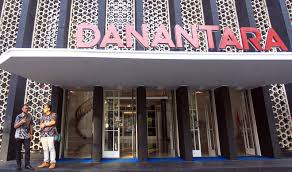
The positive performance of non-oil and gas commodity trade continues to serve as a pillar of the economy. State-Owned Enterprise (SOE) observer Arief Poyuono believes the government’s move to strengthen the export governance of strategic natural resources through Danantara Sumberdaya Indonesia (DSI) is a commendable effort.
According to Poyuono, various issues in export trade, including under-invoicing practices, have persisted for years without receiving serious attention. “If the government now intends to fix export governance, I believe it is a good step. Under-invoicing is not a new issue; it has been a problem for decades and has caused significant losses to the state,” Arief Poyuono stated on Wednesday (3/6/2026).
Arief explained that under-invoicing in exports involves businesses reporting export values or volumes lower than the actual figures. This practice has the potential to reduce state revenue, decrease export foreign exchange inflows into the country, and create unfair business competition. He highlighted studies showing that the accumulated value of exports reported lower than actual realisation reached approximately US$908 billion between 1991 and 2024, equivalent to more than IDR 15,000 trillion.
“With leakages of that magnitude, we certainly cannot consider this a small matter. What surprises me is that for years, such practices were never a major debate. Now that there is an effort to improve and increase transparency, doubts are emerging,” he said.
Arief suggested that the government and Danantara should be given the space to carry out their mandates. He noted it is too early to conclude the impact of the policy before implementation and results can be objectively evaluated. He emphasised that the primary goal is to create a more transparent, accountable, and integrated commodity trading system, which is expected to strengthen Indonesia’s position as a major exporter in the global market.
He also asserted that the enforcement efforts are not aimed at compliant businesses, but rather at practices that potentially harm the state and create market distortions. “The goal is to create a healthier level playing field. It is time for practices that harm the state to be regulated and non-compliant businesses to be dealt with firmly,” Arief added.
Economist and Public Policy Expert from UPN Veteran Jakarta, Achmad Nur Hidayat, stated that Indonesia’s problem is not a lack of commodities, but the leakage of commodity value. Enforcement through DSI is projected to be able to redirect 10% to 20% of potential under-invoiced funds back into the country. This surge in state revenue from the natural resources sector will directly secure funding for various national development programmes, such as the Free Nutritious Meal (MBG) Programme.
An economist from Andalas University also assessed that the formation of PT DSI by Danantara Indonesia would be effective in suppressing under-invoicing and strengthening national economic sovereignty. The government has mandated that coal, CPO, and ferroalloy exports must go through a single door via Danantara starting in September 2026 to strengthen foreign exchange reserves.