
Under-invoicing and Transfer Pricing Implicate Wilmar and Others
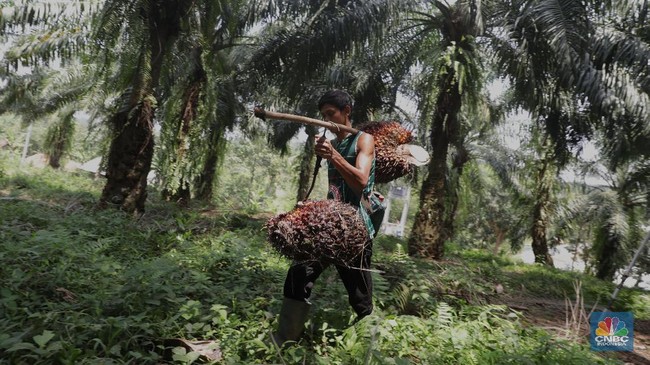
Practices to manipulate export prices to evade tax, such as under-invoicing and transfer pricing, have become a serious concern under President Prabowo Subianto’s administration. The issue came to light after Prabowo used this practice as the basis for establishing PT Danantara Sumberdaya Indonesia (PT DSI) as the sole exporter of strategic commodities from Indonesia, such as palm oil (CPO) and coal. During the 19th plenary session of the DPR RI on Wednesday, 20 May 2026, Prabowo stated in his opening address for the 2027 Macroeconomic Framework and Fiscal Policy Outline (KEMPPKF) that under-invoicing, under-accounting, transfer pricing, and smuggling as loopholes have prevented optimal state revenue for the past 34 years. “For 34 years, what has occurred is known as under-invoicing. Under-invoicing is fraud. Businesses do not report the true value of their sales. Many have set up overseas companies,” Prabowo stated in his speech. Cumulative export under-invoicing from 1991 to 2024 is estimated at US$908 billion, equivalent to approximately Rp15.98 trillion (based on an exchange rate of Rp17,600 per US$1). The figure comes from UN Comtrade 2025 data processed by NEXT Indonesia Institute. Finance Minister Purbaya Yudhi Sadewa revealed the president had previously raised the issue in every cabinet meeting with ministers. He also admitted being tasked by the president to investigate evidence of the practice. After receiving the assignment, Purbaya claimed to have immediately acted to find evidence on the ground, utilising the National Single Window Agency. “I called on top officials from the Finance Ministry to join, forming a ‘Team 10’ that employed AI to verify whether under-invoicing existed in industries such as palm oil,” Purbaya stated. Through the special team at the LNSW, Purbaya conducted random sampling of 10 export companies, particularly CPO. He detected vessel movements, transaction values with destination countries, and export company profiles using AI technology. From the investigation, he claimed to have directly identified under-invoicing in three of the sampled cases. “The arrogance is clear: Indonesian companies send goods to Singapore-based subsidiaries, which, despite being foreign entities, can be traced back to their owners. The goods are then shipped to the US via the Singapore subsidiary,” Purbaya explained. “The vessels go directly from Indonesia to the US, but paperwork is manipulated in Singapore. Previously, we couldn’t detect this as we didn’t know US pricing. So I used AI and forced my team to obtain US import data, and found a company selling that information,” he said. He stated that for each sampled vessel, the export volume remained consistent from Indonesia to Singapore and then to the US. However, the price dramatically increased when passing through Singapore. “In all three cases per company, the US or destination price was double the price sold to Singapore. This means we lost half the potential revenue. The Finance Ministry is suffering losses,” Purbaya said. “I’m struggling to find income, yet this is happening right in front of us. If I randomly selected ten companies and picked three vessels, all showed the same pattern. This indicates it’s a common practice,” he added. The same practice was found in coal exporters via India, he said. This practice means Indonesia’s natural resource sales do not benefit the nation but instead cause losses as state revenue leaks abroad. Following Prabowo’s speech at the DPR, Purbaya went to the Presidential Palace the next day, Thursday, 21 May 2026, to submit a report on ten major palm oil companies involved in trade invoice manipulation or under-invoicing. “This confirms his long-held suspicion that such practices exist, and the data is very strong,” Purbaya said. Purbaya initially refused to disclose the names of the CPO companies but later named some from the list of ten. The ten companies include Wilmar International Limited, Musim Mas Group, PT Salim Ivomas Pratama Tbk, and Golden Agri-Resources. “Wilmar, Musim Mas. There are a few more,” he told journalists at the Coordinating Ministry for Economic Affairs on Tuesday, 25 June 2026. “Golden Agri, yes…Musim Mas was mentioned earlier…Salim Ivomas seems to be included,” he added. When asked about PT Astra Agro Lestari Tbk (Astra Group), Purbaya said it was not on the list. “Astra Agro doesn’t seem to be there. Probably not,” he said. When asked about First Resources, he said he couldn’t recall. When confirmed about Cargill and Bumitama, Purbaya stated he did not know. “I don’t know,” he said. Regardless, Purbaya stressed that law enforcement agencies have already been involved in handling the long-standing illegal export practices. He mentioned that the Financial and Development Supervisory Agency (BPKP) and the Attorney General’s Office have moved to respond to findings regarding ten palm oil companies engaged in export invoice manipulation or under-invoicing. If law enforcement processes this case to trial, he