
Uncovering the Houthi Money Machine: The Capital Behind Attacks on Saudi Arabia
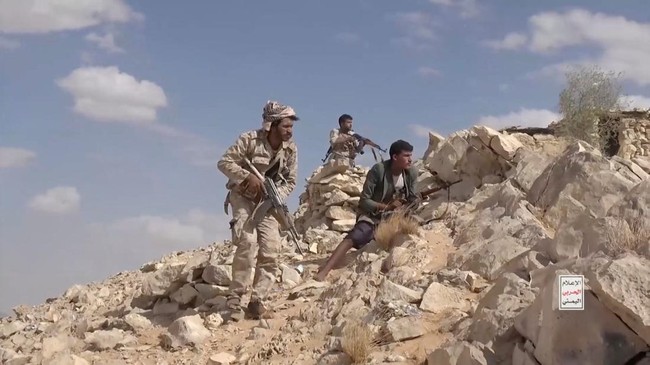
The Yemeni Houthi group has claimed to have attacked several sensitive sites in Riyadh, Saudi Arabia, using missiles and unmanned aerial vehicles (drones) on Saturday.
Footage circulating shows black smoke rising around King Khalid International Airport. The Houthis also claimed to have attacked Saudi Aramco oil facilities in Yanbu, one of Saudi Arabia’s primary oil export hubs on the Red Sea coast.
The Saudi-led military coalition stated that its air defence systems successfully intercepted missiles directed at Riyadh.
These attacks once again demonstrate the Houthis’ ability to conduct cross-border operations using long-range weaponry. The question remains: where does a group based in one of the poorest countries in the Middle East obtain its funding?
Taxes and Fuel as Cash Engines
While the Houthis are often perceived as being entirely funded by Iran, the reality is that much of the group’s operational needs are supported by the economy of the Yemeni regions they control. As the de facto government in Sana’a and much of northwestern Yemen, the Houthis collect income tax, corporate tax, zakat, taxes on cigarettes and fuel, as well as duties on imported goods.
A UN Panel of Experts received information that revenue controlled by the Houthis throughout 2023 reached approximately 3.392 trillion rials. Around 300 billion rials of this amount originated from levies at land checkpoints.
The fuel business also serves as a vital source of income. Oil products entering through ports in Houthi-controlled areas are subject to customs duties and various fees, which are then marketed through companies linked to the group. The UN Panel estimates that this sector generated approximately 1.34 trillion rials between April 2022 and June 2024. This figure includes import duties, illegal levies, and profit margins.
Meanwhile, the US Treasury Department claims that the Houthi’s profitable oil sales operations generate more than US$2 billion per year. This figure is a US government estimate rather than an audited financial report.
Telecommunications provide another revenue stream. The UN Panel estimates that revenue from this sector reached approximately US$92 million. Houthi-controlled companies are also said to receive around US$20 million per month from international calls, though these two figures likely overlap.
Iran supplements this domestic funding engine with missiles, drones, electronic components, training, oil, and cross-border transaction networks. Consequently, the Yemeni economy provides the Houthis’ operational cash, while Iran supplies the military capabilities and international access that would be difficult for the group to build independently.
Source: jawawa.id (https://jawawa.id/newsitem/uncovering-the-houthi-money-machine-the-capital-behind-attacks-on-saudi-arabia-1790088885)
Originally published by CNBC Indonesia (https://www.cnbcindonesia.com/research/20260921163343-128-769661/mengungkap-mesin-uang-houthi-modal-gempur-arab-saudi), translated from Indonesian