
Uncertainty over Electric Vehicle Taxes Deemed to Hinder Energy Transition
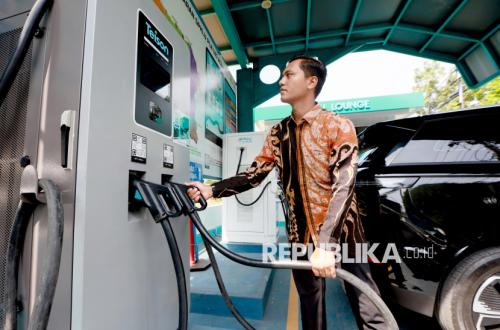
REPUBLIKA.CO.ID, JAKARTA – Uncertainty in regulations regarding electric vehicle tax incentives at the local level is seen as hindering the pace of the energy transition and threatening investor interest in Indonesia. The Institute for Essential Services Reform (IESR) warns that fiscal policy inconsistencies will leave potential consumers in a “wait and see” stance, which in turn will suppress national electric vehicle adoption rates.
Faris Adnan, Head of Transportation Systems Technology at IESR, spotlighted the controversy that arose following the issuance of Ministry of Home Affairs Regulation (Permendagri) Number 11 of 2026. The regulation initially raised concerns by reclassifying Battery-Based Electric Motor Vehicles (KBLBB) as objects of Motor Vehicle Tax (PKB) and Motor Vehicle Ownership Transfer Fee (BBNKB).
Although local governments are still given leeway to provide incentives up to a zero per cent rate, Faris assesses that differing interpretations in the field created uproar regarding tax exemption certainty. To calm the situation, the Minister of Home Affairs subsequently issued Circular Letter (SE) Number 900.1.13.1/3764/SJ, instructing governors to continue exempting PKB and BBNKB for electric vehicles.
“Electric vehicles become less attractive to potential users due to the potential increase in ownership costs. Our data shows that adding PKB and BBNKB alone can increase total ownership costs by up to 14 per cent in the first year. For many people, the decision to buy an electric car is a long-term investment that is not cheap, so tax certainty is a determining factor,” said Faris during a media briefing in Jakarta on Wednesday (6/5/2026).
Faris explained that the push to accelerate electric vehicle adoption is not just about chasing global trends, but an urgent need to safeguard the country’s fiscal health. The transportation sector currently contributes around 70 per cent of emissions from passenger vehicles, with 90 per cent of that coming from land transport. In 2024, emissions from this sector reached 240 million tonnes.
However, the main issue lies in dependence on oil imports. Faris presented data on Indonesia’s drastic surge in oil imports due to global geopolitical conflicts, such as the Russia-Ukraine war. Oil exports and imports, which were around US$10 billion in 2021, jumped to US$28 billion in the subsequent period.
“The impact is deeply felt on our fiscal burden. Energy subsidy and compensation figures skyrocketed from Rp 152 trillion to Rp 502 trillion. On average, the government spends Rp 1.5 trillion every day just on fuel compensation and subsidies,” said Faris.
According to him, using electric vehicles is a strategic solution to break the chain of ballooning subsidies. IESR projects a short-term adoption target for electric vehicles of 3.3 to 4.5 million units by 2030, and a long-term ambition of 200 million units by 2060.
In his presentation, Faris provided a cost-benefit analysis showing that providing tax incentives is actually an investment with a clear payback period.
Based on IESR simulations, for one conventional SUV (internal combustion engine/ICE), the government may appear to “lose” around Rp 15 million in the first year when providing tax incentives for its electric replacement. However, over a 10-year span, savings from fuel subsidies reach Rp 72 million per vehicle.
“Providing these incentives is like an investment. Initially, the state spends more money, but within five to 10 years, the state actually gains significant savings because it no longer has to subsidise fuel for that vehicle,” Faris explained.
Even, in global crisis conditions when world oil prices soar, savings for the state through one electric vehicle can reach Rp 65 million over 10 years. If externalities such as health impacts from air pollution and carbon value are factored in, savings for one electric car can reach Rp 124 million in a decade.