
Uncertainty Becomes a Barrier to US Investment in ASEAN
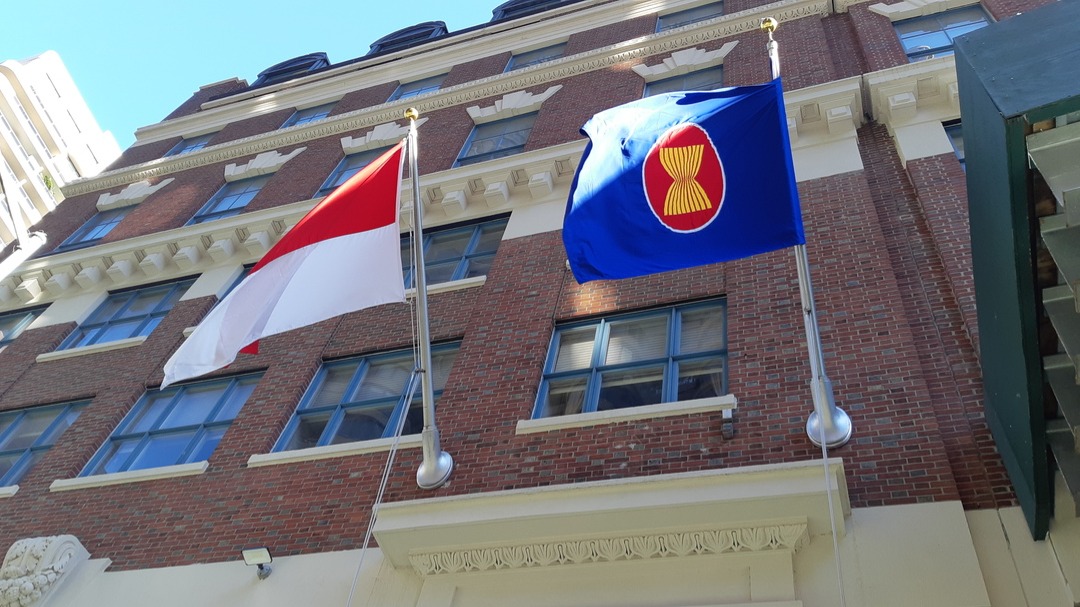
Uncertainty remains a significant issue for U.S. investors in Indonesia and much of ASEAN. This stems from domestic regulations and U.S. tariff policies.
01 Sep 2026 11:14 WIB · Internasional
KOMPAS/LARASWATI ARIADNE ANWAR
Regulatory uncertainty is one of the main obstacles to American companies’ investments in Southeast Asian countries. Uncertainty arises, among other things, when changes in regulations are difficult to predict, advance notice is inadequate, consultation space is limited, or companies do not have enough time to adjust. The pressure is compounded by U.S. tariff policies.
The President and CEO of the US-ASEAN Business Council (USABC), Brian McFeeters, stated that the issue of regulatory certainty is not only occurring in Indonesia. Similar issues are happening in the Philippines and other ASEAN countries.
“The main thing that companies want is predictable regulations. This is not something that is specifically an issue in Indonesia. It is also a major concern in almost all of ASEAN,” said McFeeters in Jakarta, Thursday (27/8/2026).
Before coming to Indonesia, McFeeters led a business mission to the Philippines. According to him, American companies there also prioritize regulatory certainty as a primary need.
If the new regulations significantly impact operations or cost structures, companies hope to receive a transition period. They also expect a consultation session regarding the policies.
The Head of the USABC Indonesia Representative, Nugraheni Widia Utami, stated that regulatory certainty plays a crucial role in determining competition among ASEAN countries in attracting US investment. “When companies choose a country to invest in, they compare Indonesia with other countries, assessing whether it is easier to understand or provides certainty,” Utami said.
The USABC team in Indonesia has held approximately 45 meetings with the government throughout this year. The meetings discussed various issues, ranging from digital, manufacturing, to agriculture. These meetings are part of the consultation mechanism between the government and the business world.
Utami stated that the number of meetings indicates the intensity of communication between USABC and the government. “We understand that communication and a close relationship with the government are very important for our members, as uncertainty often arises when the relationship and discussions between the government and companies are not functioning,” Utami said.
USABC represents more than 175 companies from various sectors, including mining, oil and gas, information and communication technology, agriculture, and health.
The main thing that companies desire is predictable regulations. This is not something that is specifically an issue in Indonesia. It is also a significant problem in almost all of ASEAN.
This assessment is in line with the US-Indonesia Investment Report 2025: Year of Transition, published by the business association of US companies in Indonesia, AmCham Indonesia, together with the US Chamber of Commerce on November 17, 2025. The report assesses regulatory uncertainty and inconsistent policy implementation as the main obstacles to US investment in Indonesia.
The Indonesian market remains attractive and offers growth potential. However, uncertainty makes it difficult for investors to make long-term investment decisions.
In an anonymous survey of member companies of AmCham Indonesia, 80 percent of respondents identified regulatory uncertainty as the main structural barrier. Meanwhile, 73.3 percent cited a lack of transparency, and 66.7 percent pointed to bureaucratic complexity.
The report also highlights weak inter-agency coordination, overlapping import licensing, a non-transparent quota system, and uncertainty in tax administration. Additionally, regulations regarding local content, data, and digital trade are considered to hinder investment in several sectors.
The US tariff policy adds to the uncertainty. Several US tariff regulations for ASEAN countries are still changing and not yet finalized. According to McFeeters, the main issue is not the magnitude of the tariffs, but rather the lack of certainty regarding US tariff policies in the future.
As a result, the company is unable to make long-term plans. McFeeters stated that the company can still adapt to high rates if the amounts are clear and do not continue to change.
“If two years ago you said a rate of 19 percent and that was it, perhaps companies would not have been too pleased, but they would have adjusted. Now they are asking, what comes next and will it change,” he said.
Utami stated that the difference in tariffs also affects the competitiveness among ASEAN countries in capturing the US market. “If Indonesia receives slightly lower tariffs compared to Vietnam or Thailand, it will assist Indonesian producers who continue to export to the US because their products will be more competitive in the American market,” she said.
Since July 24, 2026, the United States has imposed an additional 10 percent tariff on most goods from Indonesia. Malaysia and Cambodia are also subject to a 10 percent tariff, while Vietnam, Thailand, the Philippines, and Singapore face a 12.5 percent tariff.
The tariff is part of the US trade policy based on Article 301 of the Trade Act of 1974. This regulation concerns the prohibition of imports of goods produced with forced labor.
However, the uncertainty regarding tariffs is not over. The US government is still conducting another Section 301 investigation concerning overcapacity and manufacturing production. The investigation includes Indonesia, Malaysia, Cambodia, Thailand, Vietnam, and Singapore. As of August 27, 2026, there has been no final decision regarding the trade actions to be taken based on the investigation.
Therefore, although Indonesia’s rates are currently lower compared to Vietnam and Thailand, the company cannot guarantee whether the rate structure will remain.
Amid various uncertainties, trade between the
Source: jawawa.id (https://jawawa.id/newsitem/uncertainty-becomes-a-barrier-to-us-investment-in-asean-1788249087)
Originally published by kompas.id (https://www.kompas.id/artikel/uncertainty-becomes-an-obstacle-to-investment-as-to-asean)