
Uncertain Future for Coal Power Plant Phase-Out
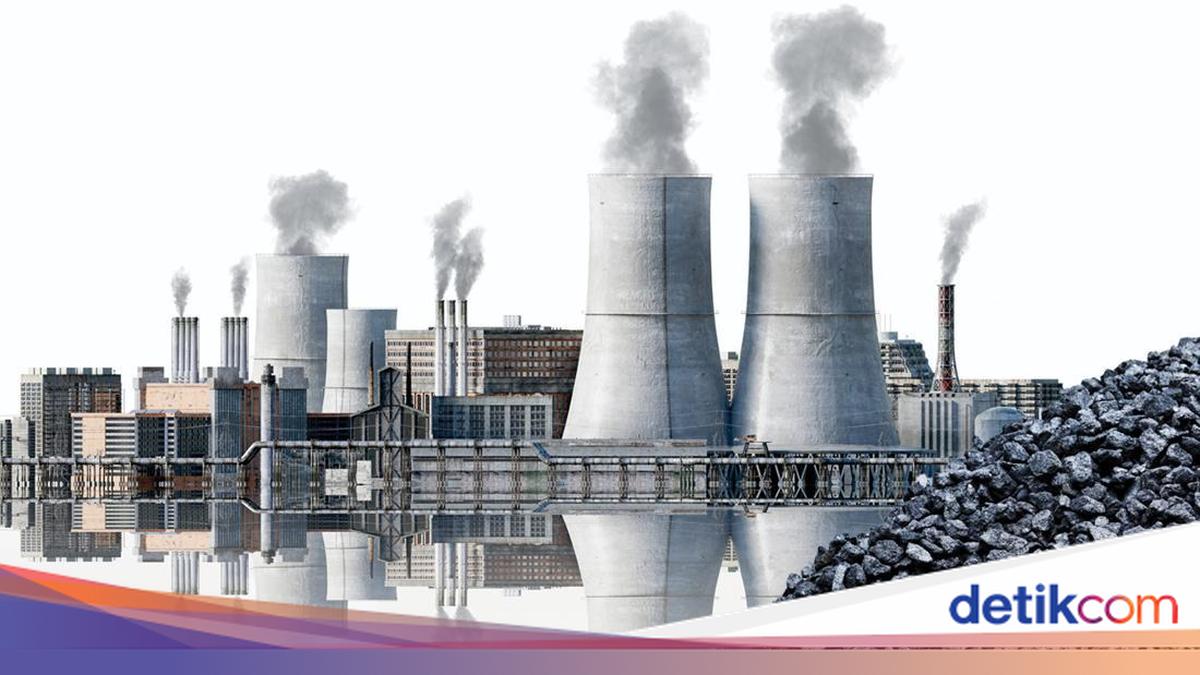
For more than 34 years, Linda and her family have lived enveloped in smoke believed to originate from the coal combustion of the Suralaya Steam Power Plant (PLTU). Her home in Jelawe, Suralaya, Banten, is less than a kilometre from the plant. Almost every dry season, coal dust blankets her yard. “Inside the house, the dust is also uncontrollable, sticking to the furniture,” the 39-year-old said. Many residents suffer from skin and respiratory diseases, as well as chronic illnesses like cancer, due to the dust and smoke shrouding their environment. Every week, people complain of chest tightness and itching, and the numbers continue to rise each year. “This year alone, three people have died from cancer,” Linda said.
This dry season has been particularly harsh. Residents of Jelawe are also haunted by severe drought. Most must share water from a well that yields very little groundwater. Linda suspects this drought is caused by massive water extraction by the new Suralaya PLTU unit, which began operating two years ago. In mid-2020, the Suralaya plant built two additional units with a capacity of 2,000 megawatts to meet the electricity needs of the State Electricity Company (PLN). Residents are forced to use polluted river water for bathing and washing clothes. “It’s not dirty, but how can I put it, it’s clear but smells. It’s contaminated, you know, there’s a lot of rubbish,” Linda revealed.
It is uncertain how long Linda and other Jelawe residents will endure this suffering. The government’s plan to retire coal-fired power plants early is now on the brink of failure following the outbreak of war between the United States and Iran in the Middle East. The war has prompted many countries in Europe and Asia to reconsider the use of alternative energy sources due to supply constraints. The closure of the Strait of Hormuz has disrupted energy supplies, particularly LNG, to several countries. As a result, many nations, including Germany, Bangladesh, and South Korea, are increasing their use of fossil fuels to meet their energy needs.
The Indonesian government is also evaluating the early retirement plan for coal plants, which is stipulated in Presidential Regulation Number 112 of 2022. One of its articles plans for the retirement of all coal plants by 2040 at the latest. However, Deputy Minister of Energy and Mineral Resources Yuliot Tanjung stated that the early retirement plan can only be implemented if funding is available, as shutting down the plants requires significant costs. Indonesia had previously secured funding from the Asian Development Bank to retire the Cirebon-1 PLTU, valued at around USD 4.2 billion. Yuliot said the plan was cancelled because the technology at Cirebon-1 was still relatively new and the funding would become a state debt burden. “That is why we at the Ministry of ESDM are asking for a joint study from the financial and technical aspects,” Yuliot said.
President Prabowo Subianto had previously announced the construction of a solar power plant with a capacity of 100 gigawatts, targeted for realisation by 2029, at an estimated cost of IDR 1,811 trillion. However, this plan also appears to be stalled. Yuliot said the government is evaluating the price and reliability of solar power to meet national electricity needs. “It turns out the offer was around USD 20 cents (per kWh). Compared to USD 4.5 cents (per kWh for coal power), this 20 cents is also a burden,” he said.
Conversely, instead of developing alternative energy sources to replace damaging coal, the government is planning to build more coal-fired power plants. This plan is outlined in the 2025-2034 Electricity Supply Business Plan (RUPTL), which opens up the possibility of building fossil energy sources with a capacity of 6.3 gigawatts. Faisal Ratuela, Anti-Mining and Energy Campaigner at the Indonesian Forum for the Environment (Walhi), said the plan to develop coal plants in the RUPTL contradicts the government’s commitment to promoting clean energy. “If this (early retirement) process becomes increasingly uncertain, it is the residents who will again be the most affected, friends,” Faisal said.
A study released by the Center of Economic and Law Studies (Celios) and the Centre for Research on Energy and Clean Air (CREA) in November 2025 shows that the operation of 20 coal-fired power plants caused approximately 89,000 deaths between 2020 and 2025. If operations continue, it is projected to potentially cause between 97,000 and 245,000 deaths in the 2026-2050 period. The same historical data indicates that the health impacts caused by these coal plants have resulted in economic losses of around IDR 650-1,630 trillion from 2020 to 2025. This figure is projected to rise to between IDR 1,115 and 2,830 trillion for the 2026-2050 period. “The existence of these PLTUs has reduced aggregate community income by up to IDR 48.4 trillion per year and negatively impacted 1.45 million workers due to decreased productivity, increased illness, and loss of employment opportunities,” the study stated.