
Unbridgeable Gap Between Palestine and Israel
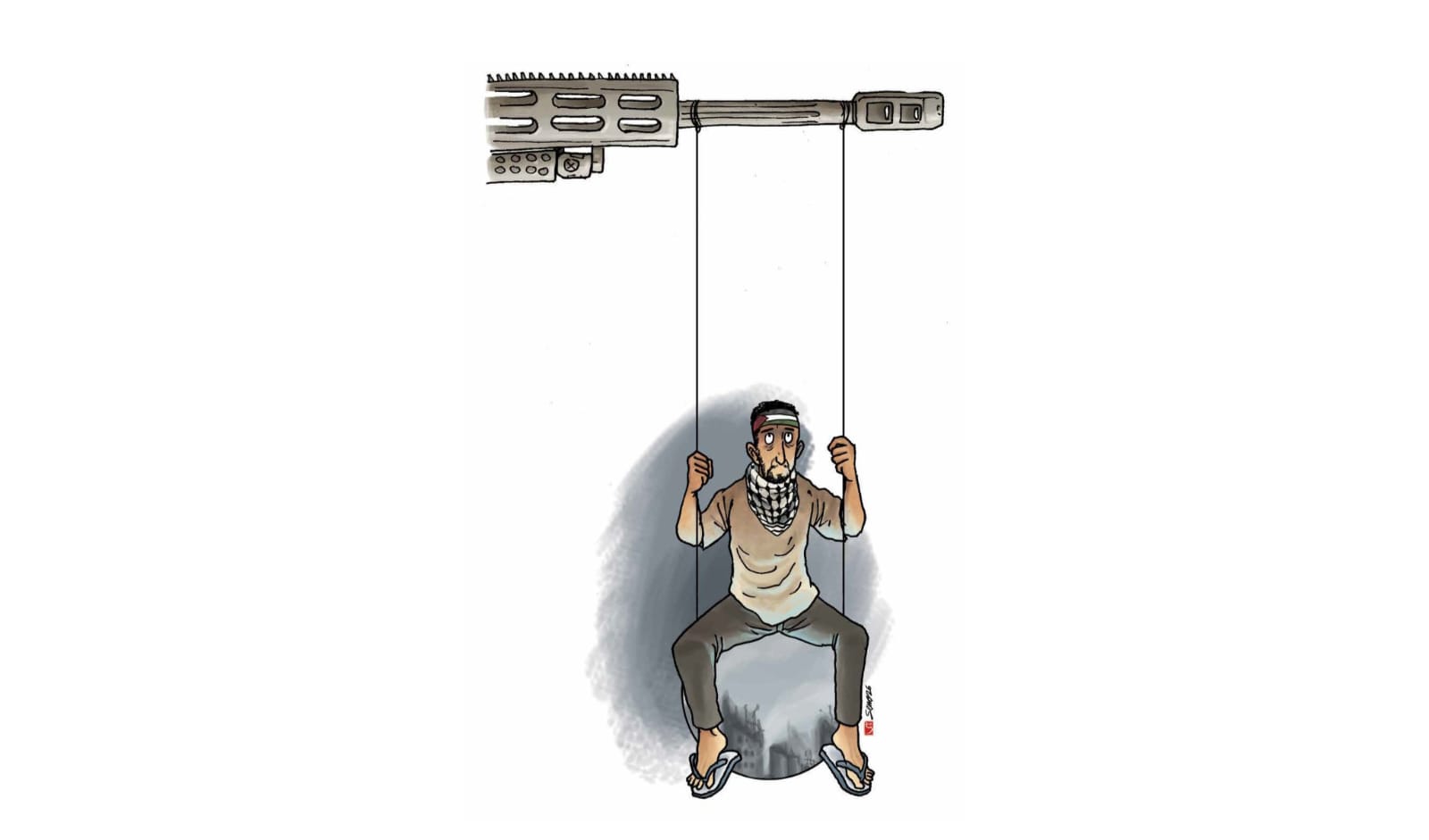
On 31 July, former US President Donald Trump announced a historic event, stating that Hamas had agreed to disarmament. Trump added that he had contacted Israeli Prime Minister Benjamin Netanyahu, who ‘agreed’ to a phased disarmament of Hamas alongside a gradual withdrawal of all Israeli military forces (IDF) from Gaza. However, there was no comment from Netanyahu. Conversely, Israeli National Security Minister Itamar Ben-Gvir, leader of a key coalition party in Israel’s far-right government, rejected the IDF’s withdrawal from the enclave. Thus, Trump’s statement was met with scepticism regarding whether the Board of Peace (BoP), which he launched last October to end the genocide in Gaza, could be implemented.
The BoP was formed to implement Trump’s 20-point plan as the second phase of resolving the Hamas-Israel war. The first phase required Hamas to return the remaining Jewish hostages – both living and remains – in exchange for the IDF withdrawing to the Yellow Line, or 53 per cent of Gaza’s territory. Under an agreement mediated by the US, Egypt, Turkey, and Qatar, Hamas fulfilled its obligations by 10 October 2025. However, the IDF instead expanded the Yellow Line to 70 per cent of Gaza’s territory. Moreover, contrary to the agreement, the IDF continued its genocidal attacks and restricted the entry of international humanitarian aid for Gazans suffering from starvation after 90 per cent of civilian infrastructure was destroyed.
The intensification of IDF attacks in Gaza and the expansion of the Yellow Line aim not only to force Hamas to disarm but also to displace the population. In other words, Israel is also carrying out ethnic cleansing after Netanyahu failed to achieve his war goal of defeating Hamas. Hamas’s refusal to disarm is used as a pretext for non-compliance with the agreement, even though the disarmament issue was supposed to be discussed in the second phase. Hamas’s firm stance on retaining its weapons stems from the fact that they are the only leverage Palestinians have against Israel in their struggle to realise the aspiration of a Palestinian state based on relevant UN Security Council resolutions. The Palestinian Authority (PA) under President Mahmoud Abbas, which holds international legitimacy, cannot be relied upon to achieve this goal. The weak PA, whose existence is based on the Oslo Accords, is viewed as an Israeli collaborator. Moreover, Israel has suspended the Oslo Accords, leaving the PA powerless against it.
On the international stage, PA diplomacy has succeeded in strengthening its political position. Since the genocide Israel launched in response to the Hamas attack on 7 October 2023, which killed more than 1,100 Israelis, a growing number of countries have recognised the state of Palestine, including key Israeli allies such as the United Kingdom, France, Italy, Spain, Ireland, and Norway. Hamas views diplomatic struggle alone as insufficient to provide leverage against Israel. After all, since the Oslo Accords were signed in 1993, the construction of Jewish settlements in East Jerusalem and the West Bank has expanded, contradicting the agreement.
Hamas’s softening stance on disarmament is due to three main factors. First, the US-Israeli aggression against Iran since 28 February has sidelined the Palestinian issue. The Iran war, creating a global geopolitical and energy crisis, has diverted the international community’s attention to domestic issues. The war in Lebanon has further eroded global attention on Palestine. Israel has exploited this momentum to persecute Palestinians in both Gaza and the West Bank. Second, the resilience of Gaza’s residents has declined, as has Hamas’s popularity. Ending the war has become the priority for Gazans. Third, these two problems made it easier for Turkey, Egypt, and Qatar to persuade Hamas, now led by Khalil al-Hayya. Fourth, the disarmament of Hamas is a compromise path. Hamas’s weapons are not handed over to Israel but to the Palestinian National Committee, a technocratic government whose members are not affiliated with any Palestinian faction. As the IDF withdraws gradually from Gaza, an International Stabilisation Force and Palestinian police will maintain security, after which Gaza’s reconstruction will begin. Trump, with absolute veto power, will oversee the BoP, with Nickolay Mladenov, a senior Bulgarian diplomat, serving as its director-general. Despite Hamas’s willingness to disarm, Netanyahu responded coldly. Even as Trump announced what he called a historic event, Israel intensified its attacks on Gaza. This signals Netanyahu’s defiance. From the perspective of Israeli domestic politics, with elections scheduled for October, Hamas’s disarmament followed by an IDF withdrawal does not benefit Netanyahu. Ending the war without achieving Israel’s objectives could dissolve the government, as Itamar Ben-Gvir and Finance Minister Bezalel Smotrich’s party would likely withdraw. Even if they did not, Netanyahu would lose the election and inevitably face trial on corruption and bribery charges. Beyond electoral concerns, there is a strong consensus among Israelis against a two-state solution. Although the BoP does not involve a Palestinian entity, many countries, including Saudi Arabia, Egypt, Turkey, Pakistan, and Western nations, see this project as potentially leading to the establishment of a Palestinian state with territory in East Jerusalem, the West Bank, and Gaza based on pre-June 1967 borders. This is Israel’s fear. It is no surprise that Israel seeks to annex not only Gaza but also the West Bank, rendering the two-state solution impossible.
Source: jawawa.id (https://jawawa.id/newsitem/unbridgeable-gap-between-palestine-and-israel-1785815432)
Originally published by Media Indonesia (https://mediaindonesia.com/opini/917887/gap-tak-terjembatani-antara-palestina-dan-israel), translated from Indonesian