
UNAS Dean Outlines Islamic Ethics at Spiritual Ecology Forum 2026 in Taiwan
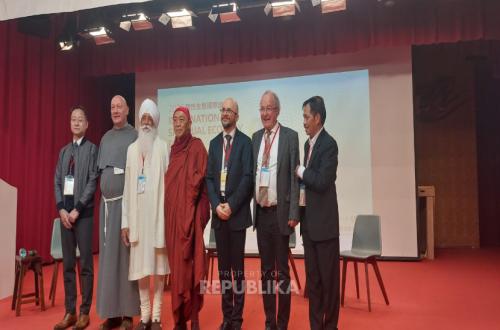
TAIWAN — Universitas Nasional (UNAS) Dean of the Faculty of Biology and Agriculture, Dr Fachruddin M. Mangunjaya, was invited to speak at the International Spiritual Ecology Forum 2026, held in Taiwan from 7 to 9 November 2026. The international forum brought together religious leaders, academics, scientists and environmental practitioners from various countries to discuss the relationship between spirituality, religion and environmental sustainability.
At the forum, organised by the University for Life and Peace (ULP), Fachruddin represented the Islamic perspective with a paper entitled “The Earth as a Trust: Islamic Ethics and Ecological Practice”. His presentation was scheduled for 7 November 2026 at Ling Jiou Mountain, Taiwan, during a dialogue session on ecological practices grounded in religious traditions.
Fachruddin explained that Islam views the earth not merely as a resource for human exploitation, but as a trust from Allah SWT that must be protected and for which people are accountable. He outlined the concepts of tawhid, khalifah and amanah as theological foundations for human responsibility towards nature. Other Islamic ethical principles, including mizan (balance), ihsan (goodness), adl (justice) and wasatiyyah (moderation), also provide guidance for developing environmentally responsible behaviour.
Drawing on Indonesia’s experience, Fachruddin introduced several community- and faith-based conservation practices. One example is the Ekopesantren movement, an approach that integrates environmental education with Islamic values in the life of Islamic boarding schools. Through waste management, water and energy conservation, tree-planting, ecological gardens and engagement with surrounding communities, pesantren can become centres for learning and practical environmental sustainability.
He also highlighted the contribution of environmental fatwas issued by the Indonesian Ulema Council (MUI), conservation rooted in local wisdom, and the potential of environmental waqf to support ecosystem restoration and biodiversity protection. Religious teachings, he said, need to be translated into concrete action, policy, education and changes in public behaviour.
This year’s forum was themed “From Sacred Wisdom to Lived Systems and Collective Action” and featured representatives of Buddhist, Catholic, Islamic and Sikh traditions, as well as academics and environmental advocates. The gathering provided a space for interfaith dialogue and cooperation in addressing the global ecological crisis.
Fachruddin’s participation also introduced Indonesia’s experience of connecting religious values, science and nature conservation to an international community. His appearance is expected to strengthen UNAS’s contribution to the development of spiritual ecology and encourage global collaboration to protect the earth as a shared trust.
Source: jawawa.id (https://jawawa.id/newsitem/unas-dean-outlines-islamic-ethics-at-spiritual-ecology-forum-2026-in-taiwan-1794149442)
Originally published by Republika (https://khazanah.republika.co.id/berita/to6r59483/doktor-unas-ungkap-etika-islam-dalam-forum-ekologi-spiritual-2026-di-taiwan), translated from Indonesian