
Unable to Detect China's J-20, US Allocates Rp25.3 Trillion for E-7
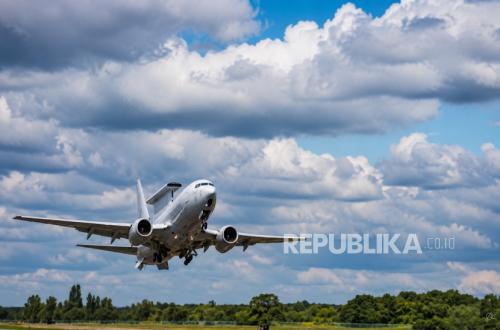
The United States Department of Defence has again allocated funds amounting to 1.55 billion US dollars for the procurement of E-7 Wedgetail Airborne Early Warning and Control (AEW&C) aircraft in the 2027 fiscal year. This decision reverses the Pentagon’s 2025 plan to cancel the programme. Secretary of the Air Force Troy Meink previously informed the House Armed Services Committee that the government would propose an additional budget of around 1.5 billion dollars for the E-7 programme. The funds consist of 651 million dollars diverted from the Navy’s procurement budget and 899 million dollars from the Air Force’s procurement budget, bringing the total to 1.55 billion dollars. This shift in budget priorities demonstrates Washington’s growing focus on modernising Air Force capabilities. Conversely, several Navy programmes are being sidelined, including the sixth-generation F/A-XX fighter jet project, whose funding was halted to make room for the Air Force’s F-47 fighter development. The procurement of the E-7 is considered urgent because the E-3 Sentry early warning aircraft fleet, which has long been the backbone of the US Air Force, is increasingly ageing. The operational readiness rate of the E-3 continues to decline due to the aircraft’s age, while maintenance costs rise annually. The push to accelerate the E-7 procurement has also strengthened after China operated the new generation KJ-500 and KJ-3000 AEW&C aircraft. Both systems are assessed to present far more modern air sensor capabilities compared to the United States’ ageing fleet, as reported by Military Watch Magazine on Thursday (24/6/2026). The US Air Force’s dependence on early warning aircraft is also far greater than that of China or Russia. The fighter jets of both countries are generally equipped with larger radars with longer range. For example, the radar used by the F-35 fighter is estimated to be only about one-third the size of the radar on China’s J-15B and J-16 fighters. The need to replace the E-3 came to the fore after the US Air Force faced China’s J-20 stealth fighter. In March 2022, Commander of Pacific Air Forces General Kenneth Wilsbach admitted that the E-3 radar was no longer capable of effectively detecting modern stealth aircraft. ‘The sensors we use on the E-3 are no longer adequate to face 21st-century threats, especially stealth platforms like the J-20. The aircraft cannot see targets far enough away to give our pilots an advantage. That is why I want to have the E-7,’ Wilsbach said at the time. The urgency of modernisation is expected to increase further as China is projected to operate the world’s first sixth-generation fighter jet in the early 2030s. Although it carries far more modern capabilities than the E-3, the E-7 still uses a smaller radar compared to China’s latest AEW&C systems. The E-7’s radar size is closer to the KJ-500, while China has now developed the KJ-3000 which possesses higher capabilities.