
UN Urges US-Iran Peace Negotiations to De-escalate Conflict
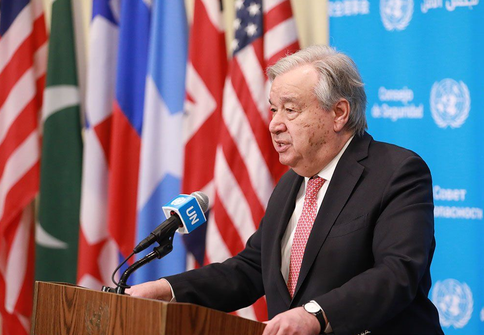
United Nations Secretary-General António Guterress urged the resolution of the Middle East conflict through negotiation channels on Tuesday (1/9). This call emerged amidst an escalation of mutual attacks involving the United States and Iran.
Via the X platform, Guterres emphasised the urgency of peace based on international law. “We need negotiations towards a just and lasting peace, more than ever, in accordance with international law, including the UN Charter and relevant UN resolutions,” he wrote.
Guterres also highlighted the fragility of stability in the region. He stated that various agreed-upon treaties and ceasefires are being continuously violated, while cycles of retaliatory attacks persist.
Tensions escalated after Tehran’s Islamic Revolutionary Guard Corps (IRGC) launched a retaliatory strike following US attacks on Iranian territory on the same day. In response, US President Donald Trump issued a stern threat, warning of devastating attacks if Iran continues to retaliate against American interests.
Based on field reports, several regions in Iran have been targeted by airstrikes, including:
Qeshm Island and Bandar Abbas
Sirik, Chabahar, and Konarak
Jiroft Airport in Kerman Province
Infrastructure and nuclear facilities under IAEA supervision.
Meanwhile, Iranian President Masoud Pezeshkian levelled sharp criticism at the effectiveness of the UN while speaking at the SCO+ meeting on the sidelines of the Shanghai Cooperation Organisation (SCO) Summit in Bishkek, Kyrgyzstan. Pezeshkian asserted that the UN must transform to be capable of fulfilling its primary mission of preventing war.
“The UN must evolve into an institution that more accurately reflects the realities of a new world and is more effective in fulfilling its primary mission, which is to maintain international peace and security,” said Pepereshkian.
He also condemned the joint aggression by the United States and Israel against Iran, including attacks on nuclear facilities under the supervision of the International Atomic Energy Agency (IAEA). Pezeshkian questioned the credibility of international mechanisms if the sovereignty of member states is no longer protected from the use of military force.
To date, the situation in the Middle East remains tense, with reports of civilian casualties, including an incident in Sirik involving a wedding ceremony, which has triggered diplomatic outrage from Tehran.