
UN Issues Warning of Impending Extraordinary Global Disasters
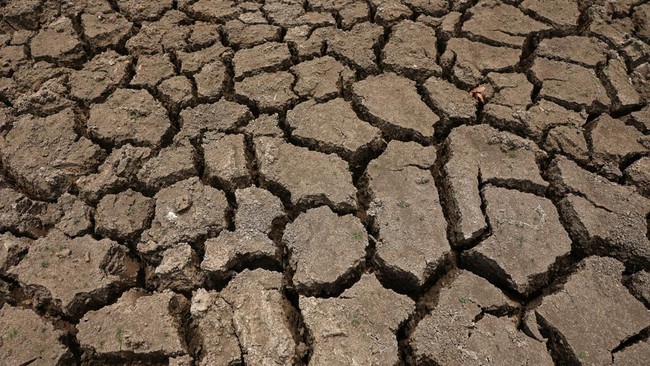
The United Nations issued a severe warning on Thursday that the El Niño climate phenomenon is now strengthening into a ‘super’ or giant scale. This extreme phenomenon is projected to persist until February 2027, increasing the risk of flash floods, severe droughts, and extreme heatwaves in many countries.
Quoting CNBC International, Celeste Saulo, Secretary-General of the UN World Meteorological Organization (WMO), revealed the terrifying scale of the threat this phenomenon poses to global society. “This has the potential to deal a heavy blow to societies and economies worldwide,” she stated.
The Asia-Pacific and Latin American regions are certain to bear the heaviest burden of these direct impacts. However, the entire world is bracing for the domino effect on key commodities, ranging from maize, cocoa, and coffee to global energy supplies.
“We have already seen disruptions and destruction due to droughts and floods, and we expect these impacts to increase as El Niño strengthens,” she explained.
These adverse impacts have been confirmed through an Oxfam report in August, which linked El Niño to unpredictable weather and droughts in Guatemala, Honduras, and El Salvador, resulting in severe crop losses. El Salvador even declared a national state of emergency on 25 August.
Simultaneously, Indonesia is currently struggling against devastating forest fires. In India, a weaker monsoon season is expected to disrupt the growth of paddy, sugarcane, cotton, and soybeans. Meanwhile, officials in Peru have acknowledged that the anchovy fishery, commonly used for animal feed, has taken a significant hit.
The energy sector is also not immune to the threat of crisis. Extreme weather is expected to have unpredictable impacts on global energy production and demand, potentially triggering disruptions in hydropower, wind, and solar power generation, as well as oil refining, gas, and mining operations. Responding to this unstoppable escalation, UN Secretary-General António Guterres highlighted that El Niño is visibly expanding before our eyes.
“The world is in a danger zone of extreme weather. The race now is between increasing risks and our commitment to taking climate action and protecting people. We must win that race,” he asserted.
For context, the El Niño event (meaning “boy” in Spanish) is a natural climate pattern that oscillates with La Niña every two to seven years. This event is triggered when sea temperatures in the eastern tropical Pacific rise 0.5 degrees Celsius above the long-term average.
The WMO noted that sea surface temperatures reached more than 2 degrees Celsius above normal in July, and surged to a range of 2.2 to 2.6 degrees Celsius above normal from late July to mid-August. The warning becomes even more pressing as WMO research shows that the subsurface ocean is storing much more extraordinary warmth, with temperatures more than 8 degrees Celsius above average during July and early August.