
UN Issues Stark Warning as 400 Million Africans Still Lack Access to Clean Drinking Water
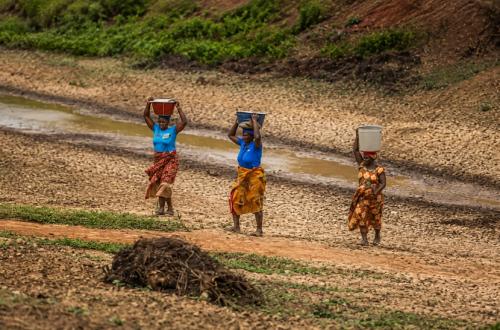
The water and sanitation crisis remains one of the biggest obstacles to Africa’s development. More than 400 million people on the continent still lack access to basic drinking water services, whilst over 700 million are without safely managed sanitation facilities.
Claver Gatete, United Nations Under-Secretary-General and Executive Secretary of the UN Economic Commission for Africa, warned that the crisis not only threatens public health but also undermines productivity, food security, and economic growth across the region. Speaking at the 49th Ordinary Session of the African Union Executive Council in Addis Ababa, Ethiopia, Gatete said, ‘Water is at the centre of every major development challenge facing Africa today.’
He noted that climate change is intensifying pressure on water resources, with increasingly unpredictable rainfall patterns and more frequent droughts, floods, and other climate shocks disrupting agricultural production. The impact is particularly severe for economies heavily reliant on farming, with some African nations losing up to five percent of their gross domestic product annually due to climate-related disruptions.
The water crisis is also closely linked to energy poverty. Nearly 600 million Africans still live without access to electricity, limiting their ability to boost productivity, develop industries, expand public services, and compete in the global economy.
Gatete stressed that governments can no longer address water, energy, agriculture, and climate change as separate issues. He called for integrated planning that connects water management with agriculture, energy, industry, urban development, and climate policy. Such an approach is increasingly vital as population growth, urbanisation, industrial expansion, and rising demand for food and energy all place greater strain on water resources. Without coordinated planning, competition for water will intensify, with cities requiring more water for households and industry whilst agriculture still needs substantial supplies to maintain food production.