
UN Identifies Israeli Tank Fire as Cause of Fallen Indonesian Troops in Lebanon
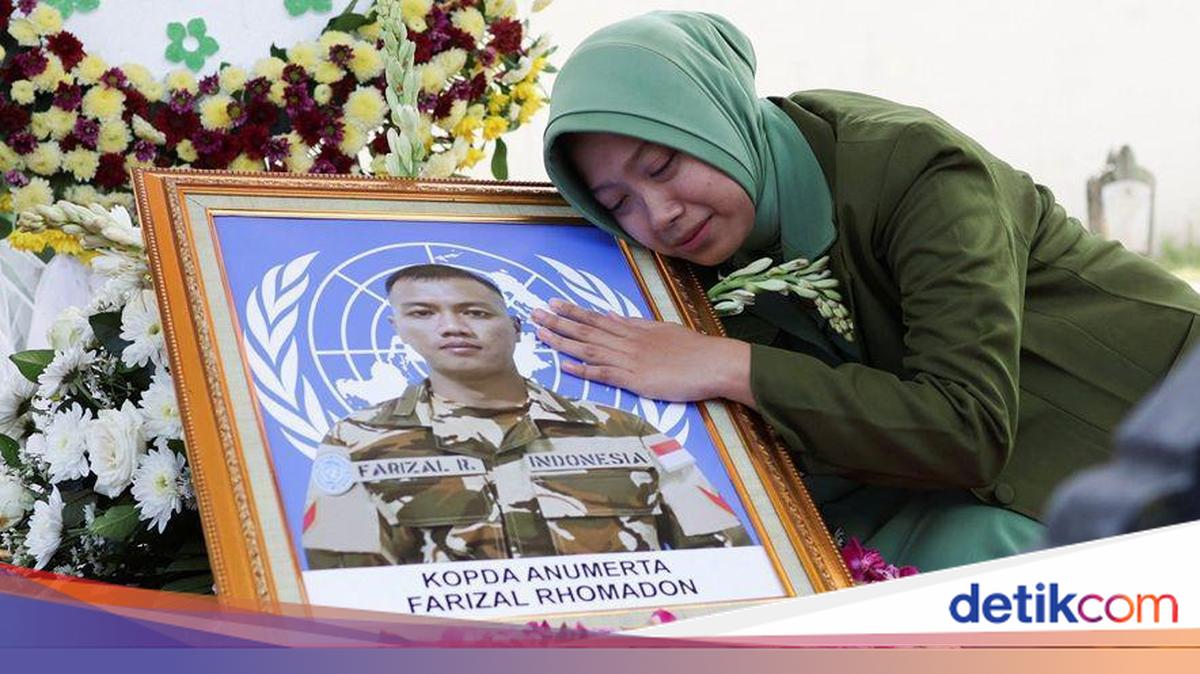
The Indonesian government, through the Ministry of Foreign Affairs (Kemlu), has strongly condemned Israel’s attacks in southern Lebanon, which have heightened risks to UN peacekeeping forces. This statement follows Kemlu’s receipt of the UN’s preliminary investigation results regarding the deaths of three TNI soldiers at the end of March.
However, security experts assess that condemnations and demands are still insufficient as a long-term solution to the conflict in southern Lebanon, particularly involving UN peacekeeping forces.
They view the escalation of conflict in Lebanon as likely to increase alongside the conditional ceasefire between Iran and the US.
The UN’s preliminary findings indicate that the incidents killing three TNI soldiers in Lebanon at different times stemmed from Israeli tank projectiles, with the possibility of a Hezbollah explosive trap.
What is the Indonesian government’s response?
Kemlu claims to have received and responded to the UN’s preliminary report.
Kemlu is urging the UN to conduct a thorough investigation to ensure justice for the victims and to bring the attackers to court.
“We urge all relevant parties to investigate and prosecute the perpetrators, as well as ensure accountability for the crimes committed against peacekeeping personnel,” emphasised Veronica during a press conference at the Kemlu office in Central Jakarta on Wednesday (07/04).
Vero stated that if the final investigation results align with the preliminary findings pointing to Israeli military involvement, Indonesia is prepared to take very firm diplomatic steps.
“We emphasise that such actions constitute a serious violation of international law,” she said, as quoted by Kompas.com.
The government will request that the UN urge relevant authorities to investigate, prosecute, and ensure full accountability for the perpetrators.
“These incidents are inseparable from the deteriorating situation in Lebanon. Indonesia continues to strongly condemn Israel’s attacks in southern Lebanon, which have significantly increased the risks faced by UN peacekeeping personnel,” she added.
However, she did not elaborate on the specific concrete diplomatic steps to be taken.
In a written statement, the Head of the Defence Information Bureau (Karo Infohan) of the Ministry of Defence’s Secretariat General, Brigadier General TNI Rico Ricardo Sirait, said they would still coordinate with TNI parties to determine next steps.
“I am consulting with the TNI’s Kapuspen, as this is still related to TNI Headquarters,” he said.
Expert: Condemnations and Demands Are Not Enough
Professor Muradi, Professor of Political and Security Studies at Padjadjaran University, assesses that condemnations and demands are not sufficient to resolve this issue.
“Instead, we should be much firmer. Because the soldiers sent there represent the state,” he said.
He stated that based on the UN’s preliminary findings, Indonesia should already have sufficient grounds to take concrete steps.
Indonesia could suspend the deployment of soldiers to peacekeeping forces in the Lebanon area until the UN grants them greater authority to respond to safety threats.
“So it’s not just Indonesia’s interest, but also for countries sending troops to the peacekeeping force,” he said.
This suspension of TNI members could be implemented until there is clarity from the UN regarding authority to respond to threats to life.
Professor Muradi noted that during this suspension period, Indonesian soldiers could still join peacekeeping forces in other countries, such as Jordan.
The authority for UN peacekeeping forces to respond to threats also has precedents, said Professor Muradi. For example, in Mali and Congo.
“They [peacekeepers there] receive greater authority to respond when there is an attack,” he said.
He is concerned that without authority granted by the UN to these peacekeeping forces, it will only prolong the existing conflict. “Because what they face is a much more structured state entity,” he said.
Professor Muradi also observes that as Iran and the US agree to a conditional two-week ceasefire, Israel will deploy its forces in Lebanon.
“This means the escalation will actually be greater there [Lebanon] compared to attacks on Iran,” he said.
Who is responsible for the deaths of the three TNI soldiers?
The UN’s preliminary investigation found that the death of TNI soldier Farizal Rhomadon was caused by Israeli tank fire in Lebanon on 29 March.
Meanwhile, the deaths of two TNI soldiers, Zulmi Aditya Iskandar and Muhammad Nur Ichwan, in Lebanon on 30 March were caused by an improvised explosive device likely planted by Hezbollah.
“This is a preliminary finding, based on initial physical evidence,” the UN stated in an email to the BBC on Tuesday (07/04).
The UN added that the entire investigation process is still ongoing and involves relevant parties.
The UN also described these incidents as “unacceptable” because they could be classified as war crimes under international law.
The UN stated that it has requested these cases to be investigated and prosecuted by national authorities to bring the perpetrators to court.
Three TNI soldiers, part of the peacekeeping force in Lebanon (UNIFIL), died in two separate incidents in southern Lebanon on 29 and 30 March.
TNI Chief, General Agus Subiyanto, has ensured that all victims receive an Extraordinary Promotion (KPLB).
What are the details of the preliminary investigation?
In an email received by the BBC, UNIFIL provided more detailed preliminary findings on the incidents of 29 and 30 March.
These incidents “have taken the lives of three of our brave Indonesian peacekeepers, Major Zulmi Aditya Iskandar, Sergeant First Class Muhammad Nur Ichwan, and Corporal Farizal Rhomadon”.
“We have shared these preliminary findings with the Indonesian government, as well as with Israel and Lebanon.”