
UN Human Rights Forum Discusses Use of AI for Human Rights Advancement
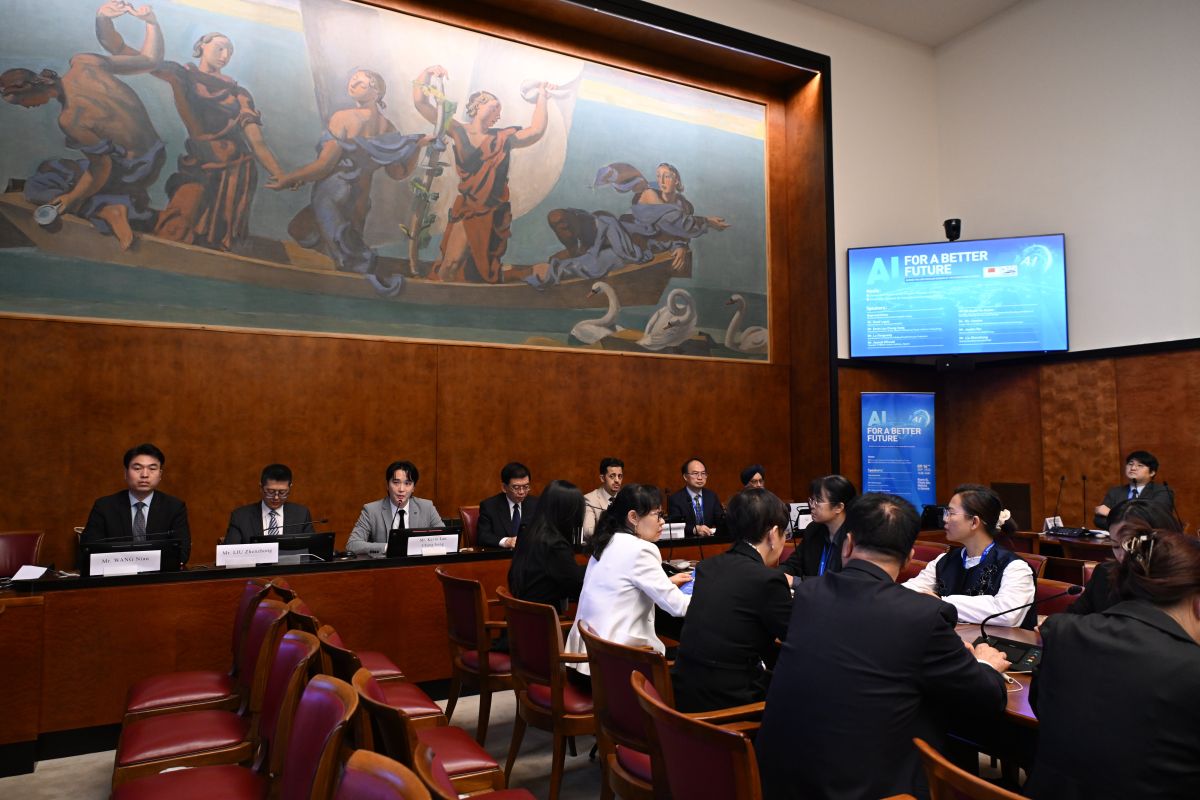
Geneva (ANTARA) - A side event titled “Artificial Intelligence (AI) Empowering Human Rights Development” was held during the 63rd session of the United Nations (UN) Human Rights Council, according to Xinhua reports on Friday (18/9).
Co-organised by the Permanent Mission of China to the UN Office in Geneva and the China NGO Network for International Exchange, the event was attended by nearly 100 participants, including representatives from over 20 countries, leaders of non-governmental organisations, and experts. Participants engaged in in-depth discussions regarding the strengthening of global AI governance and the advancement of human rights.
Wang Nian, counsellor for the Permanent Mission of China to the UN Office in Geneva, stated that they are committed to responding to the calls of Global South nations and uniting the international community to utilise AI in supporting the protection of human rights.
Wang noted that China has submitted a series of joint statements to the Human Rights Council regarding the role of AI in promoting human rights, as well as proposing a thematic resolution on “accessibility for all.”
Wang added that China advocates for a human-centric, inclusive, and mutually beneficial approach, aimed at empowering groups such as persons with disabilities, the elderly, women, and children through AI, while ensuring their equal participation in social life.
Liu Zhenzhong, deputy secretary-general of the China NGO Network for International Exchange, shared practical experiences regarding the use of AI by Chinese civil society organisations in natural disaster relief.
Emphasising that AI is a double-edged sword that offers new opportunities for human rights progress while posing potential governance risks, Liu called on the international community to fully utilise the role of civil society organisations as bridges and connectors. He urged for the improvement of global AI governance systems to ensure that the outcomes of intelligent technology benefit human rights development in all countries fairly and inclusively.
Participants shared perspectives on how AI supports human rights advancement from various angles.
Lu Xiaoguang, vice president of the Presidium of the Beijing Federation of Persons with Disabilities, outlined how Beijing is advancing the practical application of assistive technologies, such as brain-computer interfaces and smart assistive devices, through a three-pronged approach involving institutional protection, technological innovation, and industrial empowerment.
By building a comprehensive ecosystem for technology-based support for persons with disabilities, Beijing uses smart solutions to protect the legitimate rights and interests of the disabled, including ease of daily living and equal opportunities for development, he stated.
Wu Jianshe, a project officer at the Beijing NGO Network for International Exchange, presented the core theme of the “right to be heard.”
He discussed various practical achievements in using AI to assist individuals with various conditions, such as speech impediments (stuttering) and Alzheimer’s disease, in overcoming communication barriers. Additionally, he detailed experiences in developing multi-lingual public service platforms in Beijing, highlighting how smart public services can accurately protect the fundamental rights of the public.
Kevin Lau Chung-hang, founding convener of the Hong Kong Global Professional Youth Initiative, shared successful practices from Hong Kong, China, in using AI to strengthen human rights protections across sectors such as healthcare and community welfare.
Highlighting the significant digital and healthcare development gaps faced by Global South nations, he called for strengthened cross-border and inter-regional cooperation among NGOs to bridge the development gap between the North and South, and to encourage inclusive development where smart technology can advance human rights for all.
David Lopez, a representative of the AIDHDES Association, noted that the current global landscape of smart services is characterised by uneven resource distribution and supply imbalances.
He urged nations to accelerate the development of public AI infrastructure and build inclusive smart service systems that benefit the entire population, while removing technological barriers to ensure that countries and groups from various backgrounds can enjoy the benefits of AI development fairly.
Ayyoub Mihoubi, founder of the IBRAA Algeria Autism Institute, shared innovative applications of AI technology in early screening, rehabilitation intervention, and guidance for families of individuals with autism.
Through digital and smart support models, these technologies effectively alleviate the caregiving burden on families of individuals with special needs, while providing professional and accessible social development and welfare support for these groups, he noted.
Jasdev Rai, director of the Sikh Human Rights Group, highlighted that AI holds significant value in various fields, such as poverty alleviation, public healthcare, and ecological governance, effectively contributing to the improvement of community livelihoods.
At the same time, he stated that technological development must adhere to basic ethical principles and establish robust risk prevention and control mechanisms to ensure that AI develops safely, for the common good, and in an inclusive manner.