
UN: Energy Security and Low-Carbon Transition are Not Mutually Exclusive
Jakarta (ANTARA) - The United Nations Economic and Social Commission for Asia and the Pacific (UN-ESCAP) has asserted that energy security and the transition towards a low-carbon economy are not two conflicting objectives, but rather two paths that are increasingly converging towards the same goal.
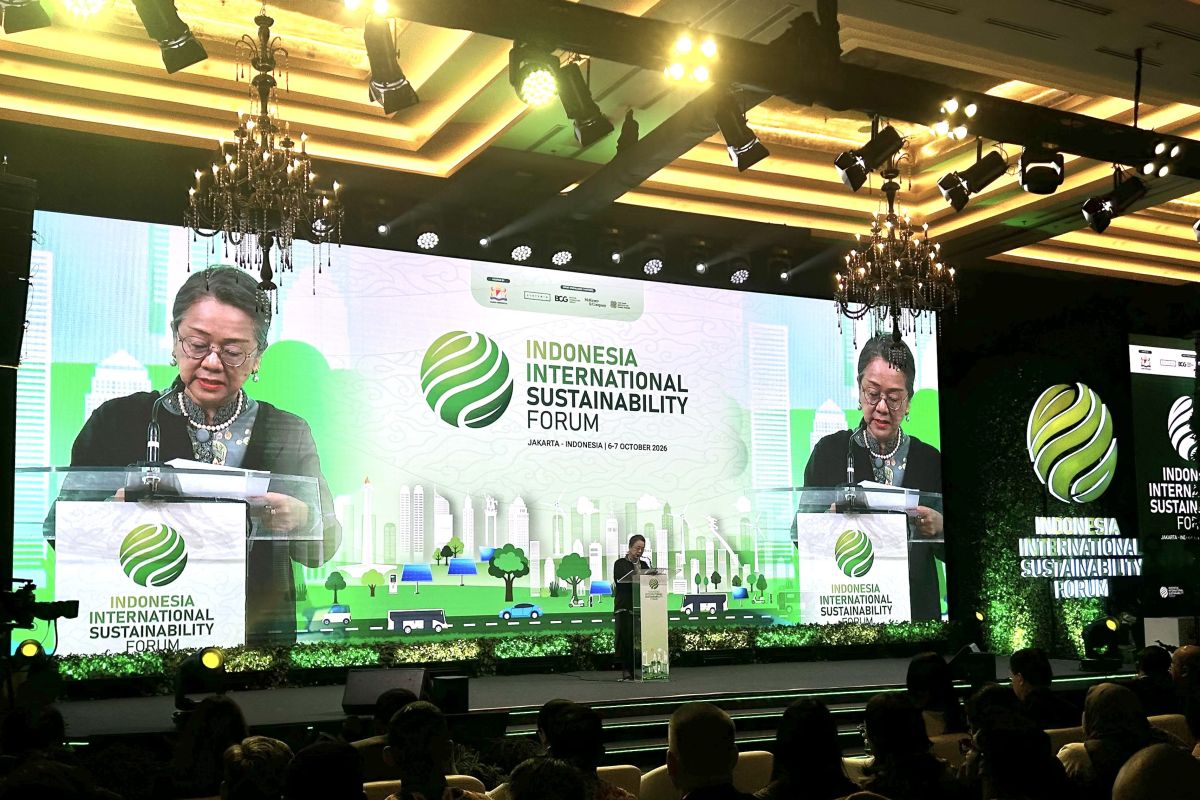
This statement was delivered by the Deputy Secretary-General of UN-ESCAP, Armida Salsiah Alisjahbana, during her speech at the Indonesia International Sustainability Forum in Jakarta on Tuesday.
“One of the key messages we wish to convey is that energy security and the low-carbon transition are not conflicting goals, but are increasingly viewed as two paths leading in the same direction,” said Alisjahbana.
She stated that by accelerating investment in renewable energy, energy efficiency, electrification, resilient infrastructure, and regional cooperation, the world can collectively build an economy that is more secure, more competitive, and more sustainable.
Alisjahbana outlined that energy security rests on three main pillars: availability, uninterrupted supply, and affordability. When any of these pillars weaken, the economy is impacted, the business sector loses confidence, and society is left vulnerable to bearing the greatest burden.
Therefore, she continued, energy security is not merely an issue for the energy sector. Energy security serves as the foundation for economic growth, social welfare, and national resilience.
“At the same time, energy security is also a regional and global public good that requires sustained cross-border cooperation, both between countries and across regions,” she said.
However, Alisjahbana emphasised that governments cannot undertake the clean energy transition alone. The role of the private sector is considered vital to expanding the use of renewable energy, electrification, and the development of carbon markets to support the energy transition.
The contribution of the private sector, she noted, can help mobilise private capital, drive the achievement of corporate sustainability goals, and support the growth of the clean energy market.
On the other hand, regional cooperation is also seen as increasingly important to strengthen energy security. ASEAN nations have implemented several initiatives, including the ASEAN Power Grid, coordinated oil reserve management, fuel-sharing mechanisms, and joint procurement.
“By working together, governments can build collective resilience and strengthen regional energy market stability. However, it is clear that governments cannot undertake the transition to clean energy on their own,” she concluded.