
UN Chief: World Faces Two Crises, Energy Transition Must Be Accelerated
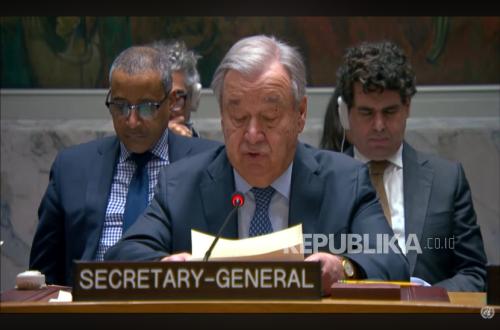
United Nations Secretary-General Antonio Guterres has warned that the world is facing two major, interconnected challenges: the climate crisis and the energy crisis. According to him, both issues share the same root cause, namely the global dependency on fossil fuels.
In a speech at London Climate Action Week, Guterres said the impacts of climate change continue to worsen amid rising geopolitical uncertainty, which exposes the vulnerability of a global energy system still reliant on oil, coal, and gas.
“The climate crisis is driving us deeper into higher temperatures and closer to catastrophic tipping points. And the energy crisis demonstrates how misguided the world is for its continued dependence on hydrocarbon energy,” Guterres said on Tuesday (23/6/2026).
According to Guterres, the solution to both crises is to accelerate a just transition towards clean energy. “These crises share a common destructive force: fossil fuels, and they also demand a common answer: a rapid and just transition to clean energy,” he stated.
Guterres reminded the world that it has just experienced the eleven hottest years in modern recorded history. The impacts of climate change are also increasingly felt through the rising frequency and intensity of disasters, causing significant economic losses in various countries. He highlighted a warning from the World Meteorological Organisation, which estimates that El Niño could potentially worsen the rise in global temperatures, disrupt food and water security, and increase the vulnerability of communities in various regions.
“Every moment is precious. Because the higher and longer the temperature overshoot, the greater the risk of crossing planetary tipping points that trigger permanent change,” he said. Guterres also cited a report from the UN Scientific Advisory Board showing that several Earth systems are increasingly approaching tipping points. These threats include the collapse of coral reefs, accelerating ice sheet melt in Greenland and West Antarctica, the weakening of major ocean circulation, and the degradation of parts of the Amazon rainforest.
“The accelerating loss of ice sheets in Greenland and West Antarctica will lock in sea-level rise that reshapes coastlines, displaces millions of people, and threatens the existence of some island nations,” he said.
On the other hand, conflict in the Middle East has once again exposed the vulnerability of the global energy system. According to Guterres, the turmoil triggers pressures that not only impact the energy sector but also worsen debt, food, and development issues, especially in developing countries. “These twin crises once again reveal the limitations of an outdated development model,” he said.
Guterres assessed that dependence on fossil fuels makes the world’s energy system vulnerable to conflict and market volatility. Moreover, the groups that contribute the least to climate change are often the most affected. Therefore, he stressed the importance of accelerating the implementation of the Sustainable Development Goals (SDGs) and building more resilient, low-carbon economic systems.
According to Guterres, the development of renewable energy shows an increasingly positive trend. Over the past decade, the cost of solar power technology has fallen by nearly 90 per cent, onshore wind power by more than 70 per cent, and battery storage by around 95 per cent. “Last year, wind and solar power exceeded all new electricity demand growth worldwide,” he said.
He added that more than 90 per cent of new renewable energy capacity built globally is now cheaper than the cheapest fossil fuel alternatives. Based on data from the International Renewable Energy Agency, installed renewable energy capacity saved the global economy approximately 480 billion US dollars in 2025 through reduced fossil fuel needs.
Guterres asserted that future energy security can no longer depend on fossil fuel imports that are vulnerable to geopolitical shocks. “There is no embargo on sunshine and no blockade on the wind,” he said. According to him, renewable energy has now become the foundation of true energy security. The electrification of the transport, building, and industrial sectors is also considered one of the most effective ways to reduce emissions while cutting dependence on fossil fuels.
Closing his speech, Guterres said the world is at a critical crossroads. On one hand, the impacts of climate change are increasingly alarming, but on the other, the clean energy revolution is developing faster than ever before. “This is a revolution that can free countries from the volatile price swings of fossil fuel markets, expand energy access for all, strengthen security, create jobs, clean the air we breathe, restore damaged ecosystems, and bring a safer future within our reach,” Guterres said.
He added that the world has the opportunity to turn these challenges into momentum to strengthen resilience, justice, and shared progress by accelerating the transition to renewable energy and strengthening global climate action.